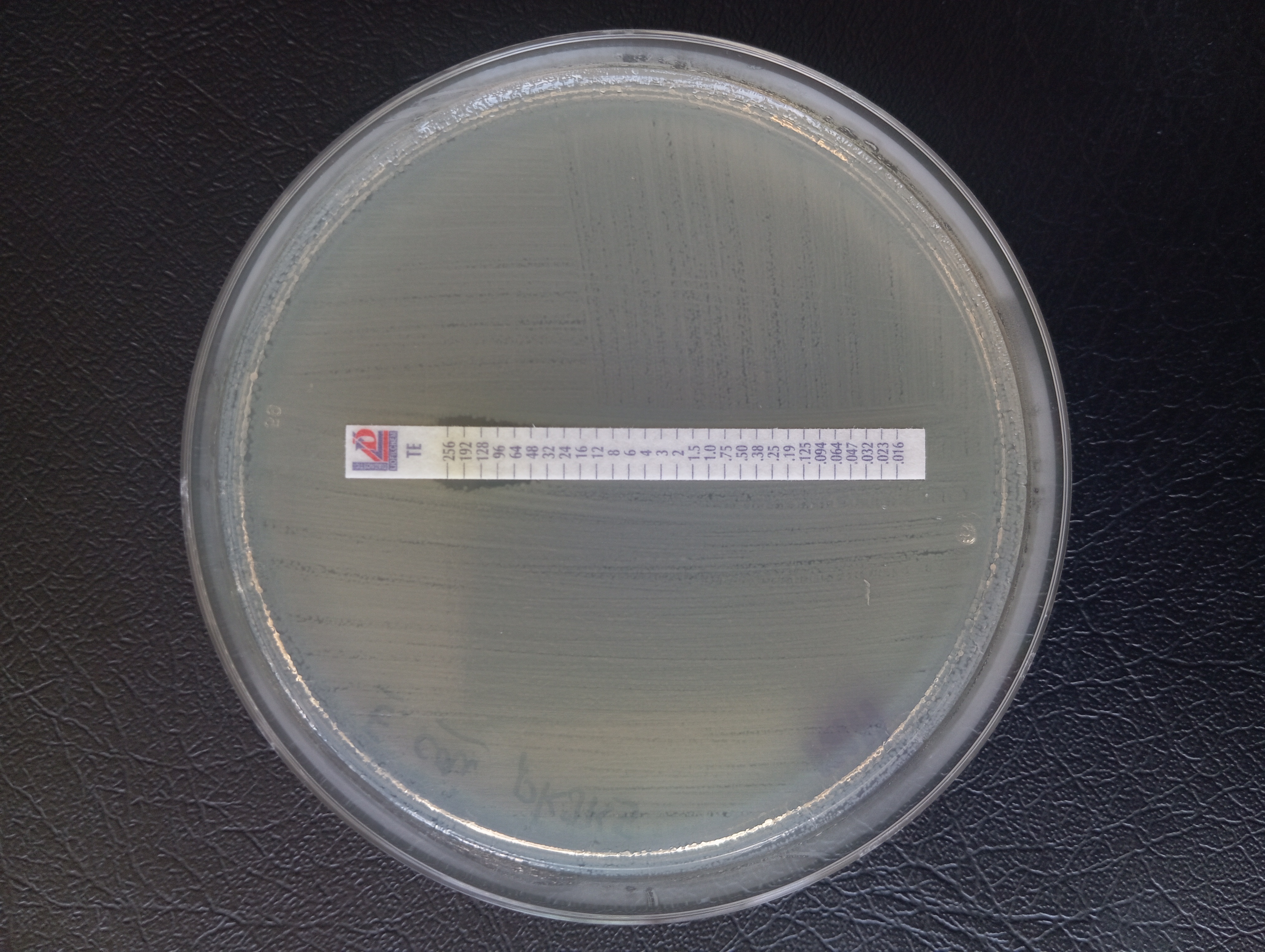

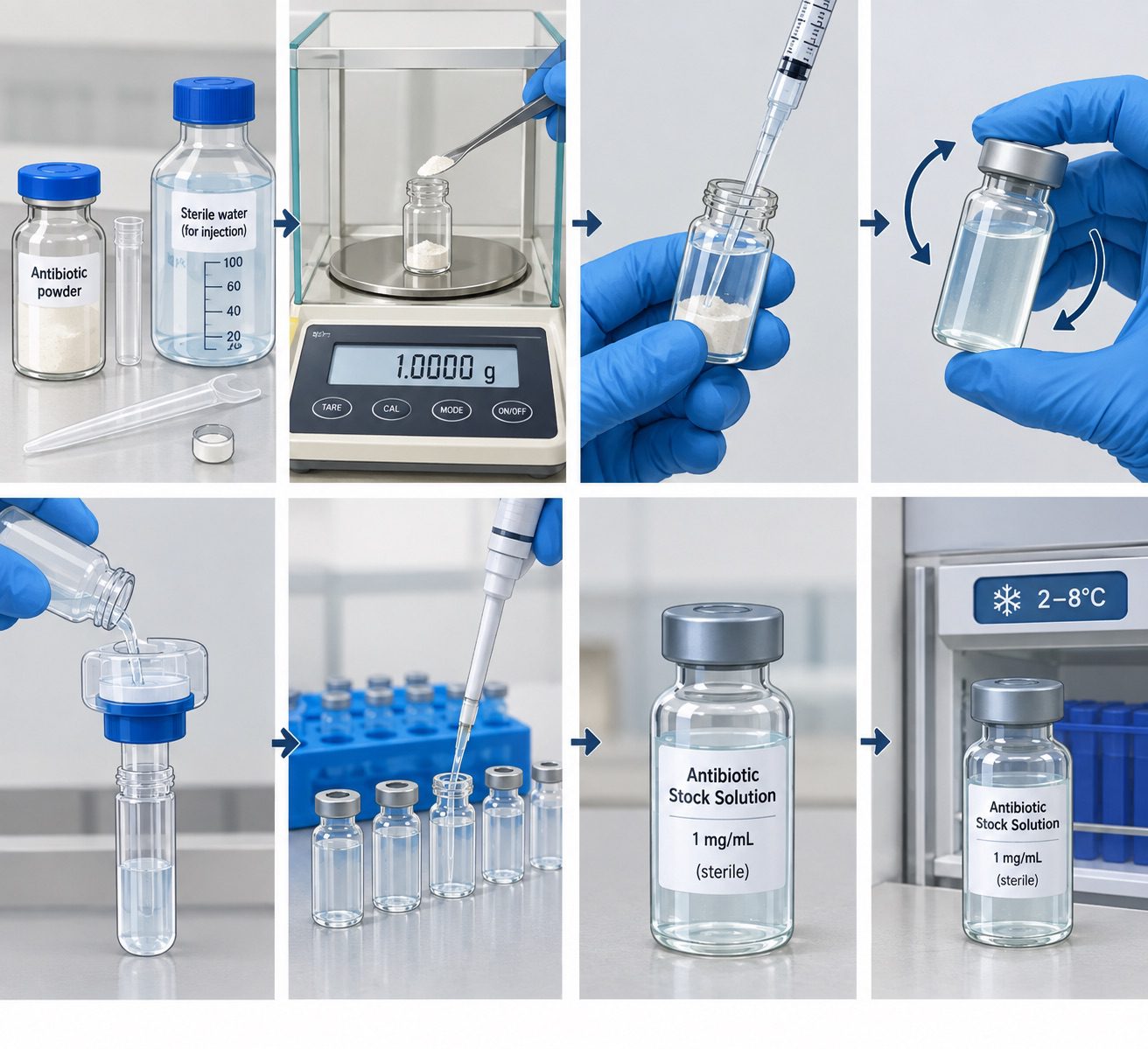
The preparation of concentrated antibiotic stock solutions, such as ampicillin, penicillin, tetracycline and doxycycline is an important part of maintaining reliable and reproducible microbiological experiments. In bacterial culture and molecular biology, antibiotics are commonly used as selective agents to ensure that only microorganisms carrying the desired antibiotic-resistance marker, such as a plasmid or antibiotic resistant gene (ARG), are able to grow. Accurate preparation and application of the antibiotic are therefore essential for effective selection and experimental consistency.
Preparing a standardized stock solution provides a convenient and reproducible source of antibiotic for multiple experiments. A known concentration, such as 100 mg/mL, allows the required amount to be accurately calculated and added to different volumes of culture media. This reduces the risk of concentration errors and ensures that cultures receive a consistent selective pressure. Consistency is particularly important when comparing results between experiments or different batches of media.
Sterile preparation is equally important. Contamination of an antibiotic stock can introduce unwanted microorganisms into cultures and compromise experimental results. Sterile filtration and aseptic handling help maintain the integrity of the stock solution and reduce the possibility of introducing contaminants into otherwise sterile media.
Aliquoting the stock solution is another important practice. Dividing the preparation into small volumes minimizes repeated opening and handling of the main stock and reduces the number of freeze-thaw cycles. This helps preserve antibiotic activity and decreases the risk of contamination. Appropriate labelling with the antibiotic name, concentration, preparation date, and storage conditions also supports traceability and good laboratory practice.
Accurate antibiotic preparation is particularly important because both insufficient and excessive antibiotic concentrations can affect experimental outcomes. An insufficient concentration may result in poor selection, allowing unwanted or non-resistant cells to grow. An unnecessarily high concentration may inhibit the growth of the intended organisms or introduce unwanted selection pressure.
Standardized antibiotic stock preparation supports accuracy, reproducibility, sterility, traceability, and experimental quality. These practices form an important component of good microbiological laboratory technique and help ensure that subsequent culture and molecular biology experiments produce reliable and interpretable results.
Preparation of ampicillin stock solution (100 mg/mL)
The aim is to prepare a sterile 100 mg/mL ampicillin stock solution for selective bacterial culture. The stock solution can be aliquoted, stored frozen, and subsequently added to sterile culture media to achieve the required final working concentration.
Materials required for the experiment
- Ampicillin powder (preferably ampicillin sodium, or the formulation specified by the laboratory protocol)
- Sterile Milli-Q water or distilled water
- Analytical balance
- Sterile spatula or weighing vessel
- Sterile 50 mL Falcon/conical tube
- Vortex mixer
- Sterile syringe (20-50 mL)
- Sterile 0.22 µm syringe filter
- Sterile 1.5 mL microcentrifuge tubes
- Pipettes and sterile pipette tips
- Biosafety cabinet or hood
- Appropriate labels and permanent marker
Principle of ampicillin stock solution preparation
A 100 mg/mL stock solution is prepared by dissolving 2 g of ampicillin in a final volume of 20 mL. A concentrated ampicillin stock solution is prepared by dissolving a known mass of ampicillin in a defined final volume of sterile solvent to obtain the desired concentration. For example, dissolving 2 g of ampicillin in a final volume of 20 mL produces a 100 mg/mL stock solution.
Concentration = mass ÷ final volume
2 g ÷ 20 mL = 0.1 g/mL = 100 mg/mL
The concentrated stock is then sterile-filtered and divided into small aliquots to minimize repeated freeze-thaw cycles. Ampicillin is commonly used in bacterial selection at a substantially lower final concentration, often 100 µg/mL, although the appropriate concentration should always be determined according to the organism, plasmid, and validated laboratory protocol.
Protocol for preparing ampicillin stock solution (100 mg/mL)
Preparation of the stock solution
- Clean and prepare the work area and gather all required materials.
- Accurately weigh 2.0 g of ampicillin powder using an analytical balance.
- Transfer the ampicillin powder into a sterile 50 mL Falcon tube.
- Add approximately 15-18 mL of sterile Milli-Q water initially. Do not necessarily add the entire 20 mL at this stage, because the target is a final volume of 20 mL, rather than simply adding 20 mL of water.
- Cap the tube and mix gently using a vortex mixer until the ampicillin is completely dissolved.
- Once dissolved, bring the solution to a final volume of 20 mL with sterile Milli-Q water.
- Mix thoroughly to ensure the solution is homogeneous.
Sterilization of the solution
- Using aseptic technique, transfer the solution into a sterile syringe.
- Pass the solution through a sterile 0.22 µm syringe filter into a sterile, labelled 50 mL Falcon tube. Filter sterilization should be performed using a filter compatible with the solution and syringe volume.
- Avoid excessive pressure during filtration. If the filter becomes blocked, replace it rather than forcing the solution through.
Aliquoting and storage of the stock solution
- Using sterile pipette tips, dispense 1 mL of the filtered stock solution into sterile 1.5 mL microcentrifuge tubes.
- Label each tube with: ampicillin, concentration of the solution (100 mg/mL), date of preparation, and your name.
- Store aliquots at -20°C, unless the manufacturer’s instructions or laboratory standard operating procedure (SOP) specify otherwise.
- Avoid repeated freeze-thaw cycles. Use a fresh aliquot when possible and discard aliquots that show evidence of contamination, precipitation, or other deterioration.
Application and working concentration
For a final concentration of 100 µg/mL ampicillin, a 100 mg/mL stock is diluted at 1:1,000. Table 1 summarizes the volume of 100 mg/mL ampicillin stock solution required to prepare culture media at a final concentration of 100 µg/mL across different medium volumes.
Table 1. Ampicillin stock volume required for preparation of 100 µg/mL working medium
| Final medium volume | 100 mg/mL stock required | Final ampicillin concentration |
| 1 L | 1 mL | 100 µg/mL |
| 500 mL | 500 µL | 100 µg/mL |
| 100 mL | 100 µL | 100 µg/mL |
| 50 mL | 50 µL | 100 µg/mL |
| 10 mL | 10 µL | 100 µg/mL |
| 5 mL | 5 µL | 100 µg/mL |
The dilution can be calculated using:
C1V1 = C2V2
where C1 is the stock concentration, V1 is the volume of stock required, C2 is the desired final concentration, and V2 is the final medium volume.
For example, to prepare 1 L of medium at 100 µg/mL:
(100 mg/mL) × V₁ = (0.1 mg/mL) × 1000 mL
Thus, V1 = 1 mL.
Addition of stock solution to culture medium
Ampicillin is generally added to sterile, cooled molten agar or liquid medium after sterilization. The antibiotic should not normally be subjected to unnecessary prolonged exposure to high temperatures, as this can reduce antibiotic activity.
For agar plates, allow autoclaved molten agar to cool to an appropriate handling temperature (55-60oC) before aseptically adding the required volume of ampicillin stock. Mix thoroughly but gently before pouring plates.
Final points:
- The prepared stock is 100 mg/mL, not 100 µg/mL.
- The commonly used final working concentration of 100 µg/mL is equivalent to 0.1 mg/mL.
- The appropriate final concentration may vary depending on the bacterial strain, plasmid, selection system, and laboratory SOP. Confirm the required concentration before use.
- Clearly label all aliquots and maintain appropriate records of preparation and storage.
- Prepared antibiotic-containing plates should be stored according to the laboratory’s validated SOP. A maximum of 7 days at 2-8°C may be used as a laboratory guideline where validated, but storage duration can depend on the medium, antibiotic, plate preparation method, and storage conditions.
Preparation of tetracycline stock solution
The aim is to prepare a sterile tetracycline stock solution for use in selective bacterial culture media, including liquid cultures and agar plates. The stock solution is aliquoted and stored under appropriate conditions to maintain antibiotic activity and minimize repeated freeze-thaw cycles.
Materials: The materials required are identical to those listed for the preparation of ampicillin, except that tetracycline hydrochloride powder is used as the antibiotic source.
Note: Both water and ethanol (or ethanol-water mixtures) can be used to dissolve tetracycline, depending on the specific form of the chemical and your storage needs.
Principle of tetracycline stock solution preparation
Tetracycline is a broad-spectrum antibiotic used for selection of bacteria carrying tetracycline-resistance determinants. Tetracycline hydrochloride is commonly prepared as a concentrated stock solution and subsequently diluted into sterile culture medium to obtain the required final concentration.
Because tetracycline is light sensitive, solutions should be protected from direct light during preparation, storage, and use. The exact stock concentration and solvent should be compatible with the specific tetracycline formulation being used and the manufacturer’s instructions.
For example, a 10 mg/mL stock solution can be prepared by dissolving 100 mg of tetracycline hydrochloride in a final volume of 10 mL.
100 mg ÷ 10 mL = 10 mg/mL
Other stock concentrations may be prepared using the same relationship.
Protocol for preparing tetracycline stock solution
Preparation of tetracycline stock solution
- Clean and prepare the working area and gather all required materials.
- Protect the working area and tetracycline solution from direct light. Wrapping the preparation tube in aluminium foil is suitable for routine laboratory preparation.
- Accurately weigh 100 mg of tetracycline hydrochloride using an analytical balance.
- Transfer the powder into a sterile 50 mL Falcon tube.
- Add approximately 8-9 mL of the appropriate sterile solvent. Milli-Q water may be suitable depending on the tetracycline formulation; however, the manufacturer’s recommended solvent should take precedence.
- Cap the tube and mix gently using a vortex mixer until the tetracycline is completely dissolved.
- Once dissolved, bring the solution to a final volume of 10 mL with the appropriate sterile solvent.
- Mix thoroughly to obtain a homogeneous solution.
- Keep the solution protected from light throughout the preparation.
Sterile filtration
- Transfer the solution into a sterile syringe using aseptic technique.
- Pass the solution through a sterile 0.22 µm syringe filter into a sterile receiving tube.
- Do not force the solution through a blocked filter. Replace the filter if excessive resistance occurs.
- Keep the filtered stock protected from light.
Filter sterilization is preferred for antibiotic solutions that may be adversely affected by heat sterilization. Do not autoclave tetracycline stock solution unless the specific manufacturer’s instructions and laboratory SOP explicitly permit it.
Aliquoting and storage
- Using sterile pipette tips, dispense the filtered tetracycline stock into sterile 1.5 mL microcentrifuge tubes. Small aliquots, such as 0.5-1 mL, are useful for minimizing repeated freeze-thaw cycles.
- Label each aliquot with: tetracycline, concentration prepared, date of preparation, and your name.
- Wrap tubes in aluminium foil or otherwise protect them from light.
- Store aliquots according to the manufacturer’s instructions and the laboratory’s validated SOP. -20°C is commonly used for long-term storage of tetracycline stocks.
- Avoid repeated freeze-thaw cycles. Use a fresh aliquot whenever possible.
Application and working concentration
The required final tetracycline concentration depends on the bacterial strain, selection system, plasmid, and laboratory SOP. A commonly used final concentration for bacterial selection is 10-20 µg/mL, but the appropriate concentration should be confirmed for the specific application.
For a 10 mg/mL tetracycline stock, the volume required can be calculated using:
C1V1 = C2V2
For example, to prepare medium containing 10 µg/mL tetracycline from a 10 mg/mL stock, see Tables 2 and 3. Table 2 summarizes the volume of 10 mg/mL doxycycline stock solution required to prepare different final medium volumes at a working concentration of 10 µg/mL. The required stock volume is calculated using the dilution relationship C1V1 = C2V2
Table 2. Preparation of 10 µg/mL doxycycline working concentration
| Final medium volume | 10 mg/mL stock required | Final concentration |
| 1 L | 1 mL | 10 µg/mL |
| 500 mL | 500 µL | 10 µg/mL |
| 100 mL | 100 µL | 10 µg/mL |
| 50 mL | 50 µL | 10 µg/mL |
| 10 mL | 10 µL | 10 µg/mL |
| 5 mL | 5 µL | 10 µg/mL |
For 20 µg/mL final concentration, the required stock volume is doubled and shown in Table 3. Table 3 shows the corresponding stock volumes required to achieve a final doxycycline concentration of 20 µg/mL in different medium volumes. Because the target concentration is twice that of the 10 µg/mL preparation, the required volume of 10 mg/mL stock is also doubled.
Table 3. Preparation of 20 µg/mL doxycycline working concentration
| Final medium volume | 10 mg/mL stock required | Final concentration |
| 1 L | 2 mL | 20 µg/mL |
| 500 mL | 1 mL | 20 µg/mL |
| 100 mL | 200 µL | 20 µg/mL |
| 50 mL | 100 µL | 20 µg/mL |
| 10 mL | 20 µL | 20 µg/mL |
| 5 mL | 10 µL | 20 µg/mL |
Addition to culture medium
Tetracycline should be added aseptically to sterile, cooled molten agar or sterile liquid medium. Avoid unnecessary exposure to elevated temperatures and direct light because tetracycline activity can decrease under unfavorable conditions.
For agar plates, allow sterilized molten agar to cool sufficiently before adding the antibiotic. Add the calculated volume of tetracycline stock, mix thoroughly but gently, and pour the plates under aseptic conditions.
Final points
- Tetracycline is light sensitive; protect stock solutions and antibiotic-containing media from direct light.
- Confirm the required final concentration for the particular bacterial strain and selection system rather than assuming a universal concentration.
- Do not confuse the stock concentration (mg/mL) with the final working concentration (µg/mL).
- Use sterile filtration rather than heat sterilization for the antibiotic stock unless otherwise specified by the manufacturer.
- Discard solutions showing unexpected precipitation, contamination, or significant discoloration according to the laboratory SOP.
- Clearly record the antibiotic concentration, preparation date, storage conditions, and lot number where applicable.
- Antibiotic-containing plates should be stored under conditions validated by the laboratory. Where a 7-day maximum has been established by the laboratory SOP, plates should not be used beyond that period.
Preparation of doxycycline stock solution
The aim is to prepare sterile doxycycline stock solutions for use in cell culture and other laboratory applications. Doxycycline may be prepared as an aqueous stock solution or, where appropriate, as a DMSO-based stock. The prepared stock should be aliquoted, protected from light, and stored appropriately to maintain stability and minimize repeated freeze-thaw cycles.
Materials: The materials required are identical to those listed for the preparation of tetracycline, except that doxycycline powder, such as doxycycline hyclate or doxycycline hydrochloride is used as the antibiotic source. Also, DMSO (dimethyl sulfoxide) is also used as a solvent for its preparation.
Principle of doxycycline stock solution preparation
Doxycycline is a tetracycline-class antibiotic commonly used for bacterial selection and, in inducible gene-expression systems, for regulation of doxycycline-responsive expression systems. Doxycycline is light sensitive, and solutions should therefore be protected from direct light during preparation, handling, and storage.
Doxycycline hyclate and related formulations can be prepared as aqueous stocks. A DMSO-based stock may also be useful for applications requiring a concentrated stock or where the manufacturer’s specifications recommend DMSO. The appropriate stock concentration should be selected according to the intended application and the manufacturer’s specifications. For example, a 10 mg/mL aqueous stock can be prepared by dissolving 100 mg of doxycycline in a final volume of 10 mL.
Water-based stock solution Preparation
- Clean and prepare the working area and gather all required materials.
- Protect the doxycycline and working solution from direct light by working under reduced light and/or wrapping the tube in aluminium foil.
- Accurately weigh the required amount of doxycycline powder.
- Transfer the powder into a sterile tube.
- Add approximately 80-90% of the intended final volume of sterile water.
- Mix gently using a vortex mixer until the doxycycline is completely dissolved.
- If dissolution is slow, brief sonication may be used. Avoid unnecessary heating during this process.
- Once completely dissolved, bring the solution to the required final volume with sterile water.
- Mix thoroughly to obtain a homogeneous solution.
Sterile filtration
- Transfer the solution into a sterile syringe using aseptic technique.
- Filter the solution through a sterile 0.22 µm filter into a sterile receiving tube.
- Keep the filtered stock protected from light.
Filter sterilization is preferable to heat sterilization for preparing doxycycline stocks intended for cell culture, unless the manufacturer’s instructions specify otherwise.
Aliquoting and storage
- Dispense the sterile stock into small aliquots, for example 0.5-1 mL per tube, to minimize repeated freeze-thaw cycles.
- Label each tube with: doxycycline, chemical form, e.g. doxycycline hyclate, stock concentration, date of preparation, and your name.
- Protect the aliquots from light using amber tubes or aluminium foil.
- Store according to the manufacturer’s recommended conditions. -20°C is commonly used for frozen stock solutions.
- Avoid repeated freeze-thaw cycles and use individual aliquots as required.
DMSO-based stock solution preparation
A DMSO-based stock can be used when a more concentrated stock is required or when specified by the manufacturer’s product information.
- Use fresh, high-quality, cell-culture or molecular-biology grade DMSO.
- Calculate the amount of doxycycline required for the desired stock concentration. For example, to prepare a 10 mg/mL doxycycline stock solution, dissolve 100 mg of doxycycline in a final volume of 10 mL DMSO. Add the doxycycline powder to approximately 80-90% of the calculated DMSO volume initially, mix until completely dissolved, and then bring to the final volume with DMSO. You can calculate the DMSO volume from the desired stock concentration and the mass of doxycycline, using: V = m/c.
where: V = volume of DMSO required (mL), m = mass of doxycycline (mg), C = desired stock concentration (mg/mL)
- Add the doxycycline powder to the appropriate volume of DMSO.
- Mix thoroughly until the powder is completely dissolved.
- Protect the solution from light throughout preparation.
- If required for sterile cell-culture applications, pass the solution through a sterile 0.22 µm filter using a filter compatible with DMSO.
- Dispense into small, light-protected aliquots.
- Store at -20°C, or according to the manufacturer’s instructions.
- Avoid repeated freeze-thaw cycles.
When using a DMSO stock in cell culture, ensure that the final DMSO concentration in the culture remains sufficiently low to avoid solvent-related cytotoxicity. A final concentration of ≤0.1% DMSO is commonly used as a practical upper limit, although the tolerance of the particular cell type should be verified experimentally.
Application and working concentration
For cell-culture applications, doxycycline is generally added to the culture medium from a concentrated stock immediately before use. The required final concentration depends strongly on the cell line and experimental system.
Typical doxycycline concentrations can range from approximately 0.1-12 µg/mL, although the optimal concentration should be experimentally determined for the specific cell line and inducible system.
The required stock volume can be calculated using:
C1V1 = C2V2
Table 4 shows an example of using a 10 mg/mL stock to prepare medium containing 1 µg/mL doxycycline.
Table 4. Doxycycline stock volume required for preparation of 10 mg/mL working medium
| Final medium volume | 10 mg/mL stock required | Final concentration |
| 1 L | 100 µL | 1 µg/mL |
| 500 mL | 50 µL | 1 µg/mL |
| 100 mL | 10 µL | 1 µg/mL |
| 50 mL | 5 µL | 1 µg/mL |
| 10 mL | 1 µL | 1 µg/mL |
For very small culture volumes, prepare an appropriately diluted intermediate working solution rather than pipetting extremely small stock volumes.
Final points
- Protect doxycycline from light during preparation, storage, and experimental use.
- The chemical form matters. Doxycycline hyclate and doxycycline hydrochloride have different molecular weights; use the molecular weight stated on the reagent label or certificate of analysis for molar calculations.
- Do not assume that one doxycycline concentration is suitable for every cell line or inducible expression system.
- For cell culture, use sterile-filtered stocks and appropriate aseptic technique.
- Avoid unnecessary heating because doxycycline stability can be affected by environmental conditions.
- For DMSO stocks, account for the final DMSO concentration in the culture medium.
- Clearly document stock concentration, chemical form, preparation date, storage conditions, and reagent lot number.
- Discard stocks showing contamination, unexpected precipitation, or significant changes in appearance according to the laboratory SOP.
- Antibiotic-containing culture media should be prepared and stored according to the validated laboratory procedure, with particular attention to light protection and storage duration.
Preparation of penicillin stock solution
The aim is to prepare a sterile penicillin stock solution for use in microbiological culture, cell culture, and other laboratory applications requiring penicillin-mediated antimicrobial selection or contamination control. The stock solution is prepared aseptically, sterile-filtered, aliquoted, and stored under appropriate conditions to preserve antibiotic activity.
Materials: The materials required are identical to those listed for the preparation of ampicillin, except that penicillin powder or penicillin salt/formulation appropriate for the intended application is used.
Principle penicillin of stock solution preparation
Penicillin is a β-lactam antibiotic that inhibits bacterial cell-wall synthesis and is commonly used as part of antibiotic selection systems or antimicrobial mixtures.
Penicillin formulations are generally water soluble; therefore, sterile water is normally an appropriate solvent for preparing aqueous stocks. The exact stock concentration should be selected according to the specific penicillin formulation, potency, and intended application.
A 100 mg/mL stock may be used where appropriate as a concentrated stock, although many laboratory applications use penicillin at substantially lower final concentrations. The required final concentration should therefore be confirmed from the experimental protocol or validated laboratory SOP.
Because β-lactam antibiotics can be degraded by heat, penicillin stock solutions should generally be sterilized by membrane filtration rather than autoclaving.
Protocol for preparation of penicillin stock solution
Calculation and preparation
- Clean and prepare the working area and assemble all required materials.
- Confirm the exact identity and formulation of the penicillin being used, including its salt form and stated potency.
- Determine the required stock concentration and final preparation volume.
- Calculate the mass of penicillin required using the target concentration and final volume.
- Accurately weigh the required amount of penicillin powder using a calibrated analytical balance.
- Transfer the powder into a sterile conical tube or suitable sterile vessel.
For example, when preparing a 100 mg/mL stock, the theoretical mass required for a 10 mL final volume is:
100 mg/mL × 10 mL = 1000 mg = 1 g
The manufacturer’s stated potency should be considered when preparing stocks intended for biological assays.
Dissolution of penicillin powder
- Add approximately 80-90% of the intended final volume of sterile Milli-Q or distilled water to the powder.
- Mix gently by inversion or vortexing until the penicillin is completely dissolved.
- If necessary, use gentle stirring to facilitate dissolution. Avoid unnecessary heating.
- Once the powder has completely dissolved, bring the solution to the required final volume using sterile water.
- Mix gently to ensure the solution is homogeneous.
Penicillin should generally be prepared in an aqueous solvent. Do not substitute ethanol or DMSO unless the specific penicillin derivative and manufacturer’s instructions require or permit it.
Sterile filtration
- Using aseptic technique, transfer the solution into a sterile syringe.
- Attach a sterile 0.22 µm syringe filter compatible with the solution.
- Slowly pass the solution through the filter into a sterile receiving tube.
- Avoid excessive pressure on the filter. If the filter becomes blocked, replace it rather than forcing the solution through.
- Keep the filtered solution protected from unnecessary environmental exposure.
Do not autoclave the penicillin stock solution unless specifically instructed by the manufacturer or validated laboratory procedure, because heat can substantially reduce β-lactam antibiotic activity.
Aliquoting and storage
- Aseptically dispense the sterile stock solution into small, single-use aliquots. For example, 0.5-1 mL per tube may be appropriate depending on experimental requirements.
- Use small aliquots to minimize repeated freeze-thaw cycles.
- Label each tube clearly with: penicillin, specific penicillin formulation, stock concentration, date of preparation, and your name.
- Protect the aliquots from unnecessary light exposure.
- Store at -20°C, unless the manufacturer’s instructions specify different storage conditions.
- Avoid repeated freeze-thaw cycles. Use a fresh aliquot whenever possible.
Application and working concentration
The appropriate final concentration depends on the experimental system and the specific penicillin formulation. The stock should therefore be diluted according to the validated laboratory protocol or manufacturer’s recommendations.
The required stock volume can be calculated using:
C1V1 = C2V2
Table 5 provides example volumes of a 100 mg/mL stock solution required to prepare different final medium volumes at a concentration of 100 µg/mL (0.1 mg/mL). The required stock volume scales directly with the final medium volume, making it easy to adapt the calculation to different preparation sizes.
Table 5. Penicillin stock volume required for preparation of 100 µg/mL final concentration
| Final medium volume | 100 mg/mL stock required | Final concentration |
| 1 L | 1 mL | 100 µg/mL |
| 500 mL | 500 µL | 100 µg/mL |
| 100 mL | 100 µL | 100 µg/mL |
| 50 mL | 50 µL | 100 µg/mL |
| 10 mL | 10 µL | 100 µg/mL |
| 5 mL | 5 µL | 100 µg/mL |
The appropriate concentration should always be verified for the particular application rather than assumed from this example.
Addition to culture medium
For applications involving sterile culture medium, penicillin should be added aseptically after sterilization of the medium. Where heat-sensitive antibiotic solutions are being added to molten agar, allow the medium to cool sufficiently before antibiotic addition to minimize loss of antibiotic activity. Mix the antibiotic-containing medium thoroughly but gently to ensure even distribution before use.
Final points
- Confirm the exact penicillin compound, salt/formulation, potency, and manufacturer’s instructions before preparing the stock.
- Do not assume that all penicillin products can be prepared using the same mass-to-volume calculation.
- Do not autoclave penicillin stock solutions unless specifically validated for the formulation being used.
- Use a sterile 0.22 µm filter for preparation of sterile stocks intended for cell culture or other aseptic applications.
- Avoid unnecessary exposure to heat and prolonged environmental exposure.
- Store aliquots according to the manufacturer’s validated storage recommendations.
- Minimize repeated freeze-thaw cycles.
- Clearly record the concentration, formulation, preparation date, storage conditions, and reagent lot number.
- Discard stock solutions showing evidence of contamination, unexpected precipitation, or other changes according to the laboratory SOP.
- Antibiotic-containing media should be stored according to the validated laboratory procedure and used within the established storage period.
References
Barry, A., Bryskier, A., Traczewski, M., & Brown, S. (2004). Preparation of stock solutions of macrolide and ketolide compounds for antimicrobial susceptibility tests. Clinical Microbiology and Infection, 10(1), 78–83.
Barrick Lab. (n.d.). Media amendments: Antibiotic stock solutions. https://barricklab.org/twiki/bin/view/Lab/ProtocolsAntibioticStockSolutions
Benchling. (n.d.). Tetracycline (Tet) stock preparation. https://benchling.com/protocols/KS2Y3yFq/tetracycline-tet-stock-preparation
Chen, J., Tomasek, M., & Gau, V. (2021). Categorizing microbial growth inhibition through quantification of 16S rRNA growth marker with stripwells covering a spectrum of antimicrobial conditions. Methods, 8, 101453.
Clinical and Laboratory Standards Institute. (2009). Methods for dilution antimicrobial susceptibility tests for bacteria that grow aerobically: Approved standard—Eighth edition (CLSI document M07-A8). Clinical and Laboratory Standards Institute.
GOLDbio. (n.d.). How to make stock solutions for antibiotics and cell selection agents. https://www.goldbio.com/blogs/articles/how-to-make-stock-solutions-for-antibiotics-and-cell-selection-agents
Registry of Standard Biological Parts. (n.d.). Antibiotic stocks. iGEM. https://parts.igem.org/Help:Materials/Antibiotic_Stocks
Sigler. (n.d.). Working concentrations and stock solutions. University of Toledo. http://www.eeescience.utoledo.edu/Faculty/Sigler/Von_Sigler/LEPRProtocols_files/Working%20concentrations%20and%20stock%20solutions.pdf
Woźniak, A., Drożdż, K., Biegun-Drożdż, K., Gosiewski, T., Cudak, T., Karpiński, R., Fiołek, A., Błoniarz, A., Marchewka, J., Moskalewicz, T., & Brzychczy-Włoch, M. (2026). Biocidal activity of selected essential oils against bacterial and fungal pathogens and their cytotoxicity toward human cell lines. Microorganisms, 14(10), 2196.
NeoSynBio. (n.d.). Antibiotic stock solution mixing. https://www.neosynbio.com/antibiotic-stock-solution-mixing
Rrotocols.io. (n.d.). Antibiotic stocks. https://www.protocols.io/view/antibiotic-stocks-3byl47e1zlo5/v1
Discover more from Microbiology Class
Subscribe to get the latest posts sent to your email.