
Sulfide-Indole-Motility (SIM) medium is a specialized differential culture medium employed in microbiological laboratories to investigate selected biochemical and physiological characteristics of bacterial isolates. It provides a practical means of distinguishing microorganisms according to their ability to produce hydrogen sulfide, generate indole from tryptophan, and move through a semisolid growth environment.
By incorporating these three diagnostic parameters into a single medium, SIM testing supports the preliminary characterization and differentiation of bacterial species, particularly those belonging to the family Enterobacteriaceae. SIM medium is a semisolid, multipurpose differential medium designed to assess three distinct bacterial properties: sulfide production, indole formation, and motility. The abbreviation SIM represents these three characteristics, which are evaluated through observable changes in the medium following bacterial inoculation and incubation.
Unlike general-purpose culture media intended primarily to support microbial growth, SIM medium contains specific ingredients that facilitate the detection of metabolic reactions and movement patterns. The sulfide component determines whether an organism can produce hydrogen sulfide (H2S) through the breakdown of sulfur-containing compounds. The indole component evaluates the organism’s capacity to degrade the amino acid tryptophan and release indole as a metabolic product.
The motility component establishes whether the bacterium possesses functional mechanisms of locomotion that enable it to migrate through the semisolid agar matrix. The principal purpose of SIM medium is to generate a biochemical profile that assists in the differentiation of bacteria with similar cultural appearances. Individual reactions may provide useful diagnostic information, but their combined interpretation offers a more informative basis for preliminary identification.
For example, differences in hydrogen sulfide production, indole formation, and motility can help distinguish among selected enteric bacterial groups. SIM medium is particularly valuable in teaching laboratories, clinical microbiology, food microbiology, and bacteriological research, where systematic examination of microbial characteristics is essential.
SIM reactions should be interpreted alongside additional biochemical tests, cultural observations, and other identification methods when definitive species identification is required. SIM medium provides an integrated approach to examining bacterial metabolism and motility. Its capacity to reveal three characteristics within one culture system makes it a useful tool for routine bacteriological differentiation and the investigation of microbial physiology.
Principle of sulfide-indole-motility (SIM) test
Sulfide-Indole-Motility (SIM) medium is a semisolid differential culture medium designed to distinguish bacterial species according to three distinct physiological characteristics: hydrogen sulfide production, indole formation, and cellular motility. Its diagnostic value lies in the simultaneous assessment of these biochemical and structural properties within a single culture tube. The medium contains specific nutritional and chemical components that facilitate the expression and visualization of bacterial metabolic activities, allowing observable reactions to be interpreted as indicators of microbial identity.
Principle of hydrogen sulfide production
Hydrogen sulfide production is assessed through the ability of bacteria to release hydrogen sulfide (H2S) during the metabolism of sulfur-containing compounds. Certain microorganisms possess enzymes that enable them to reduce sulfur-containing substrates, such as thiosulfate, or degrade sulfur-containing amino acids, depending on their metabolic capabilities.
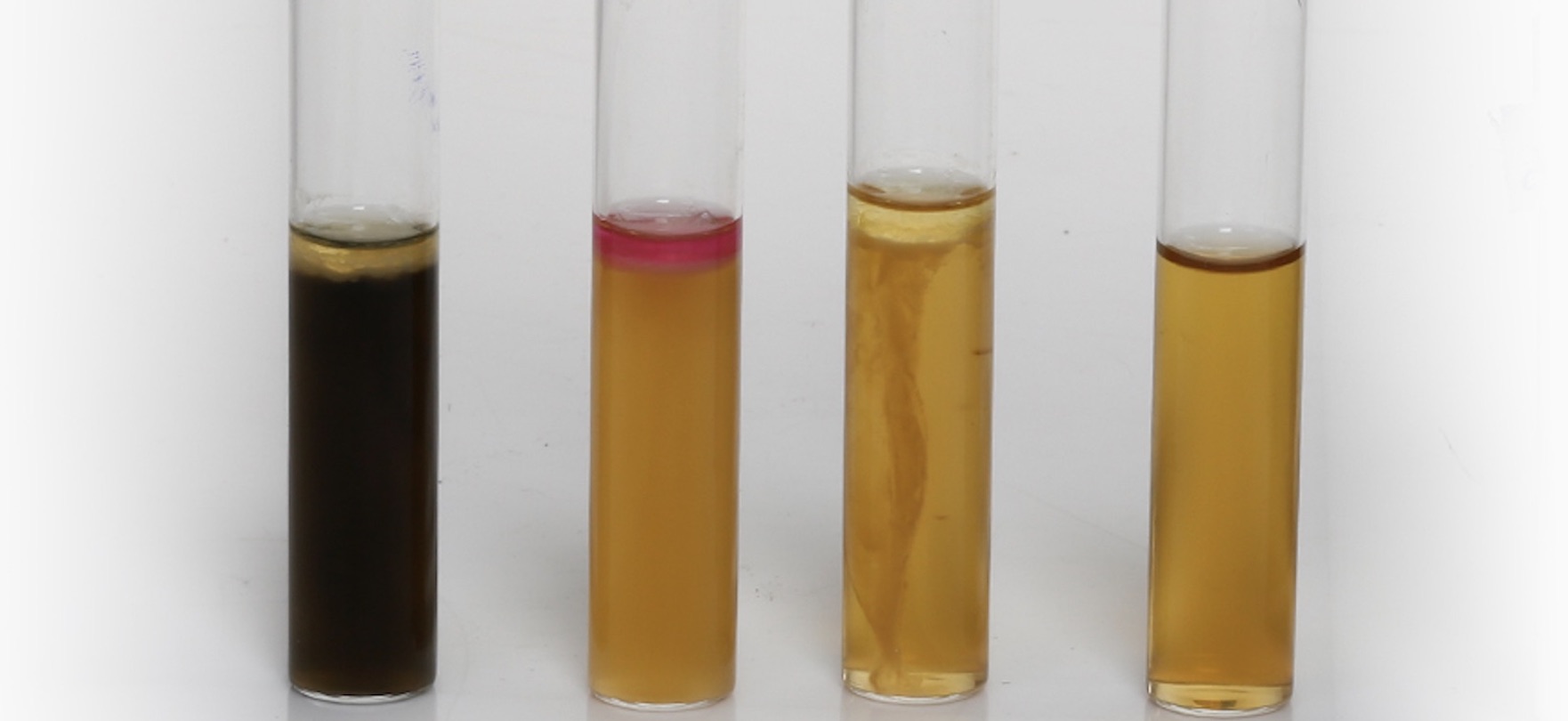
The hydrogen sulfide generated reacts with iron salts incorporated into the medium, producing an insoluble black ferrous sulfide precipitate. The appearance of blackening within the inoculated medium indicates a positive reaction for H2S production. The absence of black precipitate suggests a negative result under the conditions of the test. This reaction provides a useful biochemical distinction between bacterial organisms with different sulfur-metabolizing capacities.
Principle of indole production
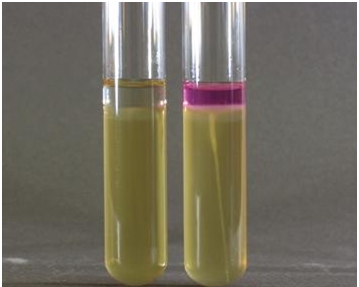
The indole reaction evaluates the capacity of bacteria to metabolize the amino acid tryptophan through the action of the enzyme tryptophanase. Organisms possessing this enzyme can cleave tryptophan, generating indole alongside other metabolic products. Following an appropriate incubation period, Kovac’s reagent is introduced into the culture tube to reveal the presence of indole. When indole is present, it reacts with the reagent to produce a characteristic red or cherry-red layer at the surface of the medium.
A yellow or yellowish layer, without the development of the characteristic red coloration, indicates a negative reaction. This biochemical property is particularly useful in differentiating closely related bacterial species that may otherwise exhibit similar cultural characteristics. The indole reaction therefore provides evidence of a specific enzymatic pathway rather than merely indicating bacterial growth.
Principle of bacterial motility
The motility component of SIM medium is based on the movement of bacterial cells through a semisolid agar matrix. Unlike conventional solid agar media, which restrict the spread of bacterial growth, SIM medium contains a relatively low concentration of agar that permits motile organisms to migrate away from the original inoculation pathway. During inoculation, a sterile straight needle is introduced vertically into the medium and withdrawn along the same line.
After incubation, motile bacteria produce diffuse growth extending outward from the stab line, sometimes resulting in generalized turbidity throughout the medium. Nonmotile organisms, by contrast, typically exhibit growth concentrated along the inoculation track, with little or no surrounding diffusion. This distinction reflects the organism’s capacity for active movement, commonly associated with functional flagella, although the test does not independently establish the precise mechanism of motility.
The combined assessment of sulfide production, indole formation, and motility generates a three-part biochemical profile that supports the presumptive differentiation of bacterial isolates. Each reaction contributes independent information about the organism’s metabolic or physiological characteristics. When interpreted alongside additional biochemical tests, colony morphology, and other laboratory findings, the SIM medium reaction pattern strengthens the identification process and improves the reliability of bacterial characterization.
Composition and functional roles of SIM medium
Sulfide-Indole-Motility (SIM) medium composition includes selected nutritional and chemical components that support bacterial growth while facilitating the observation of distinct metabolic and physiological reactions. These components include peptone, sodium thiosulfate, ferrous ammonium sulfate, and agar. Each ingredient contributes to the diagnostic performance of the medium, making SIM useful for differentiating bacterial species, particularly members of the family Enterobacteriaceae.
The coordinated action of peptone, sodium thiosulfate, ferrous ammonium sulfate, and agar enables SIM medium to combine nutritional support with three complementary diagnostic reactions. These constituents facilitate the differentiation of bacteria according to their sulfur metabolism, tryptophan degradation, and capacity for movement. The reliability of the resulting observations depends on appropriate medium preparation, suitable incubation conditions, and correct interpretation of the biochemical reactions.
1. Peptone
Peptone is a principal nutritional component of SIM medium and supplies amino acids, short peptides, and other nitrogenous compounds required for bacterial development. Of particular importance is its contribution of tryptophan, an amino acid that serves as the precursor for indole formation. Bacteria possessing the enzyme tryptophanase can metabolize tryptophan to produce indole, pyruvate, and ammonia. The indole formed during this reaction can subsequently be detected by adding Kovac’s reagent, which produces a characteristic red layer when the reaction is positive. The availability of suitable nutrients also promotes cellular multiplication, allowing biochemical activities to become sufficiently evident for interpretation.
2. Sodium thiosulfate
Sodium thiosulfate functions as a sulfur-containing substrate that supports the detection of hydrogen sulfide (H2S) production. Certain bacteria possess metabolic pathways that release H2S from sulfur-containing compounds during growth. The liberated gas reacts with the iron salt incorporated into the medium, producing an insoluble black precipitate of iron sulfide. Consequently, localized or extensive blackening of the medium indicates a positive H2S reaction. The distribution of black precipitate may also provide useful information about the location of bacterial growth and sulfur metabolism within the inoculated medium. However, the absence of blackening is interpreted as a negative result only when growth and test conditions are adequate.
3. Ferrous ammonium sulfate
Ferrous ammonium sulfate serves as the indicator component for hydrogen sulfide detection. It supplies ferrous ions that react with H2S generated by bacterial metabolism, resulting in the formation of black iron sulfide. This visible reaction provides a convenient means of distinguishing organisms that produce detectable quantities of hydrogen sulfide from those that do not under the test conditions. The compound therefore plays an essential role in converting an otherwise difficult-to-observe metabolic product into a readily recognizable visual endpoint. Accurate interpretation requires consideration of the overall growth pattern and the possibility that extensive blackening may obscure other features of the medium.
4. Agar
Agar is incorporated into SIM medium at a relatively low concentration to establish a semisolid consistency. Unlike firm agar used in routine isolation plates, this consistency permits motile bacteria to migrate away from the original inoculation track. Motility is therefore assessed by examining whether growth remains concentrated along the stab line or spreads outward through the surrounding medium. Nonmotile organisms generally exhibit growth restricted to the inoculation site, whereas motile organisms produce diffuse growth extending into adjacent areas. The physical properties of agar are consequently central to the motility component of the test.
Preparation of sulfide-indole-motility medium
The preparation of SIM medium is an essential laboratory procedure in microbiological investigations because the reliability of biochemical reactions depends partly on the composition, consistency, and sterility of the culture medium. SIM medium is a semisolid differential medium designed to evaluate hydrogen sulfide production, indole formation, and bacterial motility. Proper preparation ensures that the medium provides suitable nutritional conditions for bacterial growth while preserving the physical properties required for accurate interpretation of these reactions.
Weighing the dehydrated medium: The preparation begins with the measurement of dehydrated SIM medium using an appropriate laboratory balance. The quantity required is determined by the intended final volume and the concentration specified by the manufacturer. Accurate weighing is important because deviations from the recommended formulation may alter agar concentration, nutrient availability, and the visibility of biochemical reactions. Clean weighing equipment should be used to prevent contamination and preserve the integrity of the preparation.
Dissolution in distilled water: The measured powder is transferred into a suitable heat-resistant flask containing the specified volume of distilled or deionized water. The mixture is stirred to disperse the dehydrated ingredients evenly throughout the liquid. Adequate mixing helps prevent the formation of dry aggregates and promotes uniform distribution of nutrients, sulfur-containing compounds, and other constituents. The water volume should be measured accurately to maintain the intended concentration of the medium.
Heating and homogenization: The suspension is heated with frequent mixing according to the manufacturer’s instructions until the dehydrated ingredients dissolve completely. Controlled heating facilitates dissolution and produces a homogeneous preparation. Excessive heating or prolonged boiling should be avoided unless specifically directed by the product instructions, as inappropriate treatment may affect the medium’s chemical characteristics. The preparation should be handled carefully to minimize evaporation and maintain the correct final composition.
Dispensing into culture tubes: After dissolution, the medium is distributed aseptically into clean, suitable test tubes using appropriate laboratory equipment. Each tube should contain a consistent volume sufficient for subsequent inoculation and observation. Adequate headspace should be maintained to facilitate safe handling and prevent spillage during sterilization. The tubes are then prepared for sterilization according to the validated procedure for the selected commercial formulation.
Sterilization of the medium: The dispensed medium is sterilized using an autoclave under the temperature, pressure, and exposure time specified by the manufacturer or an approved laboratory procedure. Sterilization eliminates contaminating microorganisms that could interfere with bacterial growth and biochemical interpretation. Appropriate autoclave loading, validated cycle selection, and safe handling procedures are essential to ensure effective sterilization without unnecessarily compromising medium quality.
Cooling and semisolid formation: Following sterilization, the tubes are removed carefully and positioned upright while the medium cools. As the preparation reaches room temperature, the agar forms a semisolid matrix. This consistency is critical because it allows motile bacteria to migrate away from the inoculation line while restricting the passive spread of nonmotile organisms. Uneven solidification, excessive drying, or physical disturbance may compromise the clarity of subsequent motility observations.
Quality control and storage: The prepared medium is inspected for uniform appearance, appropriate consistency, and evidence of contamination. Representative batches should undergo quality-control testing with suitable reference organisms to verify expected sulfide, indole, and motility reactions. The medium is stored under the conditions recommended by the manufacturer, with appropriate protection against drying, contamination, and deterioration. Tubes showing abnormal appearance, damaged closures, or questionable sterility should not be used for diagnostic testing.
Sulfide production test in sulfide-indole-motility medium
The sulfide production test is an important biochemical procedure used to determine whether bacterial species can generate hydrogen sulfide H2S during the metabolism of sulfur-containing compounds. In SIM medium, this reaction provides a useful characteristic for differentiating closely related bacterial taxa, particularly members of the family Enterobacteriaceae. Hydrogen sulfide formation depends on the metabolic enzymes expressed by an organism and its ability to utilize available sulfur substrates under the conditions of incubation.
SIM medium contains sodium thiosulfate as a sulfur source and an iron-containing compound, commonly ferrous ammonium sulfate, as an indicator system. Bacteria capable of producing hydrogen sulfide may reduce thiosulfate or metabolize other suitable sulfur-containing substrates, releasing H2S into the surrounding medium. The liberated gas subsequently reacts with ferrous ions to form ferrous sulfide (FeS), an insoluble black compound. Localized or extensive blackening of the medium provides visible evidence of a positive sulfide production reaction.
Several bacterial species demonstrate characteristic differences in this biochemical property. Salmonella enterica serovar Typhimurium commonly produces H2S, resulting in blackening of SIM medium (Figure 1). Similarly, Proteus mirabilis and Proteus vulgaris are generally hydrogen sulfide-positive, making this reaction useful when differentiating them from other Gram-negative bacilli. Citrobacter freundii may also produce H2S, although biochemical characteristics can vary among strains.
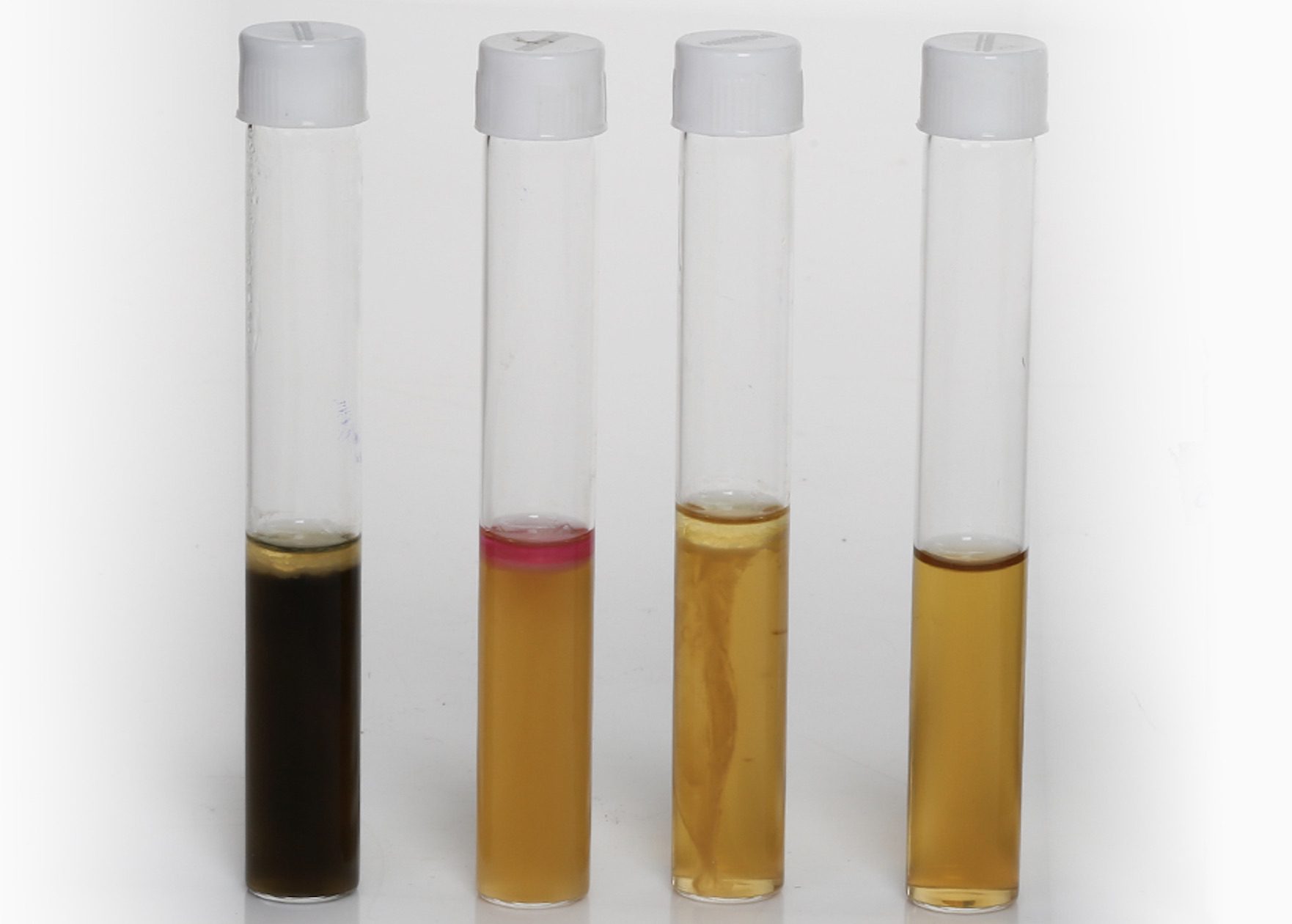
In contrast, Escherichia coli is typically H2S-negative and therefore does not ordinarily produce blackening in SIM medium. Shigella sonnei and Shigella flexneri are generally H2S-negative, providing a useful distinction from many H2S-producing Salmonella isolates. Klebsiella pneumoniae is also usually negative for this reaction. These patterns are typical rather than absolute and should be interpreted alongside additional identification tests.
A positive result is recorded when a distinct black precipitate develops within the medium, even if the darkening is confined to a limited region. A negative result is indicated by the absence of black precipitate after the prescribed incubation period. Importantly, extensive blackening may obscure the underlying growth pattern, so the observation should be documented carefully.
Although the sulfide reaction is valuable for preliminary identification, it should not be used as the sole basis for assigning a bacterial species. Results may be influenced by strain variation, incubation conditions, medium formulation, and the availability of sulfur substrates. Therefore, H2S production should be interpreted together with indole production, motility, colony characteristics, and other relevant biochemical or validated identification methods.
Indole production test in sulfide-indole-motility medium
The indole production test is an important biochemical procedure used to differentiate bacterial species based on their ability to degrade the amino acid tryptophan and produce indole. In Sulfide-Indole-Motility medium, this reaction provides valuable information for the presumptive identification of bacteria, particularly members of the order Enterobacterales. The test relies on the activity of the enzyme tryptophanase, which catalyses the breakdown of tryptophan into indole, pyruvate, and ammonia.
Indole production helps distinguish microorganisms that may otherwise exhibit similar morphological and cultural characteristics. Although the test is relatively simple and informative, its results should not be used alone for definitive bacterial identification. Combining indole reactions with hydrogen sulfide production, motility, colony characteristics, and other biochemical tests improves identification accuracy in clinical, environmental, and research microbiology.
Tryptophan is an amino acid that serves as a substrate for bacterial enzymes. Organisms possessing functional tryptophanase can metabolise tryptophan to produce indole, pyruvate, and ammonia. The reaction can be summarised as follows:
Tryptophan + H2O → Indole + Pyruvate + NH3
During incubation, bacterial growth and enzymatic activity determine whether sufficient indole accumulates in the medium to produce a detectable reaction. Following incubation, Kovac’s reagent is added to the SIM medium. The reagent contains p-dimethylaminobenzaldehyde, which reacts with indole under acidic conditions to form a coloured compound, making indole production visible at the surface of the medium.
Kovac’s reagent is carefully added to the incubated SIM medium according to the manufacturer’s instructions, avoiding unnecessary disturbance of the medium. The result is interpreted based on the colour that develops at the surface. Positive reaction: A red or cherry-red layer forms at the surface, indicating detectable indole production from tryptophan. Negative reaction: A yellow or yellowish layer remains, indicating that indole has not been produced at a detectable level under the test conditions.
Accurate interpretation requires appropriate incubation conditions, correct reagent application, and suitable quality-control procedures. A negative result indicates the absence of detectable indole under the conditions used rather than necessarily proving that the organism can never produce indole.
Indole testing is particularly useful for differentiating closely related enteric bacteria. Several bacterial species exhibit characteristic reactions that contribute to their preliminary identification. Escherichia coli typically produces a positive indole reaction, making this test useful for distinguishing it from several indole-negative enteric organisms. Proteus vulgaris is generally indole-positive, whereas Proteus mirabilis is typically indole-negative. Similarly, Klebsiella oxytoca commonly produces indole, while Klebsiella pneumoniae is generally indole-negative. Citrobacter koseri is usually indole-positive, whereas Citrobacter freundii is typically indole-negative, although biochemical profiles may vary among isolates and identification systems.
Members of the Enterobacter cloacae complex are generally indole-negative. However, biochemical characteristics should always be interpreted in the context of the organism’s overall identification profile. These examples demonstrate the diagnostic value of indole testing in bacterial differentiation. When interpreted alongside hydrogen sulfide production, motility, and other biochemical reactions, the indole test contributes to a more reliable presumptive identification of bacterial isolates.
Motility test in sulfide-indole-motility medium
The motility test in SIM medium is a microbiological technique used to determine whether a bacterial organism possesses the ability to move through a semisolid culture medium. This characteristic is particularly useful in the differentiation and identification of bacterial species that may exhibit similar morphological and biochemical properties. Bacterial motility is commonly associated with the presence of flagella, which function as locomotory structures that enable cells to move through suitable environments. However, bacterial movement can also occur through alternative mechanisms, depending on the organism.
SIM medium contains a relatively low concentration of agar, which produces a semisolid consistency. Unlike solid agar media, which restrict bacterial movement to the inoculation site, semisolid agar permits motile organisms to migrate through the surrounding medium. The resulting growth distribution provides a visible indication of whether the tested organism demonstrates motility under the incubation conditions.
The motility test is performed by introducing a pure bacterial culture into SIM medium using a sterile, straight inoculating needle. The needle is inserted vertically into the medium and withdrawn carefully along the same path to establish a narrow inoculation line. Maintaining a straight stab is essential because excessive movement during inoculation may create misleading growth patterns.
Following incubation under appropriate laboratory conditions, the medium is examined for the distribution of bacterial growth. A motility-positive result is characterized by diffuse growth extending outward from the original stab line. This spreading pattern indicates that the bacteria have moved through the semisolid agar. In contrast, a motility-negative result is indicated by growth confined predominantly to the inoculation line, with little or no visible expansion into the surrounding medium.
Several medically significant bacteria demonstrate positive motility reactions in SIM medium. Escherichia coli, for example, is generally motile because many strains possess peritrichous flagella distributed over their cell surfaces. Following inoculation, motile strains typically produce diffuse growth extending away from the stab line. Similarly, Salmonella enterica is generally motile, and its flagellar activity often produces widespread growth throughout the semisolid medium. Many Proteus species, including Proteus mirabilis, are also motile due to their flagella.
These organisms may exhibit pronounced movement, although the characteristic swarming observed on solid agar is not assessed in the same way in SIM medium. Other examples include Enterobacter cloacae complex and Pseudomonas aeruginosa, which are generally motile under suitable conditions. Motility may vary among strains, and certain species contain nonmotile variants.
The motility reaction contributes to bacterial identification when interpreted alongside sulfide production and indole formation. Because growth patterns may be influenced by inoculation technique, incubation conditions, and strain variability, the motility result should not be used independently to identify an organism. Instead, it forms part of a broader biochemical identification profile.
Procedure for sulfide-indole-motility testing
The Sulfide-Indole-Motility test is performed to investigate three important biochemical characteristics of bacteria: hydrogen sulfide production, indole formation, and motility. Accurate execution of the procedure is essential for obtaining reliable results and differentiating bacterial species according to their metabolic and physiological properties. The test requires properly prepared SIM medium, a pure bacterial culture, a sterile straight inoculating needle, an incubator, and Kovac’s reagent for detecting indole production.
Preparation of the inoculum and test medium
Before inoculation, the prepared SIM medium should be examined to ensure that it has a uniform semisolid consistency and is free from visible contamination. The medium is generally dispensed into test tubes and allowed to solidify in an upright position. A fresh, pure bacterial culture should be selected to minimize the possibility of mixed growth interfering with the interpretation. The test tubes and inoculating materials must be handled aseptically to maintain the integrity of the procedure.
Aseptic inoculation technique
A sterile straight inoculating needle is used to introduce the bacterial inoculum into the SIM medium. The needle is carefully loaded with a small amount of growth from the selected bacterial culture. Using a straight needle rather than a loop is important because the narrow inoculation track enables the assessment of bacterial movement through the semisolid medium. Care should be taken to prevent contamination during the transfer of the organism.
Stab inoculation of the medium
The inoculating needle is inserted vertically into the centre of the medium, following a single straight path. It is advanced carefully to an appropriate depth and withdrawn along the same track. Repeated stabbing, sideways movement, or unnecessary disturbance of the medium should be avoided because these actions may produce misleading growth patterns. A properly executed stab line provides a clear reference point for distinguishing motile bacteria from nonmotile organisms.
Incubation of the inoculated tubes
Following inoculation, the tubes are incubated under the temperature and duration recommended for the organism being examined and the specific medium formulation. Incubation permits bacterial growth and the development of detectable biochemical reactions. Excessive incubation should be avoided when it may interfere with the interpretation of the results. Appropriate positive and negative control organisms may be included to confirm that the medium and testing procedure are functioning correctly.
Examination for hydrogen sulfide production
After incubation, the medium is inspected for blackening along the stab line or in the surrounding agar. Hydrogen sulfide-producing bacteria generate H2S, which reacts with iron-containing compounds in the medium to form a black precipitate. Visible blackening is interpreted as a positive sulfide reaction. If blackening is absent, the reaction is recorded as negative, provided that the test conditions and growth are adequate.
Detection of indole formation
Indole production is assessed by adding the recommended amount of Kovac’s reagent to the surface of the incubated medium. The reagent reacts with indole produced when bacteria break down tryptophan through tryptophanase activity. The development of a red or cherry-red layer at the surface indicates a positive indole reaction, whereas a yellow or unchanged reagent layer indicates a negative reaction according to the applicable test protocol.
Assessment of bacterial motility
Motility is determined by examining the distribution of bacterial growth within the semisolid agar. Motile organisms typically produce diffuse growth spreading outward from the original stab line. Nonmotile organisms generally remain concentrated along the inoculation track, with little or no lateral spread. The interpretation should account for the clarity of the stab line, the extent of growth, and any evidence of accidental disturbance.
Recording and reporting of results
The final observations are recorded separately for sulfide production, indole formation, and motility. Each reaction is reported as positive or negative, with a brief description of the observed characteristics. The combined biochemical profile can support the differentiation of bacterial isolates when interpreted alongside additional identification tests. Results should be evaluated carefully because no single SIM reaction is sufficient to establish the identity of a bacterial species.
Interpretation and diagnostic importance of SIM test
The interpretation of Sulfide-Indole-Motility medium is based on the detection of three bacterial characteristics: hydrogen sulfide production, indole formation, and motility. These biochemical reactions help differentiate bacterial species with similar morphological and cultural characteristics. Each reaction is assessed independently, and the combined results provide a biochemical profile that supports the presumptive identification of the test organism.
Hydrogen sulfide production is indicated by the formation of a black precipitate in the medium. This occurs when bacteria produce hydrogen sulfide, which reacts with iron salts to form an insoluble black compound. Blackening indicates a positive result, whereas the absence of blackening indicates a negative reaction under the test conditions. Extensive blackening may obscure the underlying growth pattern.
Indole production is determined by adding Kovac’s reagent to the incubated medium. Bacteria that produce the enzyme tryptophanase can degrade tryptophan and release indole. A cherry-red layer at the surface indicates a positive reaction, while a yellow or unchanged reagent layer indicates a negative result. This test is particularly useful for differentiating closely related enteric bacteria.
Motility determination is based on the distribution of bacterial growth in the semisolid agar. Motile organisms produce diffuse growth extending away from the inoculation line, whereas nonmotile organisms generally grow along the stab track. Accurate interpretation requires careful inoculation because excessive movement of the inoculating needle may cause misleading growth patterns.
The diagnostic importance of SIM medium lies in its ability to assess three complementary biochemical characteristics in a single test tube. The combined reaction pattern helps distinguish enteric bacteria, including members of the genera Escherichia, Salmonella, and Proteus. Differences in hydrogen sulfide production, indole formation, and motility can assist in differentiating organisms with otherwise similar characteristics. However, SIM results are not sufficient for definitive identification and should be interpreted alongside additional biochemical tests, colony morphology, and other appropriate identification methods. Proper inoculation, incubation, reagent application, and quality control are essential for reliable and reproducible results.
References
Chen, C. H., Tsay, W. F., Huang, L. U., Lee, J. H., & Lu, W. C. (1992). Six semi-solid media methods for detecting motility of gram-negative bacilli. Zhonghua Yi Xue Za Zhi (Taipei), 49(3), 164–169.
Ederer, G. M., Lund, M. E., Blazevic, D. J., Reller, L. B., & Mirrett, S. (1975). Motility-indole-lysine-sulfide medium. Journal of Clinical Microbiology, 2(3), 266–267.
MacFaddin, J. F. (1985). Media for isolation-cultivation-identification-maintenance of medical bacteria (Vol. 1). Williams & Wilkins.
Discover more from Microbiology Class
Subscribe to get the latest posts sent to your email.