
The Poxviridae family represents one of the most biologically distinctive groups of DNA viruses known to infect both vertebrate and invertebrate hosts. Unlike most DNA viruses, which replicate within the nucleus of host cells, poxviruses carry out their entire replication cycle in the cytoplasm, a feature that necessitates an unusually complex viral genome encoding many of the enzymes required for transcription and replication.
Members of this family are responsible for a broad spectrum of diseases in humans, animals, birds, and insects. Among the most historically significant pathogens in human medicine is the variola virus, the causative agent of smallpox, a disease that was globally eradicated in 1977 through an unprecedented vaccination campaign.
Other medically and veterinary important members include vaccinia virus, used in smallpox vaccination; monkeypox virus, the cause of mpox; and cowpox virus, historically important in the development of immunization.
Poxviruses are notable not only for their pathogenicity but also for their exceptional size and structural complexity. They are among the largest known viruses, visible under light microscopy in some cases, and possess a highly organized virion architecture.
Taxonomy and classification of Poxviridae family
The Poxviridae family comprises large, structurally complex double-stranded DNA viruses distinguished by cytoplasmic replication and an exceptionally broad host range. Taxonomically, the family is divided into two subfamilies based primarily on host specificity, evolutionary lineage, and genomic organization:
- Subfamily Chordopoxvirinae. This family infect vertebrates.
- Subfamily Entomopoxvirinae: This family infect invertebrates (especially insects).
Among these, Chordopoxvirinae is the most medically and veterinary relevant, containing all known poxviruses that infect humans and domestic animals.
Subfamily Chordopoxvirinae
The Chordopoxvirinae subfamily includes poxviruses that infect vertebrate hosts such as mammals, birds, and occasionally reptiles. These viruses are characterized by:
- Large linear double-stranded DNA genomes
- Cytoplasmic replication in viral “factories”
- Complex virion architecture (brick-shaped or ovoid)
- Extensive encoding of immune evasion and host-modulatory proteins
This subfamily is subdivided into eight genera, each defined by host range, disease manifestation, antigenic properties, and genetic relationships. The genera within Chordopoxvirinae demonstrate remarkable diversity in host range, pathogenicity, and ecological impact. While some genera are primarily of veterinary importance, others have had profound effects on human history and global health, particularly the Orthopoxvirus genus.
Orthopoxvirus
The genus Orthopoxvirus is the most medically significant within the Poxviridae family and has had a profound impact on human history and immunology. Members of this genus have a broad host range, infecting humans, rodents, cattle, and primates.
Key species of Orthopoxvirus include:
- Variola virus (causative agent of smallpox)
- Vaccinia virus (used as the live vaccine strain for smallpox eradication)
- Monkeypox virus (mpox virus) (zoonotic emerging pathogen)
- Cowpox virus (historically linked to early vaccination development)
Orthopoxviruses share strong antigenic similarity, which explains the cross-protective immunity observed in vaccination. This genus is also characterized by relatively large genomes (~200-240 kb) encoding sophisticated immune evasion systems, including cytokine decoys and complement-binding proteins.
Clinically, infections caused by Orthopoxviruses range from:
- Severe systemic disease (smallpox, historically), to
- Zoonotic skin infections (cowpox, mpox), and
- Localized lesions in accidental hosts
Parapoxvirus
The Parapoxvirus genus includes zoonotic viruses primarily associated with livestock and occupational exposure. These viruses are highly resilient in the environment and can survive on fomites such as animal equipment and contaminated surfaces.
Major species of Parapoxvirus include:
- Orf virus (infects sheep and goats)
- Pseudocowpox virus (infects cattle)
- Bovine papular stomatitis virus (zoonotic poxvirus of cattle)
Parapoxvirus lesions are typically nodular, proliferative, and localized, often appearing on hands and arms of humans in contact with infected animals. The infections are generally self-limiting but can be painful and slow to resolve. A notable feature is their ability to induce strong localized inflammatory responses while rarely causing systemic illness in immunocompetent hosts.
Avipoxvirus
The Avipoxvirus genus infects a wide range of avian species, including domestic poultry, wild birds, and endangered species. These viruses are globally distributed and have important ecological and agricultural implications.
Transmission of Avipoxvirus occurs through:
- Mechanical vectors such as mosquitoes
- Direct contact with infected birds
- Contaminated surfaces
Disease presentation due to Avipoxvirus infection occurs in two major forms:
- Cutaneous (dry form): wart-like lesions on unfeathered skin regions such as combs, eyelids, and legs
- Diphtheritic (wet form): lesions in oral and respiratory mucosa, potentially leading to respiratory distress
Avipoxviruses can significantly reduce fitness in wild bird populations and cause economic losses in poultry farming due to reduced productivity and secondary infections.
Yatapoxvirus
The Yatapoxvirus genus primarily infects non-human primates, although occasional zoonotic infections in humans have been documented. These viruses are relatively rare but biologically interesting due to their ability to induce proliferative or tumor-like lesions.
Important species of Yatapoxvirus include:
- Tanapox virus
- Yaba monkey tumor virus
Human infection is typically associated with:
- Localized nodular skin lesions
- Mild febrile illness in some cases
A distinctive feature of this genus is its association with benign tumor formation in primate hosts, which provides insight into virus-induced cell proliferation mechanisms.
Capripoxvirus
The Capripoxvirus genus is of major importance in veterinary medicine and livestock production. It includes pathogens that affect sheep, goats, and cattle, often causing significant economic losses.
Key species of Capripoxvirus include:
- Sheep pox virus
- Goat pox virus
- Lumpy skin disease virus (cattle)
These viruses are characterized by:
- High morbidity in naïve populations
- Fever, generalized skin nodules, and lymphadenopathy
- Reduced milk and meat production
Transmission of Capripoxvirus occurs through:
- Direct contact with lesions
- Insect vectors (especially biting flies)
Capripoxviruses are particularly important in regions with intensive livestock farming, where outbreaks can severely impact food security and trade.
Molluscipoxvirus
The Molluscipoxvirus genus contains a single species of major human relevance:
- Molluscum contagiosum virus
This virus exclusively infects humans and is highly prevalent worldwide, especially in children and immunocompromised individuals.
Clinical features of Molluscipoxvirus include:
- Small, flesh-colored, dome-shaped papules
- Central umbilication (a key diagnostic feature)
- Usually painless lesions that may persist for months
Transmission of Molluscipoxvirus occurs through:
- Direct skin-to-skin contact
- Fomites (towels, clothing)
- Sexual contact in adults
Although generally benign and self-limiting, infection can be more extensive and persistent in immunosuppressed patients, including those with HIV.
Suipoxvirus
The Suipoxvirus genus infects domestic pigs and is responsible for swine pox, a disease generally considered mild but economically relevant in pig farming systems.
Clinical manifestations of Suipoxvirus include:
- Vesicular and pustular skin lesions
- Mild fever in some cases
- Reduced growth performance in affected herds
Transmission of Suipoxvirus occurs primarily through:
- Direct contact between pigs
- Mechanical transmission via mites and other ectoparasites
While mortality is low, outbreaks can lead to production losses and increased management costs in intensive farming environments.
Leporipoxvirus
The Leporipoxvirus genus infects rabbits, hares, and occasionally other lagomorphs. It includes some of the most ecologically and historically significant poxviruses.
Key species of Leporipoxvirus include:
- Myxoma virus
- Shope fibroma virus
Myxoma virus is particularly notable for its role in biological control of rabbit populations, especially in Australia and parts of Europe, where it was introduced to control invasive rabbit species.
Disease manifestations of Leporipoxvirus infection include:
- Severe systemic disease in susceptible rabbit populations
- Swelling, skin tumors, and mucosal lesions
- High mortality in non-adapted hosts
Over time, both viral attenuation and host resistance have been observed, making this system a classic example of host-pathogen co-evolution.
Morphology and structural characteristics of poxviruses
Poxviruses exhibit one of the most structurally complex and highly organized virion architectures among all known viruses. This complexity is not incidental but is fundamentally tied to their large double-stranded DNA genome, cytoplasmic replication strategy, and broad host range spanning vertebrates and invertebrates. In contrast to many other DNA viruses that depend extensively on host nuclear enzymes and regulatory systems, poxviruses are comparatively self-sufficient. Their virions are therefore “pre-packaged” with a wide array of functional proteins, including enzymes required for transcription initiation, mRNA processing, and early immune evasion, allowing infection to proceed immediately upon entry into the host cell cytoplasm.
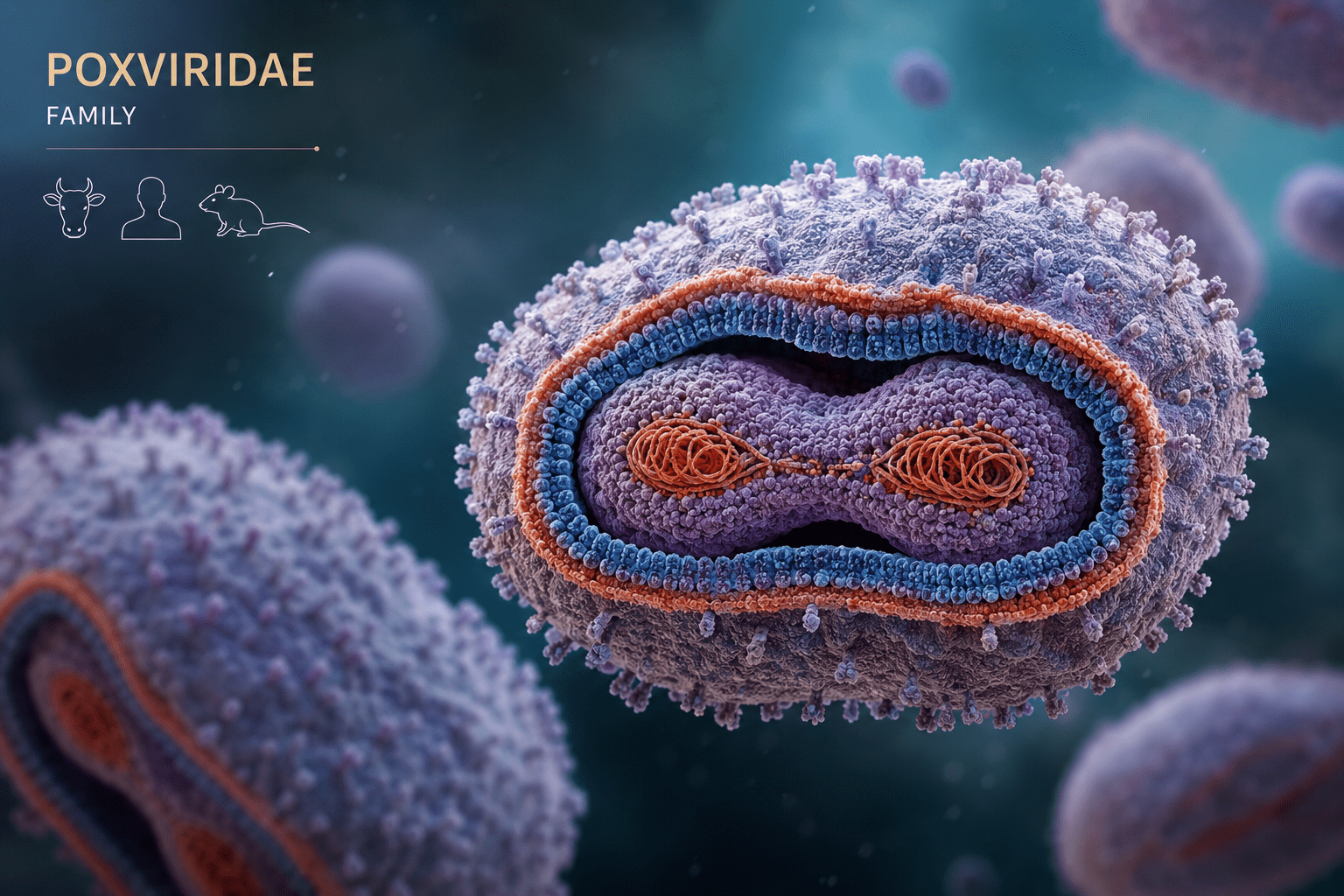
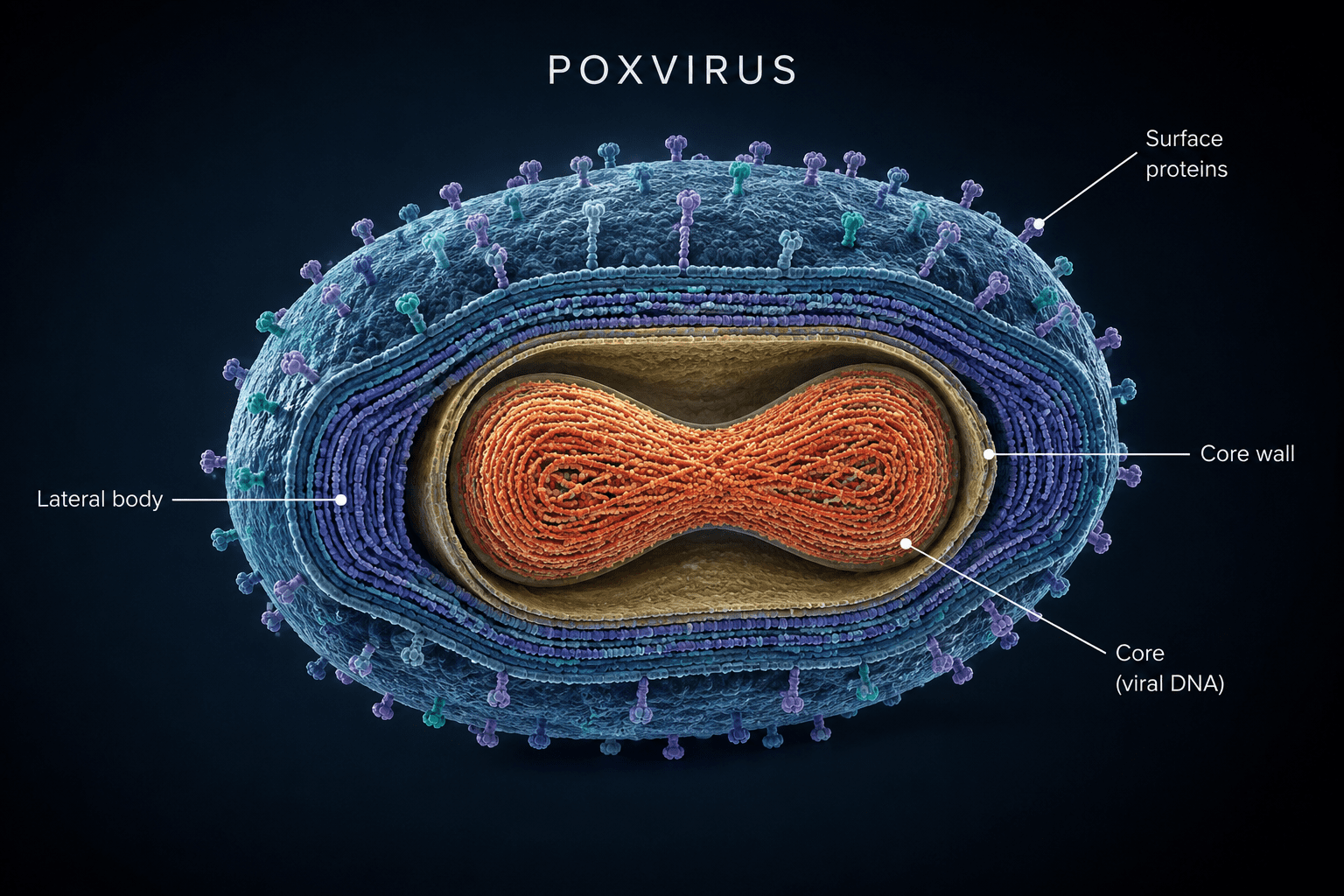
Morphologically, poxviruses are among the largest known viruses, typically exhibiting a distinctive brick-shaped or ovoid structure with a complex, multi-layered organization. The virion consists of a dense central core that houses the linear dsDNA genome, flanked by lateral bodies and enclosed within a proteinaceous core wall. Surrounding these internal structures is an outer envelope derived from host cellular membranes during viral egress. This envelope is embedded with viral glycoproteins that mediate attachment to host cell receptors and facilitate membrane fusion during entry.
A defining structural feature of poxviruses is their internal enzymatic cargo. Unlike most viruses, which rely on host nuclear transcription machinery, poxviruses carry within their virion a complete transcriptional apparatus, including viral DNA-dependent RNA polymerase, capping enzymes, poly(A) polymerase, and transcription factors. This allows early gene expression to begin immediately after uncoating in the cytoplasm, independent of nuclear access. This level of autonomy is a direct consequence of their structural elaboration and large coding capacity.
The overall morphology of poxviruses is closely aligned with their replication strategy, which occurs entirely within specialized cytoplasmic regions known as viral factories. These structures serve as organized hubs for viral genome replication, transcription, and virion assembly. The physical design of the virion thus supports a highly coordinated infection cycle, ensuring both stability outside the host and efficiency once inside.
In evolutionary terms, the structural sophistication of poxviruses represents a successful adaptation toward replication independence. Their size, genomic complexity, and internal enzymatic systems collectively reduce reliance on host cell processes, distinguishing them sharply from most other DNA virus families. This integrated structural-functional organization makes poxviruses among the most evolutionarily advanced and self-contained viral systems known in nature.
Poxvirus virion size, shape, and biological implications
Poxviruses are recognized as the largest known viruses infecting animals, and their size has important biological and diagnostic implications.
They typically measure:
- Length: 220-450 nm
- Width: 140-260 nm
- Thickness: 120-240 nm
To put this into perspective, poxviruses are significantly larger than most other medically important viruses. For example, influenza viruses are often less than 120 nm in diameter. Because of their relatively large size, poxviruses are sometimes visible under advanced light microscopy, although electron microscopy remains the definitive method for structural analysis.
The large size of poxviruses is not merely a physical curiosity; it reflects functional necessity. The virion must accommodate:
- A large double-stranded DNA genome
- A full set of transcription enzymes
- Structural proteins required for assembly
- Proteins involved in immune evasion and host manipulation
The size of poxviruses is directly tied to their biological independence. Unlike many viruses that “borrow” host machinery, poxviruses physically carry much of what they need to begin replication immediately after entering the host cell.
Brick-shaped architecture, envelope organization, and internal structure of poxvirus
Brick-shaped virion design of poxvirus
One of the most distinctive features of poxviruses is their brick-shaped or ovoid morphology (Figure 1). This shape is highly consistent across the family and serves as a key diagnostic marker in electron microscopy. The rigid shape is maintained by an internal protein scaffold that provides structural integrity. This architecture helps the virus:
- Resist environmental degradation
- Maintain stability during transmission
- Protect its large genome and enzymatic cargo
Unlike spherical viruses, which rely primarily on lipid envelopes for structure, poxviruses rely heavily on internal protein organization.
Envelope structure and function of poxvirus
Poxviruses are enveloped viruses, meaning they are surrounded by a lipid membrane. This envelope is derived from host cellular membranes but is extensively modified by viral proteins. The envelope of poxvirus serves several essential roles:
- It contains viral glycoproteins responsible for attachment to host cells
- It facilitates fusion with host membranes during entry
- It helps the virus evade immune detection by mimicking host cell surfaces
However, the envelope is relatively fragile in the external environment. This fragility contributes to the transmission pattern of many poxviruses, which often require close contact or respiratory droplets rather than long-range airborne spread.
Core structure and internal organization of poxvirus
Inside the virion lies a highly organized central core, which functions as the control center of the virus during early infection. The core of poxvirus contains:
- Linear double-stranded DNA genome
- Viral transcription enzymes
- Structural proteins that protect the genome
Flanking the core are lateral bodies, which are protein-rich structures that are released early after infection. These proteins help poxvirus to:
- Modify host cell defenses
- Support early viral gene expression
- Facilitate transition from entry to replication
Surrounding these internal structures is a dense protein coat that stabilizes the virion and assists in assembly during viral replication. This multi-layered architecture ensures that once the virus enters a host cell, it can rapidly initiate transcription without waiting for host nuclear processes.
Genome characteristics and functional capacity of poxvirus
The poxvirus genome is one of the largest among animal viruses, with remarkable coding capacity. Key characteristics include:
- Genome type: linear double-stranded DNA (dsDNA)
- Size range: 130-375 kilobase pairs
- Gene content: often more than 200 genes
This genome is functionally dense and encodes a wide range of proteins that support almost every step of viral replication. These steps include:
- DNA-dependent RNA polymerase, which enables transcription without nuclear enzymes
- DNA replication enzymes such as polymerases and helicases
- Transcription factors regulating viral gene expression timing
- Enzymes that modify viral mRNA (capping, polyadenylation)
- Proteins that suppress host immune responses
This extensive genetic repertoire is unusual for viruses and reflects a high level of evolutionary adaptation toward independence from host cellular machinery.
Unique biological features of poxvirus: cytoplasmic replication of poxviruses
One of the most remarkable biological properties of poxviruses is their ability to complete their entire replication cycle in the cytoplasm of infected cells, without entering the nucleus. This is highly unusual because most DNA viruses depend on the nucleus for replication and transcription. This cytoplasmic replication strategy fundamentally distinguishes poxviruses from nearly all other DNA virus families.
Why cytoplasmic replication is unusual and advantageous
In most DNA viruses, replication occurs in the nucleus because that is where the host cell provides essential machinery such as:
- DNA polymerases
- RNA polymerase II for transcription
- RNA processing enzymes
However, poxviruses have evolved to bypass the nucleus entirely. Instead, they replicate in specialized regions of the cytoplasm known as viral factories. These viral factories are not pre-existing structures in the cell; rather, they are reorganized areas of cytoplasm created by viral proteins after infection. Within these factories, the virus conducts:
- Genome replication
- Transcription of viral genes
- Assembly of new virions
To support this process, poxviruses must encode their own complete replication system. This independence is rare among DNA viruses and represents a significant evolutionary innovation. The advantage of this strategy includes:
- Avoidance of nuclear antiviral defenses
- Independence from host cell cycle stage
- Ability to infect non-dividing cells
- Faster initiation of replication after entry
However, this autonomy requires a large genome and complex virion structure, making poxviruses among the most genetically elaborate viruses known.
Viral independence and self-encoded replication machinery
Because poxviruses do not access the nucleus, they must carry or encode nearly all enzymes required for gene expression and genome replication. This makes them unusually self-sufficient compared to other viruses.
Transcription machinery of poxvirus
Poxviruses encode a complete transcription system, including:
- DNA-dependent RNA polymerase, which synthesizes viral mRNA directly in the cytoplasm
- Transcription initiation and termination factors that regulate gene expression
- RNA-modifying enzymes that process viral transcripts
This allows the virus to produce mRNA without relying on host nuclear RNA polymerase.
RNA processing enzymes in poxvirus replication
After transcription, viral mRNA must be modified to resemble host mRNA and evade immune detection. Poxviruses encode enzymes that perform:
- 5’ capping of mRNA
- Polyadenylation of transcripts
- Methylation modifications for stability and translation efficiency
These modifications ensure that viral mRNA is efficiently translated by host ribosomes.
DNA replication machinery in poxvirus replication
For genome replication, poxviruses encode:
- Viral DNA polymerase
- Helicase and primase enzymes for strand separation and primer synthesis
- DNA ligase for joining DNA fragments
- Nucleotide metabolism enzymes that support DNA synthesis
These components allow complete replication of the viral genome within cytoplasmic viral factories.
Regulation of gene expression in poxvirus replication
Poxvirus gene expression occurs in a tightly controlled temporal sequence:
- Early genes: expressed immediately after infection; involved in immune evasion and preparing replication machinery
- Intermediate genes: activate DNA replication
- Late genes: produce structural proteins for virion assembly
This regulation ensures efficient use of resources and proper assembly of infectious particles.
Biological significance of cytoplasmic replication
The ability to replicate in the cytoplasm provides several major biological advantages:
- Rapid infection cycles without nuclear entry delays
- Reduced exposure to nuclear immune sensing mechanisms
- Flexibility in infecting diverse cell types, including non-dividing cells
- Greater independence from host cellular conditions
At the same time, this strategy requires poxviruses to maintain one of the largest and most complex viral genomes, reflecting a trade-off between independence and genetic economy.
Replication cycle of poxviruses
The replication cycle of poxviruses is one of the most distinctive and complex among DNA viruses because it occurs entirely within the cytoplasm of the infected host cell rather than in the nucleus. Most DNA viruses depend heavily on the host cell’s nuclear machinery for genome replication and transcription; however, poxviruses possess unusually large double-stranded DNA genomes that encode many of the enzymes and regulatory proteins necessary for their own replication. This unique feature enables them to complete their entire life cycle independently of the host nucleus.
The replication process begins with attachment and entry into a susceptible host cell. Infection is initiated when viral envelope proteins and glycoproteins specifically recognize and bind to receptors present on the surface of the host cell membrane. These interactions determine host specificity and cellular tropism. Following successful attachment, the virus enters the cell through either direct membrane fusion with the host plasma membrane or through endocytosis, a process in which the host cell engulfs the virus into intracellular vesicles. Once internalized, structural changes in the viral envelope facilitate the delivery of the viral core into the cytoplasm.
The next stage is uncoating, during which the outer viral structures are progressively removed to expose the viral genome. Unlike many DNA viruses that transport their genome into the nucleus, poxviruses release their core directly into the cytoplasm. Importantly, the viral core contains prepackaged enzymes, including a DNA-dependent RNA polymerase and transcription factors, which permit immediate initiation of gene expression after entry. This early transcription activity is essential because the host cell cytoplasm normally lacks the machinery required to transcribe viral DNA.
During early gene expression, viral enzymes transcribe a set of early genes from the viral genome. These genes encode proteins necessary for subsequent stages of infection, including factors involved in DNA replication, nucleotide metabolism, host range determination, and immune evasion. Early proteins also play a critical role in modifying the intracellular environment to favor viral replication. Many poxvirus proteins actively interfere with host immune defenses by suppressing interferon responses, inhibiting inflammatory signaling pathways, and preventing programmed cell death (apoptosis). These immune-modulating mechanisms allow the virus to establish infection and evade early host antiviral responses.
Once sufficient early proteins have accumulated, the virus proceeds to DNA replication. Replication occurs within specialized regions of the cytoplasm known as viral factories or virosomes. These are organized structures formed by the virus to concentrate viral genomes, enzymes, and structural proteins in a localized environment optimized for efficient replication. Viral DNA synthesis is catalyzed by virus-encoded DNA polymerase, allowing genome amplification independently of host nuclear enzymes. Multiple copies of the viral genome are generated during this stage, creating templates for subsequent gene expression and virion assembly.
Following genome replication, the infection enters the phase of late gene expression. Late genes encode proteins that primarily serve structural and assembly functions. These include membrane proteins, core proteins, enzymes packaged into mature virions, and components required for virion morphogenesis. The synthesis of structural proteins marks the beginning of new virus particle formation.
The assembly and maturation stage occurs within the cytoplasmic viral factories where newly synthesized genomes and structural components are organized into developing virions. Initially, immature spherical particles are formed through a highly coordinated process of membrane acquisition and protein assembly. These immature virions subsequently undergo extensive structural rearrangements, condensation of the viral core, and incorporation of essential enzymes to become fully mature and infectious intracellular mature virions.
The final stage of the replication cycle is viral release. Mature poxvirus particles can exit infected cells through two principal mechanisms. One mechanism involves cell lysis, in which destruction of the host cell releases large numbers of viral particles into surrounding tissues. Alternatively, some virions acquire an additional envelope by budding through intracellular membranes and subsequently exit the cell without immediate destruction of the host. This budding process generates enveloped extracellular virions that facilitate viral dissemination and spread to neighboring cells. Through these coordinated stages of attachment, entry, replication, assembly, and release, poxviruses efficiently propagate while maintaining their unique independence from host nuclear machinery.
Replication cycle of poxviruses
The replication cycle of poxviruses is one of the most distinctive and complex among DNA viruses because it occurs entirely within the cytoplasm of the infected host cell rather than in the nucleus. Most DNA viruses depend heavily on the host cell’s nuclear machinery for genome replication and transcription; however, poxviruses possess unusually large double-stranded DNA genomes that encode many of the enzymes and regulatory proteins necessary for their own replication. This unique feature enables them to complete their entire life cycle independently of the host nucleus.
The replication process begins with attachment and entry into a susceptible host cell. Infection is initiated when viral envelope proteins and glycoproteins specifically recognize and bind to receptors present on the surface of the host cell membrane. These interactions determine host specificity and cellular tropism. Following successful attachment, the virus enters the cell through either direct membrane fusion with the host plasma membrane or through endocytosis, a process in which the host cell engulfs the virus into intracellular vesicles. Once internalized, structural changes in the viral envelope facilitate the delivery of the viral core into the cytoplasm.
The next stage is uncoating, during which the outer viral structures are progressively removed to expose the viral genome. Unlike many DNA viruses that transport their genome into the nucleus, poxviruses release their core directly into the cytoplasm. Importantly, the viral core contains prepackaged enzymes, including a DNA-dependent RNA polymerase and transcription factors, which permit immediate initiation of gene expression after entry. This early transcription activity is essential because the host cell cytoplasm normally lacks the machinery required to transcribe viral DNA.
During early gene expression, viral enzymes transcribe a set of early genes from the viral genome. These genes encode proteins necessary for subsequent stages of infection, including factors involved in DNA replication, nucleotide metabolism, host range determination, and immune evasion. Early proteins also play a critical role in modifying the intracellular environment to favor viral replication. Many poxvirus proteins actively interfere with host immune defenses by suppressing interferon responses, inhibiting inflammatory signaling pathways, and preventing programmed cell death (apoptosis). These immune-modulating mechanisms allow the virus to establish infection and evade early host antiviral responses.
Once sufficient early proteins have accumulated, the virus proceeds to DNA replication. Replication occurs within specialized regions of the cytoplasm known as viral factories or virosomes. These are organized structures formed by the virus to concentrate viral genomes, enzymes, and structural proteins in a localized environment optimized for efficient replication. Viral DNA synthesis is catalyzed by virus-encoded DNA polymerase, allowing genome amplification independently of host nuclear enzymes. Multiple copies of the viral genome are generated during this stage, creating templates for subsequent gene expression and virion assembly.
Following genome replication, the infection enters the phase of late gene expression. Late genes encode proteins that primarily serve structural and assembly functions. These include membrane proteins, core proteins, enzymes packaged into mature virions, and components required for virion morphogenesis. The synthesis of structural proteins marks the beginning of new virus particle formation.
The assembly and maturation stage occurs within the cytoplasmic viral factories where newly synthesized genomes and structural components are organized into developing virions. Initially, immature spherical particles are formed through a highly coordinated process of membrane acquisition and protein assembly. These immature virions subsequently undergo extensive structural rearrangements, condensation of the viral core, and incorporation of essential enzymes to become fully mature and infectious intracellular mature virions.
The final stage of the replication cycle is viral release. Mature poxvirus particles can exit infected cells through two principal mechanisms. One mechanism involves cell lysis, in which destruction of the host cell releases large numbers of viral particles into surrounding tissues. Alternatively, some virions acquire an additional envelope by budding through intracellular membranes and subsequently exit the cell without immediate destruction of the host. This budding process generates enveloped extracellular virions that facilitate viral dissemination and spread to neighboring cells. Through these coordinated stages of attachment, entry, replication, assembly, and release, poxviruses efficiently propagate while maintaining their unique independence from host nuclear machinery.
Pathogenesis, disease mechanisms, and human diseases caused by poxviruses
The pathogenesis of poxvirus infections involves a complex interaction between viral replication, host immune responses, and highly evolved viral immune-modulating mechanisms that together determine disease severity and clinical outcome. Unlike many other DNA viruses, poxviruses replicate entirely within the cytoplasm of infected cells and therefore encode a broad array of proteins necessary not only for replication but also for manipulation of host defense systems. Disease development begins when the virus gains entry into susceptible host cells and initiates replication, leading to direct cellular injury and systemic immune responses.
One of the principal mechanisms through which poxviruses produce disease is direct cell lysis. Following infection, the virus extensively replicates within host cells, resulting in cellular damage, disruption of normal metabolic activities, and eventual destruction of infected tissues. The release of newly formed viral particles permits further spread to neighboring cells and contributes to tissue injury and lesion formation. In epithelial tissues, this destructive process often manifests clinically as characteristic skin eruptions and mucosal lesions.
In addition to direct tissue destruction, poxvirus infections provoke significant inflammatory immune responses. Recognition of viral components by the host immune system triggers activation of inflammatory pathways and recruitment of immune cells to sites of infection. Cytokines and inflammatory mediators released during this process contribute to many of the systemic symptoms observed in infected individuals, including fever, malaise, pain, and local tissue swelling. Although inflammation serves a protective role in limiting viral dissemination, excessive inflammatory responses may also contribute to disease pathology and worsen clinical manifestations.
A defining feature of poxvirus biology is their remarkable ability to evade host immune defenses. Poxviruses encode numerous proteins specifically designed to interfere with both innate and adaptive immune mechanisms, thereby enhancing viral survival and facilitating continued replication. These viruses produce proteins capable of inhibiting interferon activity, which normally serves as one of the body’s earliest antiviral defense mechanisms by restricting viral replication and activating immune responses. By suppressing interferon signaling, poxviruses create a more permissive intracellular environment for replication.
Poxviruses possess strategies to block complement activation, preventing complement-mediated destruction of infected cells and reducing viral clearance by the immune system. They also interfere with cytokine signaling pathways, disrupting communication among immune cells and weakening coordinated antiviral responses. Another important immune evasion mechanism involves interference with apoptosis, the programmed cell death process that hosts often use to eliminate infected cells before viruses can complete replication. By delaying or preventing apoptosis, poxviruses prolong the lifespan of infected cells and maximize production of infectious progeny. These immune-modulating strategies contribute significantly to viral persistence, transmission, and disease progression.
Among human poxvirus diseases, smallpox, caused by the variola virus, remains one of the most historically significant infectious diseases. Before eradication, smallpox caused widespread epidemics and substantial mortality across the world. Following exposure, the disease typically had an incubation period of approximately 10-12 days, during which infected individuals remained asymptomatic. Clinical onset was abrupt and characterized by high fever, severe headache, malaise, and intense back pain, followed shortly by development of a distinctive maculopapular rash that progressed into fluid-filled pustules. Transmission occurred primarily through respiratory droplets during close person-to-person contact, although direct contact with lesions or contaminated materials also contributed to spread. Patients generally became infectious once skin lesions appeared. Severe forms, particularly variola major, carried mortality rates approaching 30%. Through coordinated international vaccination efforts and surveillance programs, smallpox became the first and so far only human infectious disease to be globally eradicated, with the final naturally occurring case recorded in 1977.
Another medically important human poxvirus infection is mpox, formerly known as monkeypox. Mpox is a zoonotic disease, meaning it can be transmitted from animals to humans while also sustaining human-to-human transmission. Clinically, mpox resembles a milder form of smallpox and commonly presents with fever, enlarged lymph nodes (lymphadenopathy), and a characteristic pustular rash. Unlike smallpox, lymph node enlargement is a prominent feature and may assist in clinical differentiation. Human transmission occurs through close physical contact, respiratory secretions, contaminated materials, and direct exposure to skin lesions.
Molluscum contagiosum, caused by a member of the genus Molluscipoxvirus, is generally a mild and localized infection of the skin. It is characterized by the appearance of small, smooth, dome-shaped lesions with central depressions known as umbilicated papules. The disease commonly affects children but may also occur in adults and immunocompromised individuals. Other poxvirus infections of human importance include orf and parapoxvirus infections, which are primarily occupational zoonoses affecting individuals who work closely with livestock, particularly farmers and veterinarians. These infections usually result in localized pustular or nodular skin lesions that develop at sites of direct contact with infected animals. Although typically self-limiting, they illustrate the continuing importance of animal reservoirs in the epidemiology of poxvirus diseases.
Epidemiology and transmission of poxvirus infections
The epidemiology and transmission of poxvirus infections are influenced by the interaction between viral characteristics, host susceptibility, environmental conditions, and the availability of preventive measures such as vaccination. Members of the Poxviridae family infect a broad range of hosts including humans, mammals, birds, and insects, and their patterns of transmission vary according to the viral species involved. Human poxvirus infections may occur through direct human-to-human spread, zoonotic transmission from infected animals, or exposure to contaminated materials in the environment. Historically, poxvirus diseases have had profound public health consequences, particularly smallpox, which caused widespread epidemics before its eradication.
Direct physical contact remains one of the most important mechanisms of poxvirus transmission. Contact with infected skin lesions, body fluids, or mucosal surfaces can facilitate movement of viral particles from an infected individual to a susceptible host. This route is especially important in diseases characterized by cutaneous lesions because poxviruses are often present in high concentrations within vesicles, pustules, and scabs. Transmission may occur during close personal interaction, caregiving activities, or exposure to contaminated skin surfaces. In healthcare settings, inadequate infection control practices may also increase the likelihood of transmission.
Respiratory transmission represents another major pathway for certain poxviruses, particularly variola virus, the causative agent of smallpox. Human-to-human spread historically occurred through inhalation of respiratory droplets released during coughing, sneezing, or prolonged face-to-face interaction with infected individuals. Once inhaled, viral particles entered the respiratory tract and initiated infection before disseminating throughout the body. Smallpox patients became most infectious following the appearance of the characteristic rash, when viral shedding increased significantly. The incubation period generally ranged from 10 to 12 days, after which infected individuals developed fever, headache, malaise, and eventually widespread skin eruptions.
Zoonotic transmission also plays an important role in the epidemiology of several poxvirus infections. Certain members of the family circulate naturally in animal reservoirs and occasionally infect humans following direct or indirect exposure. Transmission may occur through bites, scratches, handling infected animals, or contact with contaminated animal tissues. Occupational exposure increases risk among farmers, veterinarians, livestock handlers, and wildlife workers. Diseases such as cowpox and mpox illustrate the significance of animal reservoirs in sustaining viral circulation and generating sporadic human outbreaks.
Fomites constitute an additional route of transmission because poxviruses demonstrate considerable environmental stability. Viral particles can remain infectious on contaminated clothing, bedding, medical instruments, and other surfaces for extended periods under favorable conditions. This environmental persistence enhances opportunities for indirect transmission and contributes to outbreak maintenance in crowded or poorly sanitized settings. The combination of multiple transmission pathways and the ability of poxviruses to survive outside living hosts explains their historical capacity to spread efficiently across populations and underscores the importance of surveillance, hygiene measures, vaccination programs, and rapid outbreak control strategies.
Diagnosis of poxvirus infections
The diagnosis of poxvirus infections requires a combination of laboratory testing, clinical assessment, and epidemiological investigation to accurately identify infection and distinguish it from other conditions that produce similar skin manifestations. Because many poxvirus diseases present with fever and vesiculopustular or papular rashes, definitive diagnosis is essential for patient management, infection control, and public health surveillance. Advances in molecular diagnostics have significantly improved the speed and accuracy of detecting poxvirus infections while reducing reliance on traditional culture-based approaches.
Laboratory diagnosis remains the cornerstone of confirmation, with polymerase chain reaction (PCR) serving as the current gold standard for detecting poxvirus DNA. PCR provides high sensitivity and specificity and allows rapid identification of viral genetic material directly from clinical specimens such as lesion swabs, crusts, vesicular fluid, or tissue samples. Molecular assays can differentiate among closely related poxvirus species and are particularly valuable during outbreaks because they permit timely diagnosis and epidemiological monitoring. The widespread adoption of PCR has transformed diagnostic capabilities and reduced dependence on slower conventional methods.
Electron microscopy also contributes to laboratory diagnosis by enabling direct visualization of viral particles. Due to their large size and characteristic brick-shaped morphology, poxviruses can often be identified through microscopic examination of lesion material. Electron microscopy is especially useful in specialized reference laboratories and in situations requiring rapid morphological confirmation of infection. However, this method generally cannot distinguish between closely related species and therefore often complements molecular approaches rather than replacing them.
Viral culture may be employed in specialized laboratory facilities to isolate infectious virus from patient samples. Although culture provides valuable information for research, epidemiological studies, and viral characterization, it is labor-intensive, requires advanced biosafety infrastructure, and carries increased occupational risks. Consequently, routine clinical diagnosis relies more heavily on molecular techniques.
Serological testing may also support diagnosis through the detection of antibodies directed against poxvirus antigens. Measurement of immunoglobulin responses can provide evidence of prior exposure or immune status, although serology has limited utility during the acute phase of infection because antibodies may not yet be detectable early in disease progression. Interpretation may also be complicated by cross-reactivity among related poxviruses or previous vaccination history.
Clinical diagnosis remains an important component of evaluation, particularly in resource-limited settings or during outbreak investigations. Physicians assess the distribution, appearance, and progression of skin lesions together with associated symptoms such as fever, lymphadenopathy, and systemic illness. Characteristic rash patterns and epidemiological context including travel history, animal exposure, contact tracing, and vaccination status help guide diagnostic decisions and determine the need for confirmatory laboratory testing.
Treatment and management of poxvirus infection
The treatment and clinical management of infections caused by members of the Poxviridae family depend on the specific virus involved, the severity of disease, and the immune status of the infected individual. Although many poxvirus infections are self-limiting, severe cases particularly those involving orthopoxviruses may require targeted antiviral therapy in addition to supportive medical care. One of the most important antiviral agents currently available is tecovirimat (TPOXX), an antiviral drug developed specifically for orthopoxvirus infections. Tecovirimat acts by inhibiting viral egress, a critical stage in the viral replication cycle in which newly formed viral particles exit infected host cells to spread throughout the body.
By preventing this process, the drug reduces dissemination of the virus and limits disease progression. Tecovirimat has gained considerable attention because of its activity against orthopoxviruses and its role in preparedness for potential outbreaks of diseases such as smallpox and mpox. Another antiviral agent used in selected cases is cidofovir, a nucleotide analogue that functions by inhibiting viral DNA polymerase, thereby interfering with viral DNA synthesis and replication. Although cidofovir demonstrates antiviral activity against poxviruses, its clinical application remains limited due to concerns regarding toxicity, particularly nephrotoxicity, and therefore its use is generally reserved for severe infections or situations where alternative treatments are unavailable.
Supportive care remains an essential component of poxvirus management and is often sufficient for uncomplicated infections. Effective supportive treatment focuses on maintaining physiological stability while allowing the immune system to control and eliminate the infection. Adequate hydration is particularly important because patients with systemic symptoms such as fever and reduced oral intake may become dehydrated. Fluid replacement supports circulatory function and helps maintain metabolic balance during illness. Fever management is also important in reducing patient discomfort and preventing complications associated with prolonged elevated body temperature.
Antipyretic medications and routine clinical monitoring are commonly employed to manage febrile responses. Additionally, treatment of secondary bacterial infections plays a critical role in patient outcomes, especially in diseases characterized by extensive skin lesions that compromise the protective barrier of the skin. Damaged skin may become colonized by opportunistic bacteria, leading to localized or systemic infections that require appropriate antimicrobial therapy. Consequently, successful management of poxvirus infections often combines antiviral interventions, when indicated, with comprehensive supportive measures aimed at reducing complications and promoting recovery.
Vaccination and prevention of poxvirus infection
Vaccination remains the most effective strategy for the prevention and long-term control of diseases caused by poxviruses and has played a transformative role in the history of public health. The earliest and most historically significant example is the development of the smallpox vaccine, which was derived from the vaccinia virus, a related orthopoxvirus capable of inducing protective immunity without causing severe disease. The introduction of this vaccine marked the beginning of modern immunology and represents one of the most important achievements in medical science. Through systematic vaccination campaigns, smallpox once one of the most devastating infectious diseases affecting humanity was progressively eliminated across populations and ultimately declared eradicated in 1977. This success established vaccination as a powerful public health intervention and demonstrated that coordinated global disease control efforts could achieve complete elimination of a human pathogen.
Modern vaccine development has expanded considerably beyond the original vaccinia-based preparations. Contemporary vaccines designed to protect against orthopoxvirus infections include both live attenuated vaccines and non-replicating vaccines, each developed to improve safety while maintaining effective immune protection. Live attenuated vaccines contain weakened forms of the virus capable of stimulating strong immune responses, whereas non-replicating vaccines are engineered to prevent active viral multiplication within vaccinated individuals, reducing the risk of adverse effects in vulnerable populations. These newer vaccines have become increasingly relevant in preparedness strategies for emerging orthopoxvirus outbreaks, including mpox and concerns related to potential re-emergence of smallpox-like diseases.
The success of vaccination programs against smallpox also demonstrated the critical importance of herd immunity, a phenomenon in which widespread immunization within a population reduces opportunities for pathogen transmission and indirectly protects susceptible individuals. Global smallpox eradication remains one of the strongest examples of herd immunity operating at an international scale. High vaccination coverage interrupted chains of transmission, eventually eliminating the virus from natural circulation. This achievement continues to serve as a model for international vaccination campaigns and highlights the value of sustained immunization efforts, surveillance systems, and coordinated public health responses in preventing infectious diseases worldwide.
References
Acheson N.H (2011). Fundamentals of Molecular Virology. Second edition. John Wiley and Sons Limited, West Sussex, United Kingdom.
Alan J. Cann (2005). Principles of Molecular Virology. 4th edition. Elsevier Academic Press, Burlington, MA, USA.
Alberts B, Bray D, Johnson A, Lewis J, Raff M, Roberts K and Walter P (1998). Essential Cell Biology: An Introduction to the Molecular Biology of the Cell. Third edition. Garland Publishing Inc., New York.
Barrett J.T (1998). Microbiology and Immunology Concepts. Philadelphia, PA: Lippincott-Raven Publishers. USA.
Black, J.G. (2008). Microbiology: Principles and Explorations (7th ed.). Hoboken, NJ: J. Wiley & Sons.
Brian W.J Mahy and Mark H.C van Regenmortel (2010). Desk Encyclopedia of Human and Medical Virology. Elsevier Academic Press, San Diego, USA.
Brooks G.F., Butel J.S and Morse S.A (2004). Medical Microbiology, 23rd edition. McGraw Hill Publishers. USA.
Cann A.J (2011). Principles of Molecular Virology. Fifth edition. Academic Press, San Diego, United States.
Carter J and Saunders V (2013). Virology: Principles and Applications. Second edition. Wiley-Blackwell, New Jersey, United States.
Champoux J.J, Neidhardt F.C, Drew W.L and Plorde J.J (2004). Sherris Medical Microbiology: An Introduction to Infectious Diseases. 4th edition. McGraw Hill Companies Inc, USA.
Dimmock N (2015). Introduction to Modern Virology. Seventh edition. Wiley-Blackwell, New Jersey, United States.
Dimmock N.J, Easton A.J and Leppard K.N (2001). Introduction to modern virology. 5th edition. Blackwell Science publishers. Oxford, UK.
Discover more from Microbiology Class
Subscribe to get the latest posts sent to your email.