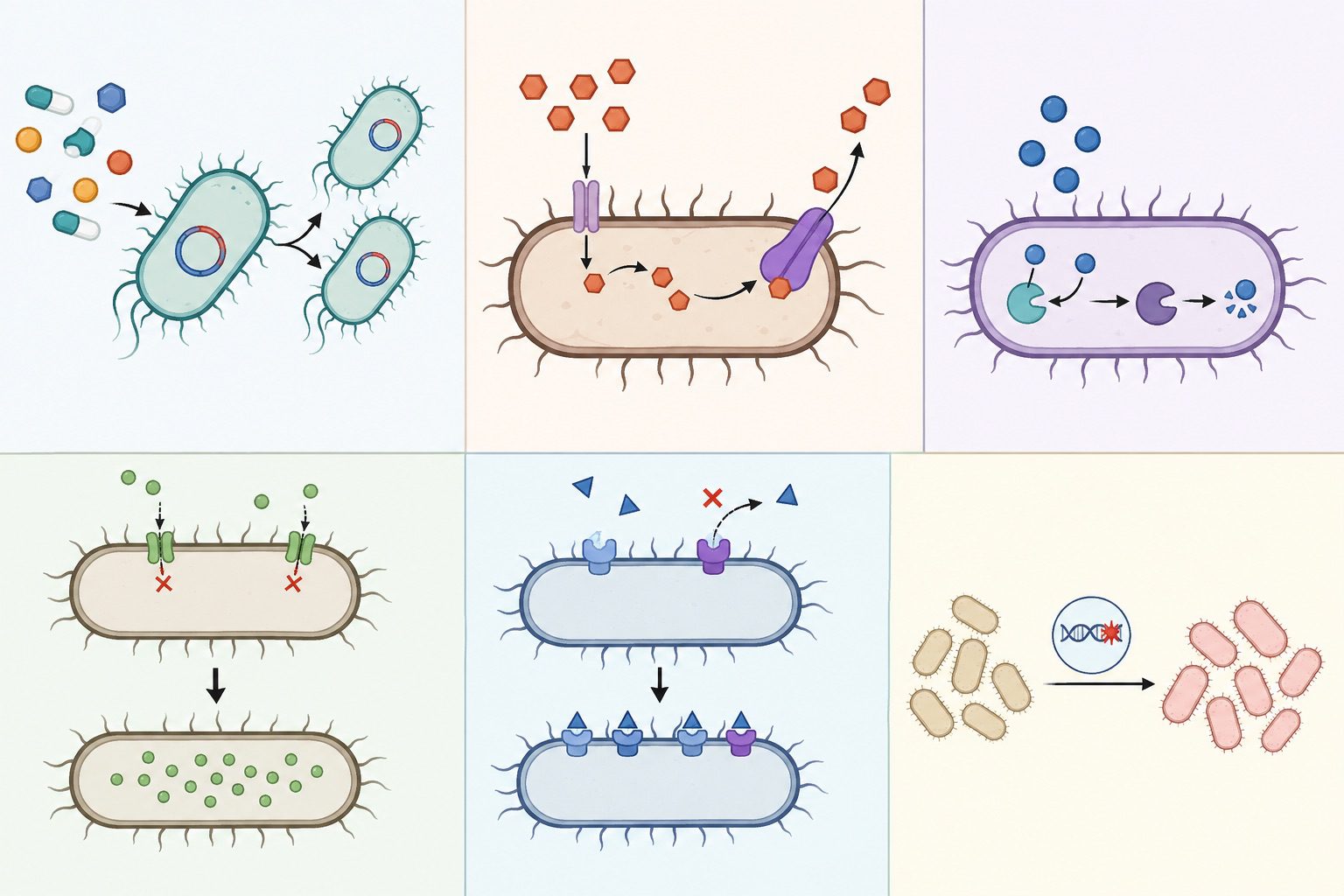

Antimicrobial resistance (AMR) is one of the most significant challenges facing modern medicine, threatening the effective treatment of bacterial infections and increasing morbidity, mortality, healthcare costs, and hospital stays. Among the mechanisms responsible for antimicrobial resistance in Gram-negative bacteria, production of extended-spectrum beta-lactamases (ESBLs) is of particular clinical importance.
ESBLs are enzymes produced predominantly by Gram-negative organisms, especially members of the Enterobacterales, that hydrolyze and inactivate a broad range of beta-lactam antibiotics. These enzymes can confer resistance to penicillins, third-generation cephalosporins such as cefotaxime, ceftriaxone, and ceftazidime, and the monobactam aztreonam. The increasing prevalence and global dissemination of ESBL-producing bacteria have created substantial challenges for the diagnosis, treatment, and control of bacterial infections.
ESBL-producing organisms are commonly associated with clinically important pathogens such as Escherichia coli, Klebsiella pneumoniae, and Klebsiella oxytoca. They can cause a wide range of infections, including urinary tract infections, bloodstream infections, respiratory infections, wound infections, and intra-abdominal infections. ESBL-producing bacteria may also possess additional resistance determinants, resulting in resistance to antimicrobial classes other than beta-lactams. Infections caused by these organisms may have limited therapeutic options and can be associated with treatment failure when inappropriate antimicrobial therapy is administered.
The accurate detection of ESBL production is therefore an essential component of clinical microbiology. Phenotypic detection of ESBL bacteria refers to laboratory methods used to identify the characteristic antimicrobial resistance phenotype or enzyme activity associated with ESBL production. Unlike molecular methods, which detect specific resistance genes such as blaCTX-M, blaTEM, or blaSHV, phenotypic methods investigate the observable effect of ESBL production on antimicrobial susceptibility. These methods are particularly useful in routine diagnostic laboratories because they can be performed using established antimicrobial susceptibility-testing procedures without necessarily requiring specialized molecular equipment.
Phenotypic detection commonly involves screening bacterial isolates for reduced susceptibility to selected extended-spectrum cephalosporins, followed, where appropriate, by confirmatory testing. Traditional confirmatory approaches exploit the ability of many ESBLs to be inhibited by beta-lactamase inhibitors such as clavulanic acid. Methods such as the combination-disk test and double-disk synergy test compare antimicrobial activity in the presence and absence of a beta-lactamase inhibitor. An increase in the inhibition zone or evidence of synergy can provide phenotypic evidence consistent with ESBL production. Other approaches may use broth-based methods, automated antimicrobial susceptibility systems, or minimum inhibitory concentration (MIC) measurements.
Phenotypic detection is important not only for identifying resistant bacterial isolates but also for guiding antimicrobial susceptibility interpretation, supporting appropriate clinical management, and assisting infection-prevention and surveillance programs. However, interpretation must be performed according to current standardized laboratory guidelines, such as those provided by the Clinical and Laboratory Standards Institute (CLSI) or the European Committee on Antimicrobial Susceptibility Testing (EUCAST), because resistance mechanisms and testing criteria may vary among bacterial species and ESBL types.
The study of phenotypic detection of ESBL-producing bacteria is essential for understanding, identifying, and controlling an important form of AMR. Reliable phenotypic detection enables clinical laboratories to recognize potentially resistant pathogens and provides valuable information for antimicrobial stewardship, infection control, epidemiological surveillance, and the effective management of bacterial infections.
What does it mean to be ESBL Positive?
As aforesaid, ESBLs are enzymes produced by certain Gram-negative bacteria that hydrolyze and thereby inactivate a broad range of beta-lactam antibiotics. Their activity is particularly important against third-generation oxyimino-cephalosporins, including cefotaxime, ceftriaxone, and ceftazidime, as well as the monobactam aztreonam. The term “extended-spectrum” reflects the ability of these enzymes to hydrolyze substrates beyond those affected by earlier, narrower-spectrum beta-lactamases. Although there is no single universally applicable molecular definition encompassing every enzyme historically described as an ESBL, the term is commonly used in clinical microbiology to describe acquired beta-lactamases with this characteristic substrate profile.
ESBLs are most frequently encountered among members of the order Enterobacterales, particularly Escherichia coli, Klebsiella pneumoniae, and Klebsiella oxytoca. ESBL-producing organisms are clinically significant because they may exhibit resistance to many commonly used penicillins and cephalosporins, potentially limiting therapeutic options. ESBL genes are frequently located on plasmids and other mobile genetic elements, allowing resistance determinants to move between bacteria. This horizontal transfer contributes substantially to the dissemination of antimicrobial resistance within healthcare facilities and communities.
Historically, many ESBLs were derived from mutations in the genes encoding older beta-lactamases, particularly TEM and SHV enzymes. Changes in the amino-acid sequence around the enzyme’s active site altered its substrate profile, enabling hydrolysis of extended-spectrum cephalosporins. TEM and SHV variants therefore played an important role in the early history of ESBL-mediated resistance. In contrast, CTX-M enzymes have a different evolutionary background. They are related to chromosomal beta-lactamases found in environmental Kluyvera species and became widely disseminated after their genes were mobilized onto plasmids and other transferable genetic elements.
The CTX-M family has subsequently become one of the most prevalent ESBL groups worldwide. CTX-M enzymes generally demonstrate particularly strong hydrolytic activity against cefotaxime, although individual variants differ in their substrate profiles. CTX-M-15 is one of the internationally important variants associated with human infections. An “ESBL-positive” result generally indicates that a bacterial isolate exhibits laboratory evidence consistent with the production of an extended-spectrum beta-lactamase or carries an ESBL-associated resistance determinant.
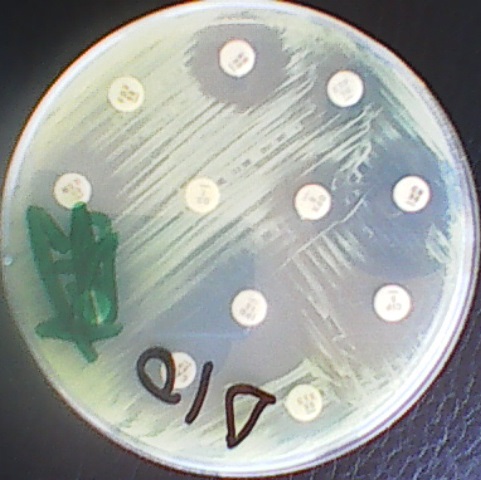
This finding may be established phenotypically using methods such as the Double-Disk Synergy Test (DDST), which detects enhanced inhibition in the presence of a beta-lactamase inhibitor (Figure 1). Identification of ESBL production is clinically important because it indicates a resistance mechanism capable of compromising the activity of several beta-lactam antibiotics, particularly extended-spectrum cephalosporins, and may occur alongside resistance to other antimicrobial classes.
As shown in Figure 1, ESBL positive bacteria produce a characteristic shape known as the keyhole effect in vitro on culture media plate; and this feature which is caused by the activity of a beta-lactamase inhibitor (e.g. clavulanic acid) is usually used to infer the presence of an ESBL phenotypically
Why ESBL-producing bacteria are clinically important
The detection of ESBL-producing bacteria has major implications for patient management, antimicrobial stewardship, and infection prevention. Beta-lactam antibiotics constitute one of the most important groups of antimicrobial agents used in clinical practice. They include penicillins, cephalosporins, monobactams, and carbapenems. When a pathogen produces an ESBL, many penicillins and cephalosporins may become ineffective because the enzyme hydrolyzes the beta-lactam ring required for antibacterial activity.
ESBL production is particularly important in infections caused by E. coli and K. pneumoniae. These organisms can cause urinary tract infections, bloodstream infections, intra-abdominal infections, wound infections, pneumonia, and other healthcare-associated or community-acquired infections. An ESBL-producing isolate may initially appear susceptible to certain antimicrobial agents in preliminary testing, but the presence of the resistance mechanism can make antimicrobial selection more complicated. Reliable laboratory identification and interpretation of antimicrobial susceptibility results are essential.
ESBL-producing organisms frequently carry additional resistance determinants on the same plasmids or other mobile genetic elements. As a result, ESBL-producing isolates may also demonstrate resistance to non-beta-lactam antibiotics, including fluoroquinolones, aminoglycosides, and trimethoprim-sulfamethoxazole. This phenomenon can produce a multidrug-resistant phenotype and substantially reduce the number of effective antimicrobial options. However, ESBL production itself should not automatically be equated with resistance to every antibiotic. Susceptibility must be determined for each antimicrobial agent using an appropriate standardized method.
The consequences of inappropriate therapy can be serious, particularly in invasive infections such as bacteremia. If an ESBL-producing pathogen is treated with an antimicrobial agent to which it is clinically resistant, the patient may experience persistent infection or treatment failure. For this reason, laboratories play an important role in recognizing ESBL-associated resistance and communicating clinically relevant results to healthcare professionals.
ESBL-producing organisms also present an infection-control challenge. Because ESBL genes are frequently carried on transferable plasmids, resistance can spread between bacteria. Transmission may occur through contaminated hands, healthcare equipment, environmental surfaces, or contact between colonized and susceptible individuals. Healthcare settings with high antibiotic exposure can provide strong selective pressure favoring the persistence and dissemination of resistant organisms.
Risk factors associated with acquisition of ESBL-producing bacteria include previous exposure to antibiotics, particularly broad-spectrum agents; prolonged hospitalization; residence in healthcare facilities; severe underlying illness; previous colonization with resistant organisms; and exposure to invasive procedures or devices. ESBL-producing organisms are no longer restricted to hospitals. Community-associated infections, especially urinary tract infections caused by ESBL-producing E. coli, are increasingly recognized.
Detecting ESBL production is not merely a laboratory exercise. It provides information relevant to antimicrobial selection, infection prevention, surveillance, and public-health efforts to control antimicrobial resistance.
Laboratory detection of ESBL-producing bacteria
Accurate detection of ESBL production requires appropriate antimicrobial susceptibility testing and interpretation according to recognized laboratory standards. The laboratory approach generally involves an initial screening step followed, when appropriate, by a confirmatory test or molecular investigation. The precise methods and interpretive criteria may differ depending on the organism, laboratory resources, and standard being followed, such as those published by the Clinical and Laboratory Standards Institute (CLSI) or the European Committee on Antimicrobial Susceptibility Testing (EUCAST).
Phenotypic detection traditionally relies on demonstrating reduced susceptibility to selected extended-spectrum cephalosporins. Common screening agents include cefotaxime and ceftazidime. An isolate showing an appropriate resistance or reduced-susceptibility pattern may be investigated further for ESBL production. One classical confirmatory approach is based on the inhibitory effect of clavulanic acid. Because many ESBLs are inhibited by beta-lactamase inhibitors, a significant improvement in activity when clavulanic acid is combined with an affected cephalosporin provides phenotypic evidence supporting ESBL production.
The double-disk synergy test is another traditional phenotypic approach. In this method, disks containing an extended-spectrum cephalosporin are positioned at an appropriate distance from a disk containing a beta-lactam/beta-lactamase inhibitor combination. Enhancement of the inhibition zone toward the inhibitor-containing disk, sometimes described as a “keyhole” effect, suggests synergy and may indicate ESBL production. Combination-disk tests provide another approach by comparing inhibition zones produced by an antimicrobial alone with those produced in combination with clavulanic acid.
Automated antimicrobial susceptibility testing systems may also generate resistance profiles suggestive of ESBL production. These systems can provide standardized MIC measurements and interpretive categories. However, the detection and reporting of ESBLs should follow the laboratory’s current susceptibility-testing standard rather than relying solely on historical ESBL screening rules.
Molecular methods provide a different form of detection. Polymerase chain reaction (PCR) assays can identify specific ESBL genes, including members of the blaCTX-M, blaTEM, and blaSHV families. Sequencing can provide additional information about the precise enzyme variant. Molecular testing is particularly useful for epidemiological surveillance, outbreak investigations, research, and situations in which characterization of the resistance mechanism is required.
It is important to distinguish phenotypic ESBL detection from molecular detection. A phenotypic test identifies a resistance pattern or enzyme activity, whereas PCR identifies particular genetic determinants. These approaches do not always provide identical information because bacteria can carry resistance genes that are not expressed in the same way, while resistance phenotypes may result from multiple mechanisms.
For routine clinical diagnosis, laboratories should therefore use validated methods and current CLSI or EUCAST guidance. Accurate identification is essential because laboratory results influence both antimicrobial treatment and infection-control decisions. The CLSI (formerly National Committee for Clinical Laboratory Standards, NCCLS) have come up with a number of guidelines for the accurate detection and reporting of organisms producing ESBLs (Table 1).
Table 1. ESBL Screening Breakpoints according to the CLSI criteria
| Disk | Content (µg) | Resistance (BP, mm) | Susceptible (BP, mm) | ESBL Screening BP, (mm) |
| Cefpodoxime | 10 | 17 | 27 | 17 |
| Ceftazidime | 30 | 14 | 18 | 22 |
| Cefotaxime | 30 | 14 | 23 | 27 |
| Ceftriaxone | 30 | 13 | 21 | 25 |
| Aztreonam | 30 | 15 | 22 | 27 |
These measures include a series of phenotypic and genotypic tests which determine ESBL phenotypes and beta-lactamase resistant genes in pathogenic bacteria suspected to produce these broad-spectrum antibiotic degrading enzymes. Because the routine antimicrobial susceptibility testing (AST) methods carried out in most hospital laboratories are not capable of detecting ESBL resistance without some modifications, the CLSI recommends the use of any of the 3rd-generation oxyimino-cephalosporins (e.g. ceftriaxone, cefotaxime and ceftazidime) to screen for the presence of an ESBL. Organisms found to show reduced susceptibility according to the CLSI breakpoints should be recommended for a phenotypic confirmatory test such as the double disk synergy test (DDST) method (Table 2).
Table 2. ESBL phenotypic confirmatory test
| DISCS | INTERPRETATION |
| Ceftazidime 30 mg Ceftazidime – clavulanic acid 30/10 mg AND Cefotaxime 30 mg Cefotaxime – clavulanic acid 30/10 mg | A ≥ 5 mm increase in zone diameter for EITHER antibiotic (i.e. ceftazidime & cefotaxime) tested in combination with clavulanic acid versus its zone when tested alone confirms ESBL production. |
Note: An inhibition zone diameter at or below the indicated screening cutoff suggests reduced susceptibility and warrants further investigation for ESBL production using an appropriate confirmatory method. Interpretive criteria should be applied according to the specific antimicrobial susceptibility-testing standard and edition adopted by the laboratory. The template for the phenotypic detection of ESBL production in clinical isolates in the microbiology laboratory is shown in Figure 2.
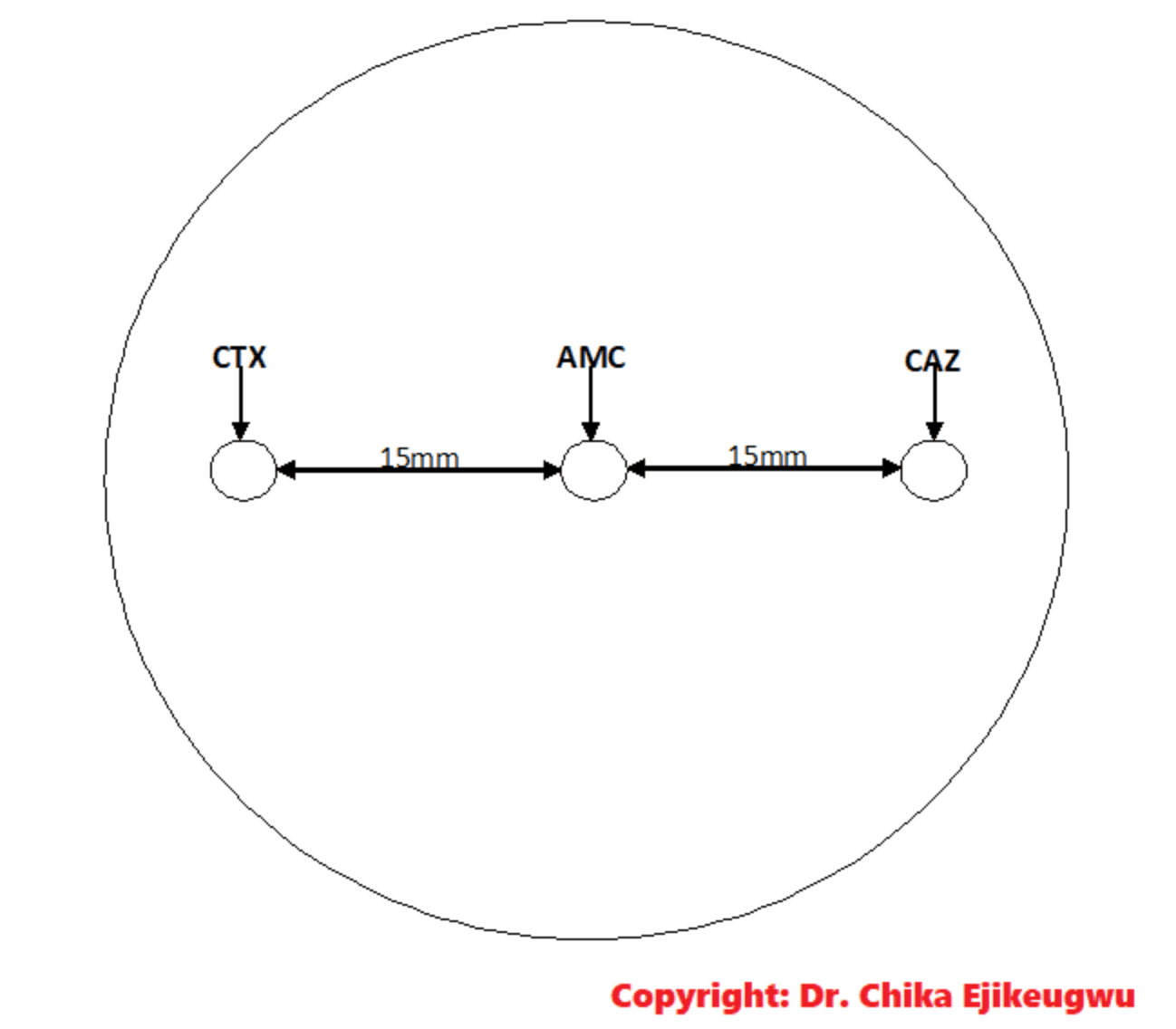
KEY: CTX = Cefotaxime (30 µg): AMC = Amoxycillin-clavulanic acid (20/10 µg): CAZ = Ceftazidime (30 µg)
Clinical interpretation, treatment and prevention of ESBL infection
An ESBL-positive laboratory result should be interpreted in the context of the organism, site of infection, antimicrobial susceptibility profile, and clinical condition of the patient. ESBL production indicates an important mechanism of resistance, but it does not mean that the organism is resistant to every antimicrobial drug. Instead, the complete susceptibility profile should be reviewed to identify agents that remain active.
Historically, carbapenems such as meropenem and imipenem have been important treatment options for serious infections caused by ESBL-producing Enterobacterales, particularly severe infections in which reliable activity against the pathogen is required. However, treatment decisions should not be based solely on the presence of an ESBL phenotype. The site and severity of infection, susceptibility results, patient-specific factors, antimicrobial pharmacokinetics, local resistance patterns, and current clinical guidelines should all be considered. In selected infections, particularly uncomplicated urinary tract infections, other active antimicrobial agents may be appropriate depending on susceptibility and clinical circumstances.
The increasing prevalence of ESBL-producing organisms reinforces the importance of antimicrobial stewardship. Unnecessary antibiotic exposure creates selective pressure that favors resistant organisms. Avoiding inappropriate prescriptions, using the narrowest effective antimicrobial spectrum, optimizing treatment duration, and reviewing therapy once susceptibility results become available can help reduce the selection and dissemination of resistance.
Infection prevention is equally important. Healthcare workers should follow appropriate hand hygiene practices, use contact precautions when indicated by local infection-control policies, and ensure proper cleaning and disinfection of shared equipment and clinical environments. Patients colonized or infected with ESBL-producing organisms should be managed according to institutional infection-prevention policies. Laboratory surveillance can also help identify clusters or outbreaks and support targeted interventions.
The epidemiology of ESBL-producing organisms has changed considerably since their initial recognition in Europe during the 1980s. ESBLs are now detected worldwide, in both healthcare and community settings. CTX-M enzymes, particularly CTX-M-15 and related variants, have become especially important in many regions. The widespread dissemination of these enzymes illustrates how antimicrobial resistance genes can cross bacterial species and geographic boundaries.
For this reason, ESBL detection should be regarded as part of a broader antimicrobial-resistance surveillance strategy. Laboratory identification allows healthcare professionals to recognize resistant organisms, select appropriate therapy, implement infection-control measures, and contribute data to local and national surveillance systems. Being “ESBL positive” means that a bacterial isolate demonstrates an ESBL-associated resistance mechanism or phenotype according to the laboratory’s testing approach.
Detecting this resistance accurately is essential because ESBL-producing bacteria can substantially restrict therapeutic choices and facilitate the spread of antimicrobial resistance. Combining reliable microbiological testing, appropriate clinical interpretation, antimicrobial stewardship, and effective infection prevention provides the foundation for managing these increasingly important resistant pathogens.
Double-disk synergy test (DDST) for phenotypic detection of ESBL-producing bacteria
The Double-Disk Synergy Test (DDST) is a conventional phenotypic method used to detect extended-spectrum beta-lactamase (ESBL) production in clinically important Gram-negative bacteria. The principle of the test is based on the ability of beta-lactamase inhibitors, particularly clavulanic acid, to inhibit ESBL enzymes. Consequently, an ESBL-producing organism demonstrates increased susceptibility to selected third-generation cephalosporins when the cephalosporin is tested in proximity to a clavulanate-containing disk. This interaction produces an enhanced zone of inhibition, commonly referred to as a “keyhole” or synergy effect, toward the beta-lactamase inhibitor-containing disk (Figure 1).
For the DDST, a fresh bacterial isolate is suspended in sterile saline and adjusted to approximately 0.5 McFarland turbidity, corresponding to a standardized bacterial inoculum. The standardized suspension is evenly inoculated over the surface of a Mueller-Hinton (MH) agar plate to produce a confluent bacterial lawn. The inoculated plate is allowed to dry briefly before antimicrobial disks are applied. A disk containing amoxicillin-clavulanic acid (20/10 µg)is positioned at the center of the MH agar plate. Disks containing third-generation cephalosporins, commonly cefotaxime (30 µg) and ceftazidime (30 µg), are then placed at a defined distance from the central amoxicillin-clavulanic acid disk. The distance should follow the validated procedure or applicable laboratory standard because the separation between disks can influence the ability to observe a synergy effect.
Following disk placement, the plates are incubated under appropriate conditions, commonly at approximately 37°C for 16–18 hours or overnight, depending on the organism and the laboratory’s validated protocol. After incubation, the inhibition zones surrounding the cephalosporin disks are examined for evidence of enhancement toward the amoxicillin-clavulanic acid disk. In an ESBL-producing isolate, clavulanic acid inhibits the ESBL enzyme, restoring some activity of the associated cephalosporin and producing visible expansion or distortion of the inhibition zone toward the inhibitor-containing disk. This characteristic appearance is known as the keyhole effect and provides phenotypic evidence of ESBL production.
A related interpretation can be obtained by comparing the inhibition zone produced by a cephalosporin alone with that produced when the cephalosporin is combined with clavulanic acid. A ≥5-mm increase in the inhibition-zone diameter in the presence of clavulanic acid has traditionally been used as a criterion supporting ESBL production in certain standardized combination-disk approaches. However, the exact interpretation and breakpoint criteria depend on the organism, test method, antimicrobial concentrations, and current laboratory standards. Laboratories should apply the current CLSI or EUCAST recommendations, or their validated institutional protocol, rather than relying exclusively on historical criteria.
The DDST is relatively inexpensive and technically straightforward, making it useful in laboratories where molecular detection methods are unavailable. Nevertheless, the test has limitations. The expression of a visible synergy effect can be affected by disk spacing, inoculum density, enzyme expression, and the presence of other resistance mechanisms. Resistance mechanisms other than ESBL production can complicate phenotypic interpretation. For these reasons, DDST findings should be interpreted alongside antimicrobial susceptibility testing and relevant quality-control procedures.
The DDST provides a practical phenotypic approach for identifying ESBL-associated resistance. Recognition of the characteristic clavulanate-mediated synergy effect can assist microbiologists in detecting potentially important resistant pathogens and supports appropriate antimicrobial susceptibility interpretation, infection-control measures, and antimicrobial stewardship.
References
Brolund, A. (2014). Overview of ESBL-producing Enterobacteriaceae from a Nordic perspective. Infection Ecology & Epidemiology, 4(1).
Dortet, L., Poirel, L., & Nordmann, P. (2015). Rapid detection of ESBL-producing Enterobacteriaceae in blood cultures. Emerging Infectious Diseases, 21(3), 504–507.
Drieux, L., Brossier, F., Sougakoff, W., & Jarlier, V. (2008). Phenotypic detection of extended-spectrum β-lactamase production in Enterobacteriaceae: Review and bench guide. Clinical Microbiology and Infection, 14(Suppl. 1), 90–103.
Ejikeugwu Chika, Ikegbunam Moses, Ugwu Chigozie, Eze Peter, Iroha Ifeanyichukwu, and Esimone Charles (2013). Phenotypic Detection of Klebsiella pneumoniae Strains – Producing Extended Spectrum β-Lactamase (ESBL) Enzymes. Scholars Academic Journal of Biosciences. 1(1):20-23.
Ejikeugwu Chika, Iroha Ifeanyichukwu, Adikwu Michael and Esimone Charles (2013). Susceptibility and Detection of Extended Spectrum β-Lactamase Enzymes from Otitis Media Pathogens. American Journal of Infectious Diseases. 9(1):24-29.
Ejikeugwu Chika, Iroha Ifeanyichukwu, Adikwu Michael and Esimone Charles (2013). Susceptibility and Detection of Extended Spectrum β-Lactamase Enzymes from Otitis Media Pathogens. American Journal of Infectious Diseases. 9(1):24-29.
Färber, J., Moder, K. A., Layer, F., Tammer, I., König, W., & König, B. (2008). Extended-spectrum beta-lactamase detection with different panels for automated susceptibility testing and with a chromogenic medium. Journal of Clinical Microbiology, 46(11), 3721–3727.
Husna, A., Rahman, M. M., Badruzzaman, A. T. M., Sikder, M. H., Islam, M. R., Rahman, M. T., Alam, J., & Ashour, H. M. (2023). Extended-spectrum β-lactamases (ESBL): Challenges and opportunities. Biomedicines, 11(11), 2937.
Ullah, N., Assawakongkarat, T., Akeda, Y., et al. (2023). Detection of extended-spectrum β-lactamase-producing Escherichia coli isolates by isothermal amplification and association of their virulence genes and phylogroups with extraintestinal infection. Scientific Reports, 13, 12022.
Wiegand, I., Geiss, H. K., Mack, D., Stürenburg, E., & Seifert, H. (2007). Detection of extended-spectrum beta-lactamases among Enterobacteriaceae by use of semiautomated microbiology systems and manual detection procedures. Journal of Clinical Microbiology, 45(4), 1167–1174.
Discover more from Microbiology Class
Subscribe to get the latest posts sent to your email.