


A slide rack and staining rack are important pieces of laboratory equipment used in the handling, organization, support, and staining of microscope slides. They are specially designed holders that provide stability and protection for glass slides containing tissue sections, blood smears, microorganisms, and other biological specimens during laboratory investigations. They play an essential role in ensuring that slides are properly arranged, safely handled, and maintained throughout different laboratory procedures.
Holding microscope slides securely
Slide racks are designed to hold microscope slides firmly in position during various laboratory procedures. They prevent slides from slipping, falling, or coming into direct contact with one another, thereby reducing the possibility of breakage. Their structure provides stability when slides are being transferred, examined, washed, dried, or stained. By keeping slides securely positioned, they make handling easier and minimize accidental damage to delicate glass slides and the specimens placed on them.
Organizing slides during laboratory procedures
Slide racks provide an organized arrangement for holding several microscope slides simultaneously. They help laboratory personnel identify, separate, and manage different specimens without confusion. Each slide can be placed in a designated slot or compartment, making it easier to distinguish between individual samples during laboratory investigations. Proper organization also prevents slides from becoming mixed up and promotes a systematic approach to specimen handling, processing, and examination.
Supporting the staining process
Staining racks are specifically designed to hold microscope slides during different staining procedures. They provide a stable platform that allows stains and other laboratory reagents to be applied to specimens conveniently and effectively. They are commonly used during staining techniques such as Gram staining, blood film staining, and histological staining. Some staining racks are designed with spaces that allow excess staining solutions to drain away from the slides, ensuring convenient handling and reducing unnecessary accumulation of reagents during the staining process.
Preventing contamination and slide damage
Slide racks and staining racks help minimize the risk of specimen contamination by keeping individual slides properly separated during laboratory procedures. They reduce the need for excessive direct handling, thereby protecting both the glass slides and the biological materials placed on them. Proper positioning also prevents slides from rubbing against one another, becoming mixed up, or sustaining scratches and breakages. This helps preserve the quality and integrity of prepared specimens before they are examined under a microscope.
Promoting efficient laboratory work
Slide racks and staining racks make laboratory procedures more efficient by allowing several microscope slides to be handled at the same time. They simplify activities such as staining, rinsing, drying, transferring, and organizing specimens, thereby saving time and reducing handling errors.
They are useful in medical, clinical, histopathology, microbiology, and research laboratories where multiple specimens are routinely processed. Their use promotes proper laboratory organization, improves workflow, and supports accurate and reliable examination of prepared specimens.
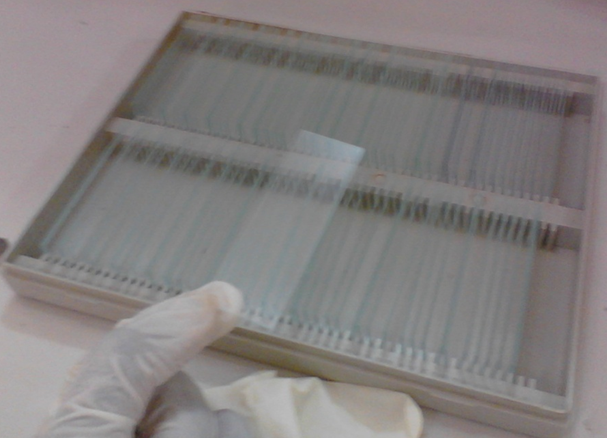
Slide racks (Figure 1) and staining racks (Figure 2) are essential laboratory equipment that facilitate safe slide handling, proper specimen organization, effective staining, and protection against contamination and damage. Their proper use contributes significantly to accuracy, efficiency, and good laboratory practice.

Types and structure of slide racks and staining racks
Slide racks and staining racks are important laboratory equipment used for holding, arranging, transporting, and processing microscope slides during various laboratory procedures. Although they serve related purposes, their designs and structures differ according to their specific functions. They are available in different types, sizes, shapes, and materials to meet the requirements of different laboratory activities.
Slide racks
Slide racks are specially designed holders used to arrange and secure multiple microscope slides in an organized manner. They usually consist of a rectangular or square framework with parallel grooves, slots, or compartments into which individual slides are inserted (Figure 3). These spaces keep the slides separated, preventing them from touching, overlapping, or breaking during handling and storage.
Slide racks are commonly made from plastic, metal, or stainless steel. Plastic slide racks are lightweight, affordable, and resistant to many laboratory chemicals, while metal and stainless-steel racks are more durable and suitable for repeated laboratory use. Some slide racks are designed to hold slides horizontally, whereas others hold them vertically to facilitate easy identification, drying, and storage.

Staining racks
Staining racks are specially constructed laboratory accessories used to hold microscope slides during staining procedures (Figure 4). They provide support for slides while stains, dyes, and other chemical reagents are applied to tissue sections, blood films, and other specimens. Their design allows several slides to be stained simultaneously, making laboratory work more organized and efficient.
Staining racks are commonly made of stainless steel, coated metal, or chemical-resistant plastic. They usually consist of a frame with evenly spaced slots or grooves that hold slides securely in position. Some designs have handles that make it easier to lift, transfer, and immerse the rack into staining containers without directly touching the slides.

Material composition of slide and staining racks
Both slide racks and staining racks are manufactured from materials that can withstand routine laboratory conditions. Common materials include:
Plastic: Lightweight, economical, and resistant to many chemicals.
Stainless steel: Strong, durable, corrosion-resistant, and suitable for repeated use.
Coated metal: Provides structural strength and additional protection against chemical exposure.
Polypropylene: A type of plastic commonly used because of its resistance to many laboratory reagents.
Sizes and designs of slide and staining racks: Slide racks and staining racks are available in different sizes and configurations depending on the number and dimensions of slides they are designed to accommodate. Some hold a small number of slides for routine procedures, while others can accommodate several slides simultaneously. The spacing between slots is designed to prevent overcrowding and allow proper handling. Certain staining racks are also designed to fit standard staining jars, dishes, or containers.
Structural Features and Functions of slide and staining racks
The major structural features of slide racks and staining racks include:
Slots and grooves: Hold individual microscope slides securely and maintain proper spacing.
Supporting frames: Provide stability and prevent slides from falling or shifting.
Handles: Available on some staining racks to facilitate easy lifting and transportation.
Open spaces: Allow stains and rinsing solutions to reach the specimen surfaces.
Protective construction: Helps minimize slide breakage, contamination, and accidental contact.
Slide racks and staining racks are essential for proper slide organization and handling in the laboratory. Their different materials, sizes, and structural designs make them suitable for various microscopy and staining procedures.
Uses of slide and staining racks in the laboratory
Slide racks and staining racks are essential laboratory equipment used in the handling, organization, staining, washing, and storage of microscope slides. They provide a safe and convenient means of holding slides during various laboratory procedures, particularly in histology, microbiology, haematology, and cytology laboratories. Their use helps to improve work efficiency, maintain specimen quality, and prevent damage or contamination during slide preparation and examination.
Holding microscope slides during staining: Staining racks are primarily used to hold microscope slides securely during staining procedures. They keep slides in an organized position, allowing stains and reagents to reach the specimen evenly. This helps ensure proper staining and produces clear, well-defined microscopic images for accurate examination.
Supporting slides during washing and rinsing: Slide and staining racks provide support for microscope slides during washing and rinsing procedures. They allow excess stains, dyes, and chemical reagents to be removed without directly handling individual slides. This reduces the risk of specimen damage, accidental breakage, and contamination while ensuring that the slides are properly cleaned before further laboratory procedures.
Organizing and arranging prepared specimens: Slide racks help laboratory personnel arrange and organize prepared microscope slides systematically. They make it easier to identify, separate, and manage different specimens, especially when several samples are being processed simultaneously. Proper organization also reduces the possibility of mixing up specimens, thereby promoting accuracy and reliability in laboratory investigations.
Facilitating the handling of multiple slides: Staining racks are designed to accommodate several microscope slides at once, making it easier to process multiple specimens during routine laboratory work. Instead of handling each slide individually, laboratory personnel can move, stain, wash, and transfer several slides together. This saves time, reduces unnecessary handling, and improves the overall efficiency of laboratory procedures.
Maintaining slides in an upright and proper position: Slide racks provide appropriate slots or spaces that keep microscope slides upright, separated, and properly positioned during laboratory procedures. This prevents slides from overlapping, rubbing against one another, or coming into direct contact, which could damage the specimens. Maintaining the correct position also promotes uniform exposure to staining solutions and helps prevent the loss or disturbance of specimen materials.
Slide racks and staining racks play an important role in ensuring the safe handling, proper organization, and effective processing of microscope slides. Their use contributes to accurate laboratory results, efficient specimen preparation, and the prevention of contamination and slide damage.
Materials and maintenance of slide and staining racks
Materials used in manufacturing: Slide racks and staining racks are commonly manufactured from durable materials such as plastic, metal, and stainless steel. Plastic racks are lightweight, affordable, easy to handle, and resistant to many laboratory chemicals. Metal and stainless-steel racks are strong, durable, and suitable for repeated use in laboratory environments. Stainless steel is particularly useful because it resists corrosion and can withstand frequent cleaning and exposure to certain chemicals.
Chemical resistance and durability: The materials used in making slide racks and staining racks should be resistant to laboratory chemicals, stains, dyes, and cleaning agents. This is important because the racks may come into contact with substances such as hematoxylin, eosin, alcohol, and other staining solutions. Chemical-resistant materials help prevent corrosion, discoloration, deterioration, and damage, thereby extending the useful life of the equipment.
Cleaning after each use: Slide racks and staining racks should be cleaned thoroughly after every use to remove residual stains, dyes, chemicals, and biological materials. Cleaning helps prevent cross-contamination between specimens and ensures that the racks remain suitable for subsequent laboratory procedures. Appropriate cleaning agents should be used according to the manufacturer’s instructions. Where necessary, racks should also be disinfected using suitable laboratory disinfectants.
Proper drying and storage: After cleaning, slide racks and staining racks should be rinsed appropriately and allowed to dry completely before storage. Proper drying helps prevent moisture accumulation, corrosion of metal components, microbial growth, and contamination. The racks should be stored in a clean, dry, and well-ventilated area, preferably in a designated laboratory cupboard or storage space. They should also be arranged properly to prevent physical damage and maintain easy accessibility.
Inspection and replacement of damaged racks: Regular inspection is necessary to ensure that slide racks and staining racks remain in good working condition. Laboratory personnel should check for cracks, broken slots, bent sections, rust, corrosion, and other signs of deterioration. Damaged plastic racks may fail to hold slides securely, while rusty or corroded metal racks may contaminate specimens and interfere with staining procedures. Any rack that is damaged, excessively worn, or no longer safe for use should be repaired where appropriate or replaced promptly.
Proper selection of materials, regular cleaning, adequate drying, correct storage, and routine inspection are essential for maintaining slide racks and staining racks. These practices promote laboratory safety, prevent contamination, preserve equipment quality, and ensure reliable results during slide preparation and staining procedures.
Precautions and safety measures for slide and training racks
Careful handling of microscope slides
Microscope slides should be handled carefully when placing or removing them from the slide rack or staining rack. This is important because slides are made of thin glass and can break easily when mishandled. Broken slides may cause cuts or injuries and can also lead to the loss of prepared specimens. Always hold slides by their edges and avoid applying excessive pressure during handling.
Avoid overcrowding the racks
Do not overcrowd the slide rack or staining rack with too many microscope slides. Each slide should be placed in its designated slot or position to prevent overlapping, scratching, or accidental breakage. Overcrowding may also interfere with the proper staining of specimens by preventing staining solutions from reaching all parts of the slides. Adequate spacing allows for proper handling, staining, washing, and drying.
Use the appropriate rack for each procedure
Always select the correct type of rack for the laboratory procedure being performed. A slide rack is mainly used for holding and organizing microscope slides, while a staining rack is designed to support slides during staining and related procedures. Using the appropriate rack helps prevent damage to slides, ensures proper exposure to staining reagents, and promotes an organized working environment. Also, ensure that the rack is compatible with the chemicals and solutions being used.
Wear appropriate personal protective equipment
Laboratory personnel should wear suitable personal protective equipment, especially disposable gloves and laboratory coats, when handling slide racks and staining racks. Gloves help protect the hands from direct contact with staining chemicals, biological specimens, and potentially infectious materials. Safety goggles should also be worn when there is a risk of chemical splashes. Used gloves should be disposed of properly, and hands should be washed after completing laboratory procedures.
Maintain proper cleaning and hygiene
Slide racks and staining racks should be cleaned thoroughly after every use to remove stains, chemical residues, dust, and biological materials. Failure to clean them properly may result in contamination of subsequent specimens and affect laboratory results. Use appropriate cleaning agents that will not damage the rack material. After cleaning, rinse when necessary and allow the racks to dry completely before storing them.
Prevent chemical spillage and accidental exposure
When using staining racks, handle staining solutions and other laboratory reagents carefully to prevent spills and splashes. Place the rack on a stable, flat surface during staining procedures. Avoid unnecessary movement while slides are immersed in staining solutions. Any chemical spill should be cleaned immediately using the appropriate laboratory spill-management procedure.
Inspect and store racks properly
Before use, inspect slide racks and staining racks for cracks, broken sections, sharp edges, rust, or other defects. Damaged racks should not be used because they may cause slide breakage, injuries, or improper specimen handling. After use and cleaning, store the racks in a clean, dry, and designated laboratory area to protect them from dust, contamination, and physical damage.
Observing these precautions and safety measures helps prevent accidents, reduce specimen contamination, protect laboratory personnel, and maintain the reliability and accuracy of laboratory procedures involving slide racks and staining racks.
References
Cheesbrough, M (2006). District Laboratory Practice in Tropical countries Part I Cambridge
Chung K.T, Stevens Jr., S.E and Ferris D.H (1995). A chronology of events and pioneers of microbiology. SIM News, 45(1):3–13.
Dictionary of Microbiology and Molecular Biology, 3rd Edition. Paul Singleton and Diana Sainsbury. 2006, John Wiley & Sons Ltd. Canada.
Goldman E and Green L.H (2008). Practical Handbook of Microbiology, Second Edition. CRC Press, Taylor and Francis Group, USA.
Madigan M.T., Martinko J.M., Dunlap P.V and Clark D.P (2009). Brock Biology of microorganisms. 12th edition. Pearson Benjamin Cummings Publishers. USA.
Nester E.W, Anderson D.G, Roberts C.E and Nester M.T (2009). Microbiology: A Human Perspective. Sixth edition. McGraw-Hill Companies, Inc, New York, USA.
Prescott L.M., Harley J.P and Klein D.A (2005). Microbiology. 6th ed. McGraw Hill Publishers, USA.
Willey J.M, Sherwood L.M and Woolverton C.J (2008). Harley and Klein’s Microbiology. 7th ed. McGraw-Hill Higher Education, USA.
Discover more from Microbiology Class
Subscribe to get the latest posts sent to your email.