

Hand hygiene is one of the simplest, most effective, and most affordable measures for preventing the spread of infectious diseases. Every day, our hands come into contact with numerous surfaces contaminated with bacteria, viruses, and other harmful microorganisms. These germs can easily spread from person to person or enter the body when we touch our eyes, nose, or mouth. Washing hands regularly with soap and clean running water removes dirt, grease, and disease-causing microorganisms, significantly reducing the risk of diarrheal diseases, respiratory infections, foodborne illnesses, and many other communicable diseases. When soap and water are unavailable, an alcohol-based hand sanitizer containing at least 60% alcohol provides an effective alternative in many situations. By practicing proper hand hygiene and following the recommended handwashing technique, individuals can protect themselves and those around them, helping to reduce the transmission of infections in homes, schools, workplaces, healthcare facilities, and the wider community.
When should you wash your hands?
Washing your hands at the right moments is just as important as washing them correctly. Germs spread easily through direct contact with contaminated surfaces, infected individuals, food, animals, or bodily fluids. Developing the habit of washing your hands during critical times helps interrupt this chain of transmission and protects both you and those around you. Always wash your hands before, during, and after preparing food to prevent harmful microorganisms from contaminating meals. This is especially important when handling raw meat, poultry, seafood, or eggs, which may carry bacteria that can spread to other foods, utensils, or kitchen surfaces. Likewise, wash your hands before eating to avoid transferring germs from your hands to your mouth.
Hand hygiene is equally important when caring for someone who is ill. Wash your hands before and after caring for a person with vomiting or diarrhea, as these illnesses are highly contagious and can spread rapidly through contaminated hands. Similarly, wash your hands before and after treating a cut, scrape, or wound to reduce the risk of infection and promote faster healing. Using the toilet is another key moment for hand washing. Always wash your hands after using the toilet, after changing diapers, or after helping a child use the toilet. Many intestinal infections spread through microscopic amounts of fecal matter that remain on the hands if they are not washed properly. Respiratory illnesses can also spread through contaminated hands. Wash your hands after blowing your nose, coughing, or sneezing, even if you use a tissue. This simple practice helps prevent the transmission of viruses that cause colds, influenza, and other respiratory infections.
People who interact with animals should also pay close attention to hand hygiene. Wash your hands after touching animals, animal feed, or animal waste, as animals can carry germs that may not make them sick but can cause illness in humans. Likewise, wash your hands after handling pet food or pet treats, since these products may also contain bacteria. Always wash your hands after touching garbage, as waste materials often contain harmful microorganisms that can contaminate your hands and spread to other surfaces or people. Beyond these situations, it is also advisable to wash your hands after returning home from public places, after using public transportation, after handling money, after gardening, and whenever your hands are visibly dirty. Frequent hand washing is particularly important during outbreaks of infectious diseases, when the risk of exposure to harmful germs is higher.
How to wash your hands properly
Knowing when to wash your hands is only part of good hand hygiene. Washing them correctly ensures that germs are effectively removed rather than simply rinsed around the skin. Proper hand washing should take at least 20 seconds, which is approximately the time it takes to hum the “Happy Birthday” song twice. Start by wetting your hands with clean, running water, either warm or cold. Apply enough soap to cover all surfaces of your hands. Soap helps lift dirt, oils, and germs from the skin so they can be rinsed away more effectively than water alone (Figure 1).
Next, lather your hands thoroughly by rubbing them together. Be sure to clean the backs of your hands, between your fingers, around and under your fingernails, your thumbs, fingertips, and wrists. These areas are often overlooked but can harbor large numbers of microorganisms. Continue rubbing your hands for at least 20 seconds. Rushing through the process may leave behind germs that could cause illness. After scrubbing, rinse your hands thoroughly under clean running water to wash away the loosened dirt and microorganisms. Dry your hands using a clean towel, disposable paper towel, or an air dryer. Drying is an important step because germs transfer more easily from wet hands than from dry ones. If possible, use a paper towel to turn off the faucet and open the bathroom door in public restrooms to minimize contact with contaminated surfaces.
When soap and clean running water are unavailable, use an alcohol-based hand sanitizer containing at least 60% alcohol. Apply enough sanitizer to cover all surfaces of your hands and rub them together until they are completely dry, usually for about 20 seconds. While hand sanitizers are effective against many germs, they do not remove all types of microorganisms or harmful chemicals and are less effective when hands are visibly dirty or greasy. Whenever possible, washing with soap and water remains the preferred method of hand hygiene. Making hand washing a consistent part of your daily routine is one of the easiest and most effective ways to prevent illness, protect vulnerable family members, and reduce the spread of infectious diseases. By washing your hands at the right times and using the correct technique, you can make a significant contribution to your own health and the health of your community.
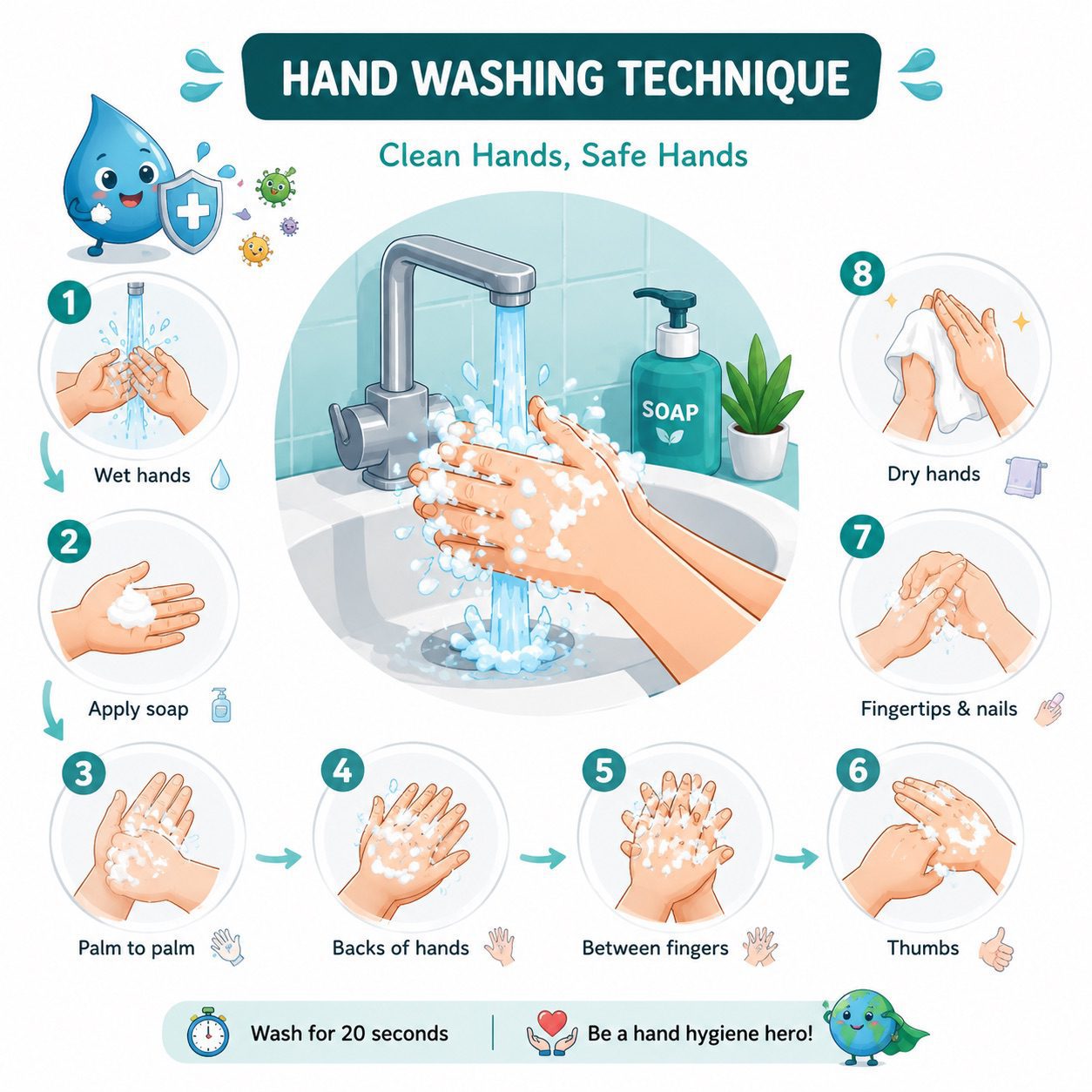
Follow five steps to wash your hands the right way
Hand washing is one of the simplest, most effective, and least expensive measures for preventing the spread of infectious diseases. Every day, our hands come into contact with countless surfaces that may harbor bacteria, viruses, fungi, and other microorganisms. These germs can easily spread from person to person through direct contact or by touching contaminated objects such as doorknobs, phones, keyboards, shopping carts, and public transport handrails. When contaminated hands touch the eyes, nose, or mouth, germs can enter the body and cause illness.
Proper hand hygiene plays a critical role in reducing the transmission of respiratory infections, diarrheal diseases, foodborne illnesses, and healthcare-associated infections. It protects not only individuals but also families, workplaces, schools, healthcare facilities, and entire communities. Studies have consistently shown that regular hand washing with soap and clean running water can significantly reduce the incidence of gastrointestinal and respiratory illnesses, making it one of the most cost-effective public health interventions available. Despite its simplicity, effective hand washing requires following the correct technique every time. The World Health Organization (WHO) and many public health agencies recommend five simple steps that ensure germs are effectively removed from the skin. Each step contributes to breaking the chain of infection and preventing disease transmission.
The five essential steps for effective hand washing
1. Wet your hands
Begin by wetting your hands thoroughly with clean, running water. Either warm or cold water is suitable, as water temperature has little effect on the removal of germs. Running water is preferable to standing water because it continuously washes away dirt and microorganisms rather than allowing them to remain on the skin. Once your hands are completely wet, turn off the tap if possible and apply enough soap to cover all surfaces of your hands. Both liquid soap and bar soap are effective when used properly. Soap works by loosening dirt, oils, and microorganisms that cling to the skin, allowing them to be rinsed away more easily than with water alone.
2. Lather your hands thoroughly
Rub your hands together to create a rich lather. This step is more important than many people realize because the lather helps lift microorganisms, grease, and dirt from the skin.
Be sure to clean every part of your hands, including:
- The palms
- The backs of both hands
- Between the fingers
- Around the thumbs
- Fingertips
- Under and around the fingernails
- Around the wrists
These areas are often missed during quick hand washing but can harbor large numbers of disease-causing microorganisms. Fingernails deserve particular attention because dirt and germs frequently accumulate underneath them, especially after gardening, cooking, or caring for children and animals.
3. Scrub for at least 20 seconds
Continue rubbing your hands together for at least 20 seconds. This amount of time allows the soap and friction to effectively remove germs from the skin. A useful way to estimate 20 seconds is by humming the “Happy Birthday” song twice from beginning to end. Alternatively, many people silently count to twenty or use a timer. Avoid rushing this step. Research has shown that many people wash their hands for less than 10 seconds, which is often insufficient for effective germ removal. The combination of soap, friction, and adequate duration is what makes hand washing highly effective.
4. Rinse thoroughly
After scrubbing, rinse your hands well under clean, running water. Rinsing removes the loosened dirt, oils, soap, and microorganisms from your skin. Ensure that all soap residue is removed, particularly between the fingers and around the wrists. Remaining soap can cause skin irritation in some individuals, while incomplete rinsing may leave behind loosened contaminants. Running water carries these contaminants away, reducing the chance that germs will remain on the hands.
5. Dry your hands completely
Dry your hands using a clean towel, disposable paper towel, or an air dryer. Drying is an essential but frequently overlooked part of proper hand hygiene. Wet hands transfer microorganisms much more readily than dry hands. Therefore, drying your hands thoroughly helps minimize the risk of spreading germs immediately after washing. In public restrooms, using a disposable paper towel to turn off the faucet and open the exit door can further reduce the chance of re-contaminating your clean hands. At home, towels should be washed regularly and allowed to dry completely between uses to prevent bacterial growth. Following these five simple steps every time you wash your hands provides maximum protection against disease transmission and helps safeguard both your health and the health of those around you.
Using hand sanitizer when soap and water are not available
Although washing hands with soap and clean running water remains the gold standard for hand hygiene, access to soap and water is not always possible. During travel, outdoor activities, emergencies, or while commuting, an alcohol-based hand sanitizer provides an effective alternative for reducing many harmful microorganisms on the hands. To be effective, the hand sanitizer should contain at least 60% alcohol, either ethanol or isopropanol. This information is clearly indicated on the product label and should always be checked before purchase. Alcohol-based sanitizers work by rapidly destroying the outer structures of many bacteria and viruses, making them inactive within seconds.
Hand sanitizers are particularly useful in settings where frequent hand hygiene is necessary but handwashing facilities are unavailable, such as public transportation, offices, classrooms, shopping centers, airports, or healthcare waiting areas. They are lightweight, portable, and easy to carry in bags, vehicles, or pockets, encouraging more frequent hand hygiene throughout the day. However, hand sanitizers should not be considered a complete replacement for washing with soap and water. Their effectiveness depends on several factors, including the amount applied, the alcohol concentration, and whether the hands are visibly clean. Soap and water remain superior because they physically remove dirt, grease, organic matter, and many types of contaminants from the skin rather than simply inactivating microorganisms.
Limitations of hand sanitizers and the correct way to use them
While alcohol-based hand sanitizers are highly effective against many disease-causing microorganisms, they also have important limitations that users should understand. First, hand sanitizers do not eliminate all types of germs. Certain microorganisms, including some bacterial spores and parasites, are more resistant to alcohol and require washing with soap and water for effective removal.
Second, hand sanitizers are less effective when hands are visibly dirty, greasy, or contaminated with food residue, soil, blood, or other organic material. Dirt and grease can shield microorganisms from the alcohol, reducing its ability to kill germs. In these situations, thorough hand washing with soap and water is the preferred method. Third, hand sanitizers cannot remove harmful chemicals such as pesticides, heavy metals, industrial chemicals, or other toxic substances that may be present on the skin. Only washing with soap and running water can effectively remove these contaminants.
To use hand sanitizer correctly:
1. Apply the recommended amount of gel or liquid sanitizer to the palm of one hand. Follow the manufacturer’s instructions regarding the appropriate quantity.
2. Rub your hands together immediately, spreading the sanitizer over all surfaces of both hands.
3. Continue rubbing the sanitizer over your palms, the backs of your hands, between your fingers, around your thumbs, under your fingernails, fingertips, and wrists.
4. Keep rubbing until your hands are completely dry. This usually takes about 20 seconds. Do not wipe the sanitizer off before it dries, as this reduces its effectiveness.
Hand sanitizer should never be applied to visibly dirty hands as a substitute for washing, nor should it be rinsed off with water after application. Additionally, because alcohol-based sanitizers are flammable, they should be stored safely away from heat sources and out of reach of young children unless supervised.
References
www.cdc.gov/handwashing/when-how-handwashing.html
www.nhs.uk/live-well/best-way-to-wash-your-hands/
www.who.int/docs/default-source/patient-safety/how-to-handwash-poster.pdf
www.healthcare-in-europe.com/en/news/hand-washing-in-hot-or-cold-water.html
www.unicef.org/guyanasuriname/everything-you-need-know-wash-your-hands
www.nfid.org/resource/when-and-how-to-wash-your-hands/
Discover more from Microbiology Class
Subscribe to get the latest posts sent to your email.