
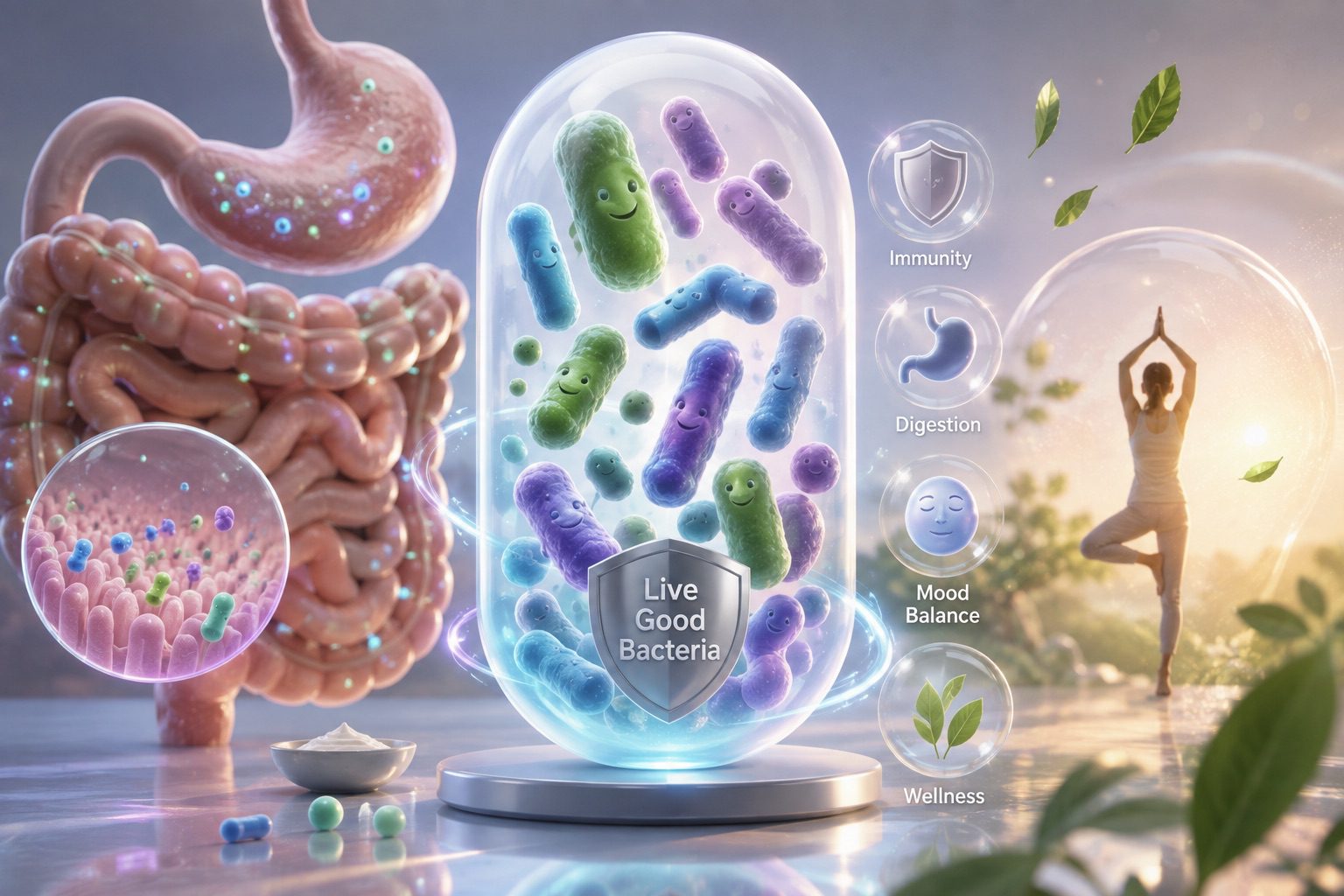
Probiotics are defined as live microorganisms that, when administered in adequate amounts, confer a health benefit on the host. To qualify as a probiotic, microorganisms must meet three essential characteristics: the microorganisms must be alive, they must be administered in a sufficient quantity, and their consumption must produce a demonstrable health benefit.
Probiotics commonly include selected strains of bacteria such as Lactobacillus and Bifidobacterium. Their effects are generally associated with interactions within the gastrointestinal tract, where they may influence the intestinal microbiota, support epithelial barrier function, compete with undesirable microorganisms, contribute to microbial metabolism, and modulate host immune responses.
Not every beneficial or naturally occurring microorganism is automatically a probiotic. Probiotic status is generally assigned to a specific strain that has been adequately characterized for safety, viability, and health-related functionality. Thus, probiotic activity is strain-specific, and microorganisms belonging to the same species may not necessarily provide identical effects.
Probiotics have emerged as an important component of contemporary research on the relationship between microorganisms and human health. The term generally refers to living microorganisms that, when administered in adequate amounts, confer a health benefit on the host. Although microorganisms have historically been associated primarily with infectious disease, advances in microbiology and molecular biology have revealed that the human body supports complex microbial communities that participate in nutrition, metabolism, immune regulation, and maintenance of physiological balance. This changing perspective has contributed to growing interest in selected microorganisms that may be deliberately introduced to support or influence host health.
Most probiotic organisms belong to bacterial genera such as Lactobacillus, Bifidobacterium, Lactococcus, and Bacillus, while certain yeasts, particularly Saccharomyces species, have also been investigated for probiotic applications. Their effects are not necessarily uniform across microorganisms, and even closely related strains can differ considerably in their biological properties. Consequently, probiotic activity is increasingly understood as being strain-specific rather than as a general characteristic shared by all microorganisms within a particular species or genus.
Probiotics may interact with the host through several biological pathways. Following ingestion, some strains can transiently interact with the intestinal environment, where they may influence microbial community structure, compete with undesirable microorganisms, modify metabolic processes, and interact with intestinal epithelial and immune cells. The production of organic acids, antimicrobial compounds, enzymes, and other bioactive metabolites may further contribute to these interactions. In addition, probiotic microorganisms can influence the intestinal environment indirectly through their effects on resident microbial populations and microbial-derived metabolites.
The gastrointestinal tract represents a particularly important site for probiotic research because it contains a dense and metabolically active microbial ecosystem. Factors including diet, age, medication exposure, physiological status, and environmental conditions can influence this ecosystem and may also affect the behavior and persistence of administered microorganisms. Therefore, the outcome associated with probiotic consumption depends on interactions among the probiotic strain, the existing microbial community, the host, and the surrounding gastrointestinal conditions.
Beyond their potential biological functions, probiotics have attracted attention in food technology, functional foods, dietary supplements, and emerging microbiome-based applications. Their incorporation into different food matrices, however, presents challenges related to viability, stability, storage, and delivery to the intended site of action.
Probiotics represent a promising interface between microbiology, nutrition, and host physiology. Continued investigation of strain characteristics, mechanisms of action, formulation, and host-microbe interactions is essential for translating probiotic concepts into reliable and scientifically supported applications.
Criteria for selecting and developing probiotic microorganisms
The designation of a microorganism as a probiotic requires more than the demonstration of its presence in the gastrointestinal tract or its association with a potential health benefit. Probiotic microorganisms must possess a defined set of biological, technological, and safety characteristics that enable them to remain viable, interact appropriately with the host, and deliver a measurable physiological benefit. These characteristics are particularly important because microorganisms introduced into the gastrointestinal tract encounter a sequence of environmental stresses that can compromise their survival and functional activity. The selection of suitable probiotic candidates requires careful consideration of their safety profile, physiological robustness, intestinal compatibility, functional performance, and stability during use.
Safety and absence of pathogenic potential constitute the primary requirements for a probiotic microorganism. Candidate strains should have a well-established history of safe use or sufficient experimental evidence demonstrating their safety in the intended host. They should not possess clinically relevant virulence determinants or characteristics associated with pathogenicity, invasiveness, or tissue damage. The potential for transmission or acquisition of undesirable antimicrobial-resistance determinants should also be carefully assessed, particularly where such determinants could compromise the effectiveness of clinically important antimicrobial agents. Genetic and phenotypic characterization can therefore provide important information for distinguishing potentially beneficial microorganisms from strains with undesirable biological properties. Safety assessment should extend beyond the microorganism itself to include its metabolites, interactions with host tissues, and behavior under conditions relevant to its intended application.
A suitable probiotic should also exhibit low toxicity and good host tolerance. Following administration, the microorganism should not induce significant adverse physiological responses or disrupt normal host functions. Probiotic consumption is generally expected to be well tolerated when appropriate strains and doses are used. Nevertheless, transient gastrointestinal manifestations, including bloating, abdominal discomfort, or increased intestinal gas, may occur in some individuals. Such responses can be influenced by the administered strain, dosage, formulation, duration of exposure, and physiological characteristics of the host. Therefore, tolerance represents an important consideration when evaluating the suitability of a microorganism for prolonged or repeated administration.
Gastrointestinal resilience is another fundamental characteristic of effective probiotics. After oral administration, microorganisms encounter the acidic environment of the stomach before entering the small intestine. Gastric acidity can substantially reduce microbial viability, particularly among strains that are poorly adapted to low-pH conditions. A promising probiotic should therefore possess sufficient acid tolerance to withstand gastric transit and retain an adequate viable population when it reaches the intestinal environment. Survival through this initial barrier does not necessarily imply permanent colonization, but it increases the likelihood that viable cells will be present at the site where their biological activity is intended to occur.
Following passage through the stomach, probiotic microorganisms encounter additional physiological challenges, including bile salts, pancreatic secretions, digestive enzymes, and variations in osmotic conditions. Resistance to these factors is therefore an important selection characteristic. Bile, in particular, can disrupt microbial membranes and interfere with cellular metabolism, whereas digestive secretions may further reduce cellular viability. Probiotic candidates should possess sufficient physiological adaptability to tolerate these conditions without losing their functional characteristics. The capacity to remain viable during gastrointestinal transit is consequently an important determinant of probiotic performance.
The ability to interact with the intestinal mucosal surface may further contribute to probiotic functionality. Adhesion to intestinal epithelial surfaces can facilitate temporary association with the host and may allow microorganisms to interact with epithelial cells, mucus, immune components, and resident microorganisms. Such interactions may contribute to competitive exclusion of undesirable microorganisms and modulation of the local intestinal environment. However, adhesion should be considered as one component of probiotic functionality rather than an absolute requirement for every strain, since some microorganisms may exert beneficial effects without establishing long-term residence in the intestine.
Another important characteristic is functional viability under intestinal conditions. A probiotic should remain metabolically competent after exposure to gastrointestinal stresses and should be capable of expressing the biological properties for which it was selected. Depending on the strain, these properties may include production of organic acids or other bioactive metabolites, interaction with resident microbial communities, modification of the intestinal environment, or communication with host cells. The availability of nutrients and substrates derived from the diet and intestinal ecosystem can influence these activities. Therefore, probiotic performance is closely associated with the capacity of the microorganism to adapt to the nutritional and ecological conditions encountered within the host.
Most importantly, a candidate microorganism must demonstrate the ability to deliver a defined health benefit. Viability alone does not establish probiotic functionality. A microorganism may survive gastrointestinal transit yet provide little or no measurable benefit to the host. Probiotic selection should therefore be linked to a specific intended function and supported by appropriate biological evidence. The relevant outcome may involve maintenance of intestinal microbial balance, support of normal gastrointestinal function, modulation of host physiological responses, or another clearly defined benefit. This distinction emphasizes that probiotic activity is a functional property of an appropriately characterized strain rather than a general feature of all microorganisms belonging to a particular microbial group.
Probiotics must demonstrate adequate technological and storage stability to ensure that their intended biological properties are preserved from production through consumption and gastrointestinal delivery. Exposure to oxygen, moisture, temperature fluctuations, processing conditions, and prolonged storage can reduce microbial viability and consequently affect product performance. A suitable probiotic formulation should therefore protect the microorganism against environmental deterioration while maintaining an adequate viable population throughout its intended shelf life. Stability is particularly relevant for food products and dietary preparations in which microorganisms may encounter processing and storage conditions that differ substantially from those of their natural habitat.
These characteristics provide a practical framework for identifying microorganisms with genuine probiotic potential. The ideal candidate must combine safety with physiological resilience, functional competence, intestinal compatibility, and adequate stability. Importantly, these properties should be evaluated at the strain level, because microorganisms within the same species can exhibit markedly different biological behaviors. A systematic assessment of these characteristics therefore provides the foundation for selecting probiotic strains that can survive gastrointestinal transit, remain functionally active, and deliver their intended benefits without compromising host safety.
Reported modes of action of probiotics
Probiotics are living microorganisms that can influence host physiology through direct interactions with the gastrointestinal environment and indirect effects mediated through the intestinal microbial community. Their biological activity is not restricted to a single mechanism; rather, probiotic microorganisms can participate in several interconnected processes involving microbial competition, epithelial barrier function, metabolic activity, and host immune regulation. These interactions are particularly relevant within the gastrointestinal tract, where microorganisms coexist with epithelial cells, immune cells, dietary substrates, and a highly diverse resident microbiota. The resulting effects depend on the probiotic strain, dose, viability, duration of administration, characteristics of the host, and composition of the existing intestinal microbial community.
1. Modulation of intestinal microbiota, barrier integrity, and pathogen exclusion
One important mode of probiotic action involves interaction with the intestinal microbial ecosystem. The gastrointestinal tract contains a complex microbial population whose composition and metabolic activity can influence digestion, nutrient utilization, epithelial physiology, and host defense. Probiotic microorganisms introduced into this environment may temporarily alter the ecological conditions of the intestine through competition for nutrients and attachment sites, production of antimicrobial substances, modification of luminal pH, and interaction with resident microorganisms. These activities can contribute to an intestinal environment that is less favorable to the proliferation or persistence of certain undesirable microorganisms.
Competitive exclusion represents one of the most relevant mechanisms through which probiotics may interfere with potentially harmful bacteria. Some probiotic strains can associate with the mucus layer or intestinal epithelial surface, thereby occupying ecological niches that could otherwise be utilized by competing microorganisms. Competition may also occur at the nutritional level, when probiotic organisms utilize substrates required by other microorganisms. In addition, certain strains produce organic acids and other inhibitory metabolites that can modify the surrounding microenvironment. A reduction in intestinal pH, for example, can create conditions that are unfavorable to some microorganisms while remaining compatible with acid-tolerant beneficial bacteria.
Probiotics may also contribute to host protection by influencing the intestinal epithelial barrier. The intestinal epithelium serves as a selective interface between the luminal contents and internal tissues. Its integrity depends on coordinated interactions among epithelial cells, mucus, tight-junction proteins, immune components, and resident microorganisms. Certain probiotic strains may interact with epithelial cells and influence cellular signaling pathways associated with barrier maintenance. By supporting epithelial integrity and mucosal function, probiotics may help preserve the physiological separation between the intestinal lumen and underlying tissues.
Another important component of probiotic activity is the production of biologically active substances. Depending on the microorganism, these may include organic acids, bacteriocin-like compounds, enzymes, and other microbial metabolites. Such products can influence neighboring microorganisms and modify the physicochemical characteristics of the intestinal environment. Some probiotic microorganisms also participate in metabolic transformations that generate compounds capable of interacting with host cells. Consequently, probiotic activity may extend beyond the physical presence of the microbial cells themselves.
The gastrointestinal tract is also a major site of host-microbe communication. Probiotic microorganisms can interact with epithelial cells and immune-associated structures within the intestinal mucosa. These interactions may influence the expression of signaling molecules and the activity of immune cells. Rather than simply “boosting” immunity, probiotics may contribute to the regulation and balancing of local immune responses. This distinction is important because effective intestinal immunity requires both adequate defense against harmful agents and appropriate control of excessive inflammatory responses.
Probiotics may influence immune activity through interactions with antigen-presenting cells, including dendritic cells, as well as through effects on cytokine signaling and other immune mediators. Their interaction with intestinal epithelial cells may also influence mucosal signaling and communication with underlying immune tissues. Through these pathways, selected probiotic strains may affect aspects of innate and adaptive immune function. The biological consequence can vary considerably among strains, emphasizing that immunological activity should not be assumed to be identical among all probiotic microorganisms.
Pathogen exclusion may therefore arise from several complementary processes rather than a single antimicrobial event. A probiotic strain may compete for adhesion sites, consume available nutrients, modify intestinal conditions, produce inhibitory metabolites, and influence mucosal defenses simultaneously. These mechanisms can create a multifaceted ecological barrier against undesirable microorganisms. Such activity is particularly relevant in the gastrointestinal tract, where microbial competition is continuous and where changes in community structure can affect host physiology.
2. Metabolic contributions, nutrient utilization, and gastrointestinal function
Beyond microbial competition and immune interactions, probiotics can influence the host through their metabolic activities. Some probiotic microorganisms are capable of synthesizing or contributing to the availability of micronutrients, including members of the vitamin B group. Certain intestinal microorganisms participate in the biosynthesis or transformation of compounds such as folate and niacin, although the magnitude and physiological significance of these contributions can vary according to the strain and the intestinal environment. These microbial activities illustrate the potential nutritional relationship between microorganisms and their host.
Probiotic microorganisms can also influence the metabolism of dietary components that are incompletely digested by the host. A notable example is lactose maldigestion, a condition in which insufficient intestinal lactase activity limits the efficient hydrolysis of lactose. Lactose normally undergoes enzymatic cleavage into glucose and galactose before absorption. When lactase activity is inadequate, undigested lactose reaches the lower intestine, where resident microorganisms ferment it. The resulting osmotic and fermentative effects can contribute to symptoms such as abdominal discomfort, bloating, flatulence, and diarrhea.
Fermented dairy products containing viable bacterial cultures can provide an alternative microbial source of β-galactosidase activity. Certain lactic acid bacteria are capable of metabolizing lactose and may therefore contribute to its breakdown during food processing or within the gastrointestinal tract. Consumption of appropriately fermented dairy products, such as yogurt containing active cultures, may consequently improve lactose tolerance in some individuals. This example demonstrates that the potential benefit of probiotics can arise not only from direct interactions with host tissues but also from microbial contributions to the digestion of specific dietary substrates.
Probiotics have also attracted considerable interest in relation to gastrointestinal functional disorders. Their potential relevance to conditions such as irritable bowel syndrome (IBS), inflammatory bowel disease (IBD), antibiotic-associated diarrhea (AAD), infectious diarrhea, and traveler’s diarrhea is linked to their capacity to interact with intestinal microbial communities, epithelial surfaces, and immune pathways. Antibiotic exposure, for example, can disturb the composition and ecological stability of the intestinal microbiota. The introduction of selected probiotic strains during or after antibiotic treatment has therefore been investigated as a means of supporting gastrointestinal microbial stability and reducing the occurrence or severity of antibiotic-associated disturbances.
In diarrheal disorders, probiotic activity may involve several mechanisms operating concurrently. These may include competition with enteric pathogens, production of inhibitory metabolites, modification of luminal conditions, enhancement of epithelial barrier function, and interaction with mucosal immune pathways. The resulting effects may help restore aspects of intestinal homeostasis following microbial or physiological disturbance. However, the effectiveness of probiotics can differ according to the causative organism, probiotic strain, formulation, dose, treatment duration, and characteristics of the individual receiving the preparation.
The possible relationship between probiotics and allergic or atopic conditions has also generated interest because intestinal microorganisms participate in the development and regulation of mucosal immune responses. Interactions between microbial communities and immune cells can influence immune tolerance and inflammatory signaling. Certain probiotic preparations have consequently been investigated for their potential to influence conditions such as atopic eczema and other allergic manifestations. These effects are likely to depend on specific host-microbe interactions rather than representing a universal property of probiotics as a group.
The modes of action of probiotics can be viewed as a network of interconnected biological processes. Their effects may originate from direct microbial activity, competition within the intestinal ecosystem, production of metabolites, modification of epithelial function, or communication with immune cells. These mechanisms can collectively influence gastrointestinal homeostasis and host physiology. Importantly, probiotic functionality is strain-dependent, and the presence of viable microorganisms alone does not guarantee a particular health outcome. A meaningful probiotic effect requires an appropriate microorganism, adequate viability and dosage, a suitable delivery system, and a host environment in which the relevant biological mechanisms can operate.
References
Bains W (1998). Biotechnology: From A to Z. 2nd ed. Oxford University Press, New York, USA.
Bourgaize D, Jewell T.R and Buiser R.G (1999). Biotechnology: Demystifying the Concepts. Pearson Education, San Francisco, CA.
Brian Robert Shmaefsky (2006). Biotechnology 101. Greenwood Publishing Group, Inc, USA. Pp. 1-273.
Bushell M.E (1998). Application of the principles of industrial microbiology to biotechnology (ed. Wiseman, A.) Chapman and Hall, New York. Pp. 5–43.
Byong H. Lee (2015). Fundamentals of Food Biotechnology. Second edition. Wiley-Blackwell, New Jersey, United States.
Chrispeels M.J and Sadava D.E (2002). Plants, Genes, and Crop Biotechnology. 2nd edition. Jones and Bartlett Publishers, Sudbury, MA.
Clark D.P and Pazdernik N (2010). Biotechnology. First edition. Elsevier Science and Technology Books, Amsterdam, Netherlands.
Das H.K (2010). Textbook of Biotechnology. Fourth edition. Wiley edition. Wiley India Pvt, Ltd, New Delhi, India.
Dictionary of Microbiology and Molecular Biology, 3rd Edition. Paul Singleton and Diana Sainsbury. 2006, John Wiley & Sons Ltd. Canada.
Glick B.R and Pasternak J.J (2003). Molecular Biotechnology: Principles and Applications of Recombinant DNA. ASM Press, Washington DC, USA.
Godbey W.T (2014). An Introduction to Biotechnology. First edition. Woodhead Publishing, Cambridge, United Kingdom.
Jee C and Shagufta (2007). Environmental Biotechnology. APH Publishing Corporation, Darya Ganj, New Delhi, India.
Lee S.Y, Lee D.Y and Kim T.Y (2005). Systems biotechnology for strain improvement. TRENDS in Biotechnology, 23(7):349-356.
Discover more from Microbiology Class
Subscribe to get the latest posts sent to your email.