
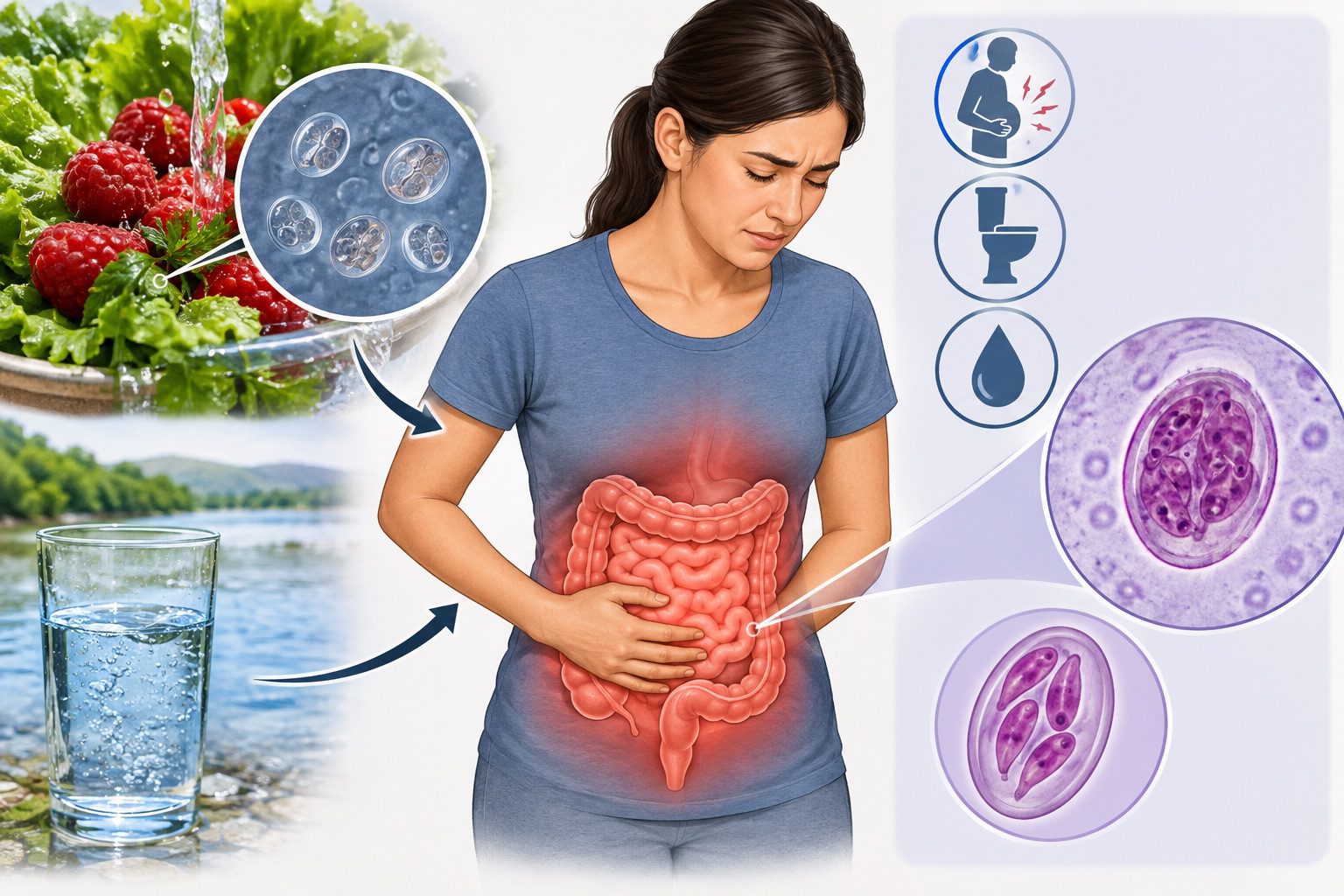
Cyclosporiasis is a food- and water-associated intestinal parasitic disease produced by the protozoan organism Cyclospora cayetanensis. The infection represents an important enteric health problem because its transmission is closely linked to environmental contamination, inadequate sanitation, unsafe water, and the handling of fresh agricultural products. Unlike many intestinal pathogens that can spread directly between individuals, Cyclospora has a distinctive environmental phase that is essential for the development of its infective form. This biological characteristic strongly influences the epidemiology and transmission dynamics of the disease.
The condition primarily involves the small intestine, where the parasite establishes itself within the epithelial lining and interferes with normal intestinal function. Following ingestion of the infective stage, the organism undergoes developmental changes within the host. These processes can disturb nutrient absorption and intestinal fluid regulation, producing the characteristic gastrointestinal manifestations of cyclosporiasis. Although infection can occur in individuals of different ages, the clinical impact may be more pronounced when prolonged diarrhea results in dehydration, reduced nutritional intake, fatigue, and weight loss.
A defining feature of cyclosporiasis is its association with contaminated food and water. Fresh produce, including fruits, vegetables, and herbs, has frequently been implicated as a vehicle for the transmission of the parasite because agricultural products may become contaminated during cultivation, harvesting, processing, transportation, or preparation. Contamination can occur when water or environmental materials carrying Cyclospora oocysts come into contact with edible plant surfaces. The disease is not simply a consequence of individual hygiene but is also connected to broader food-production and sanitation systems.
The causative parasite, Cyclospora cayetanensis, is a microscopic, single-celled coccidian belonging to the phylum Apicomplexa. Its transmission depends on the production and environmental maturation of oocysts. Oocysts are discharged from infected individuals in feces, but freshly excreted oocysts are generally not immediately infectious. They require a period of development in the external environment before becoming capable of initiating infection. This feature helps explain why direct person-to-person transmission is relatively uncommon and why contaminated environmental sources play a central role in disease propagation.
Cyclosporiasis may occur as isolated cases or as clusters and outbreaks, particularly when a common food or water source becomes contaminated. The infection is therefore relevant not only to clinical medicine but also to parasitology, epidemiology, food safety, environmental health, and public-health surveillance. Recognition of its environmental transmission pathway is essential for understanding how the parasite moves from an infected host into the food or water supply and eventually reaches a susceptible individual.
Cyclosporiasis can be described as an intestinal protozoan infection caused by Cyclospora cayetanensis, acquired primarily through ingestion of food or water contaminated with environmentally matured oocysts and characterized predominantly by gastrointestinal disturbance involving the small intestine. Its significance arises from the interaction between parasite biology, environmental persistence, food contamination, sanitation practices, and host susceptibility.
Causative agent and parasitic characteristics of cyclosporiasis
Cyclosporiasis is caused by Cyclospora cayetanensis. C. cayetanensis is an obligate intracellular protozoan parasite that primarily colonizes the human intestinal tract. Although microscopic in size, this organism has a complex biological organization that enables it to survive outside the host, complete developmental stages within intestinal cells, and establish prolonged infection. The parasite belongs to the phylum Apicomplexa, a group of organisms characterized by specialized cellular structures that facilitate invasion of host cells. Unlike many intestinal parasites, C. cayetanensis has a developmental cycle involving both environmental maturation and intracellular multiplication, making its transmission closely dependent on environmental contamination and human ingestion.
The most recognizable diagnostic stage of C. cayetanensis is the oocyst. Oocysts are spherical to slightly ovoid structures that are released from the intestinal tract of an infected individual in an immature state. Their small dimensions mean that they cannot be identified by the unaided eye and require microscopic or molecular laboratory techniques for detection. When freshly excreted, these oocysts are generally unsporulated, meaning that they have not yet undergone the developmental changes necessary to become infectious. This characteristic is important in understanding the epidemiology of cyclosporiasis because newly passed oocysts do not immediately infect another person.
After reaching the external environment, the oocyst undergoes a process known as sporulation. During this period, environmental conditions such as temperature, moisture, and oxygen availability influence its maturation. Sporulation results in the formation of internal structures containing sporozoites, transforming the previously immature oocyst into an infectious stage. This environmental maturation distinguishes Cyclospora from intestinal parasites that can be transmitted directly from one person to another immediately after being shed.
Once a mature oocyst is swallowed through contaminated food or water, it enters the gastrointestinal tract. In the small intestine, developmental processes release sporozoites, which are motile invasive forms of the parasite. These organisms penetrate intestinal epithelial cells and begin a sequence of developmental stages. Asexual multiplication increases the parasite population within the host, followed by sexual differentiation and the production of new oocysts. These newly formed oocysts are subsequently released into the intestinal lumen and expelled in feces, allowing the parasite to re-enter the environment.
The environmental resilience of the oocyst contributes substantially to the persistence of C. cayetanensis in settings where sanitation and food hygiene are inadequate. Contamination may occur when human fecal material reaches agricultural water, soil, food-processing environments, or surfaces involved in food preparation. Fresh produce has been repeatedly associated with cyclosporiasis outbreaks because fruits and vegetables may become contaminated during cultivation, harvesting, processing, transportation, or handling. Importantly, contamination is not necessarily visible, since the parasite and its oocysts are microscopic.
Another important characteristic of C. cayetanensis is its human-specific transmission pattern. Humans are considered the principal known host, and the parasite is adapted to completing its developmental stages within the human intestinal environment. Because freshly excreted oocysts require time to become infectious, immediate fecal-oral transmission between individuals is relatively inefficient. Instead, transmission commonly involves an environmental interval in which oocysts mature before reaching a new host.
From a diagnostic perspective, the oocyst provides a valuable biological target. Its distinctive morphology and structural properties can assist laboratory identification, although microscopy may require specialized staining or concentration procedures. Molecular assays can provide additional confirmation when microscopic findings are uncertain.
Life cycle of C. cayetanensis
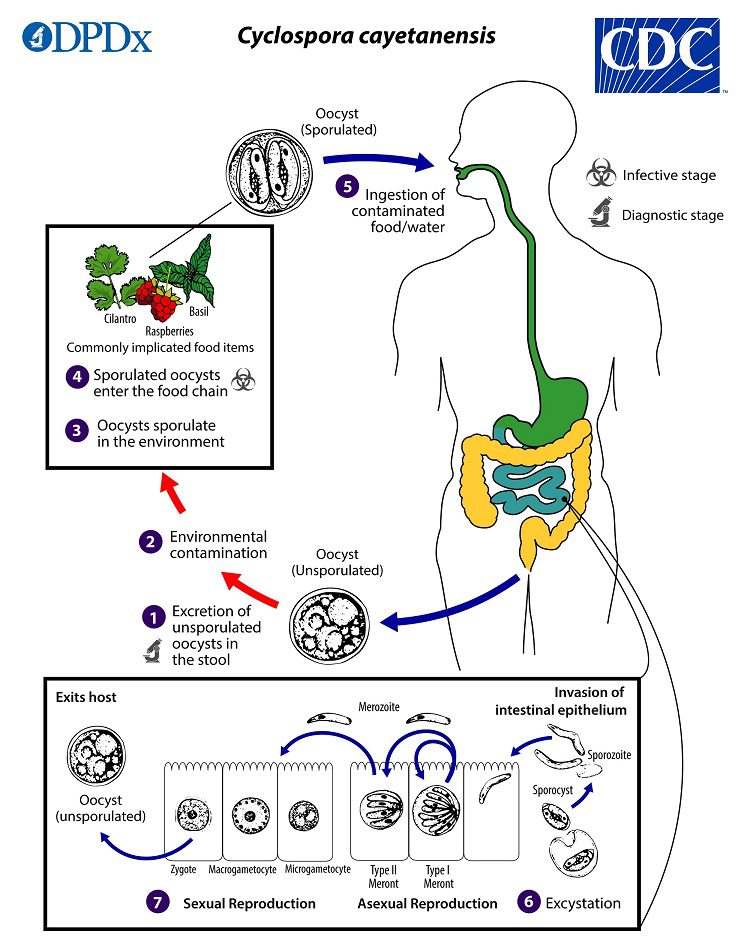
The life cycle of C. cayetanensis involves a complex transition between the human host and the external environment. Unlike parasites that are immediately infectious when excreted, C. cayetanensis requires a period of environmental maturation before its oocysts become capable of initiating infection. This developmental stage is essential to the parasite’s transmission and distinguishes Cyclospora from other fecal-oral protozoan parasites.The life cycle progresses through five interconnected stages: fecal shedding of immature oocysts, environmental sporulation, ingestion of infectious oocysts, intestinal development, and production of new oocysts (Figure 1).
The cycle begins when an infected individual excretes unsporulated oocysts in feces. These oocysts undergo sporulation in the environment, becoming infectious before they are ingested through contaminated food or water. Following ingestion, the parasite develops within the small intestine, where it undergoes asexual and sexual stages and ultimately produces new oocysts. These newly formed oocysts are released into the intestinal lumen and excreted in feces, thereby completing the cycle and allowing environmental contamination to occur again. The major stages in the life cycle of Cyclospora are as follows:
1. Excretion of immature oocysts
The cycle begins in an infected human host. During intestinal infection, the parasite undergoes developmental stages within the epithelial cells of the small intestine and ultimately produces oocysts. These oocysts are released into the intestinal lumen and leave the body in the feces. At the time of excretion, however, the oocysts are unsporulated, meaning that they have not yet undergone the developmental changes required to become infectious. This feature has important epidemiological significance. Freshly excreted Cyclospora oocysts do not immediately infect another person. Instead, they must remain in the environment for a period of time before reaching infectivity. Consequently, direct transmission from an infected individual to another person is considerably less efficient than transmission through contaminated food or water.
2. Environmental sporulation
After entering the external environment, the unsporulated oocysts undergo sporulation. During this process, the oocyst develops internally and acquires the structures necessary for infectivity. Environmental conditions such as temperature and moisture influence the progression of this maturation. Sporulation represents a critical transition in the parasite’s life cycle because it changes the oocyst from a newly shed, non-infectious stage into an infectious environmental stage. Once sporulated, the oocysts can persist in contaminated environmental materials and may eventually reach water, agricultural environments, or food products.
3. Ingestion and entry into the human host
Human infection occurs when a susceptible individual consumes food or water contaminated with sporulated oocysts. Fresh produce has frequently been implicated as a vehicle because contamination can occur during cultivation, harvesting, processing, transportation, or handling. Following ingestion, the infectious oocysts pass through the upper gastrointestinal tract and reach the small intestine. Conditions within the intestinal tract facilitate the release of the parasite’s invasive stages. The oocyst opens and releases sporozoites, which represent the motile stages capable of initiating intracellular development.
4. Development within intestinal cells
The released sporozoites penetrate epithelial cells lining the small intestine. Inside these host cells, C. cayetanensis progresses through a series of developmental stages. The parasite first undergoes asexual multiplication, allowing the infection to expand within the intestinal tissue. Sexual development occurs, producing male and female reproductive forms. Their interaction results in the formation of new oocysts. These newly produced oocysts enter the intestinal lumen and are eventually eliminated from the body through feces.
5. Completion and continuation of the cycle
The newly formed oocysts that leave the infected host are again unsporulated and non-infectious. They therefore require another period of environmental maturation before they can infect a new host. Once sporulation is completed, contaminated water or food can serve as a vehicle for transmission, allowing the parasite to re-enter the human digestive system. The life cycle of C. cayetanensis is characterized by a crucial separation between oocyst shedding and infectivity. The parasite alternates between intracellular development within the human small intestine and maturation in the external environment. This biological pattern explains why contaminated food and water play a central role in transmission and why immediate person-to-person spread is relatively uncommon.
Complications and prognosis of cyclosporiasis
Cyclosporiasis is generally a treatable intestinal infection, but prolonged or inadequately managed disease can produce substantial gastrointestinal and systemic consequences. The clinical burden is largely associated with persistent watery diarrhea, which may continue for several weeks and, in some individuals, follow a recurrent or relapsing pattern. The repeated loss of fluid and electrolytes through frequent bowel movements can progressively compromise hydration status. If fluid replacement is insufficient, patients may develop dehydration, characterized by excessive thirst, dry mucous membranes, reduced urination, dizziness, and generalized weakness. In more pronounced cases, prolonged fluid depletion may disturb electrolyte balance and interfere with normal physiological functions.
Persistent diarrhea can also influence nutritional status. Rapid intestinal transit may reduce the effective absorption of water and nutrients, while abdominal discomfort, nausea, and diminished appetite can reduce food intake. Individuals with prolonged infection may experience unintended weight loss and reduced nutritional reserves. Continued nutritional depletion can become particularly important in patients who are already nutritionally vulnerable. In these circumstances, the infection may contribute to a cycle in which gastrointestinal symptoms reduce dietary intake, declining nutritional status weakens physical condition, and recovery becomes more difficult.
Fatigue is another potential consequence of prolonged cyclosporiasis. It may arise from a combination of fluid loss, inadequate nutritional intake, disturbed electrolyte balance, poor sleep, and the physiological demands associated with persistent intestinal inflammation. Patients may therefore experience reduced energy, weakness, and difficulty maintaining normal daily activities. Although these manifestations are not usually permanent, they can remain noticeable while gastrointestinal symptoms continue and during the period of recovery following resolution of diarrhea.
An important feature of cyclosporiasis is the possibility of symptom recurrence. Even after an initial improvement, some patients may experience renewed diarrhea and abdominal discomfort. Recurrent symptoms can extend the overall duration of illness and increase the cumulative risk of dehydration and nutritional deterioration. Persistent symptoms should therefore not be interpreted simply as a prolonged but harmless inconvenience. Continued gastrointestinal disturbance warrants appropriate clinical assessment to determine whether the infection remains active, has recurred, or requires further management.
The prognosis of cyclosporiasis is generally favorable in otherwise healthy individuals when the infection is correctly recognized and appropriately treated. Effective antimicrobial therapy can shorten the course of illness and promote resolution of gastrointestinal symptoms. Supportive management is also important, particularly the replacement of fluids and electrolytes lost through diarrhea. Restoration of adequate food and fluid intake assists the body in recovering from the metabolic and nutritional effects of prolonged intestinal illness.
Early recognition has an important role in limiting the consequences of the infection. Because cyclosporiasis can resemble other causes of persistent watery diarrhea, accurate diagnosis helps distinguish it from bacterial, viral, and other parasitic gastrointestinal infections. Appropriate laboratory confirmation can facilitate targeted treatment and reduce unnecessary or ineffective interventions. Patients with prolonged symptoms may require particular attention to hydration, nutritional intake, body weight, and overall functional status during recovery.
The clinical outcome of cyclosporiasis depends on factors such as the duration and intensity of diarrhea, access to appropriate treatment, hydration status, nutritional condition, and the presence of underlying vulnerability. Most healthy individuals recover without lasting complications once the infection is adequately managed. Prolonged or recurrent disease can impose a considerable temporary burden through dehydration, weight loss, nutritional depletion, and persistent fatigue. Prompt diagnosis, appropriate therapy, adequate fluid replacement, and attention to nutritional recovery therefore remain central to achieving a favorable prognosis.
Mode of transmission of C. cayetanensis
Cyclosporiasis is primarily acquired through the fecal-oral route, following the ingestion of infectious, sporulated oocysts of C. cayetanensis. The transmission process is closely associated with environmental contamination, food hygiene, water quality, and inadequate sanitation. Unlike some intestinal protozoan infections, newly excreted Cyclospora oocysts are not immediately capable of infecting another person. They must undergo a period of development in the external environment before becoming infectious. This feature has an important influence on the epidemiology and spread of cyclosporiasis.
An infected individual releases unsporulated oocysts into the environment through feces. These immature oocysts may contaminate soil, irrigation systems, water sources, or surfaces involved in food production and preparation. Under suitable environmental conditions, the oocysts undergo sporulation, during which they develop into an infectious stage. Once sporulated, they can serve as a source of infection when introduced into food or drinking water and subsequently consumed by a susceptible person.
Foodborne transmission is particularly important in outbreaks of cyclosporiasis. Fresh produce, including fruits, leafy vegetables, herbs, and other uncooked agricultural products, may become contaminated during cultivation, harvesting, processing, transportation, or preparation. Contamination can occur when produce comes into contact with polluted irrigation water, contaminated soil, or inadequately sanitized equipment and surfaces. Because many fresh foods are eaten raw or require minimal cooking, contaminated oocysts may remain viable until consumption.
Waterborne transmission can occur when drinking water or water used in food production becomes contaminated with human fecal material containing Cyclospora oocysts. Inadequate sanitation infrastructure and unsafe water sources can therefore contribute to transmission, particularly in settings where wastewater and drinking-water systems are insufficiently protected from contamination.
Direct transmission from one person to another is considered uncommon. This is largely explained by the maturation requirement of the parasite: oocysts passed in feces need time in the environment to become infectious. Immediate transmission through ordinary person-to-person contact is less likely than transmission through contaminated food or water. The transmission of cyclosporiasis reflects an interaction between human fecal contamination, environmental maturation of oocysts, food and water exposure, and sanitation practices.
Clinical manifestations of cyclosporiasis
Cyclosporiasis primarily affects the gastrointestinal tract, particularly the epithelial lining of the small intestine. The clinical presentation can vary considerably between individuals, ranging from mild intestinal discomfort to prolonged and debilitating gastrointestinal illness. The onset of symptoms generally follows ingestion of infective C. cayetanensis oocysts and may develop after an incubation period of approximately one week.
The characteristic manifestation of cyclosporiasis is profuse, watery diarrhea, which may occur repeatedly throughout the day. The stools are generally loose and non-bloody, and persistent diarrhea can interfere substantially with normal daily activities. In some individuals, the intestinal disturbance follows an intermittent pattern, with periods of improvement followed by renewed episodes of diarrhea.
Abdominal discomfort is another frequent feature of the infection. Patients may experience cramping, abdominal tenderness, excessive intestinal gas, and bloating. These symptoms are associated with disturbances in normal intestinal function and may become more noticeable during episodes of diarrhea. Nausea can also occur and may contribute to reduced food intake.
Affected individuals may develop a reduced appetite, particularly when gastrointestinal symptoms continue for an extended period. Persistent illness can consequently decrease nutritional intake and contribute to progressive weight loss. In more prolonged cases, weakness and general physical exhaustion may become apparent as the body loses fluids and essential nutrients.
Fatigue is commonly associated with prolonged cyclosporiasis. Repeated watery stools can result in substantial fluid and electrolyte losses, while inadequate dietary intake may further contribute to reduced energy levels. If these losses are not adequately replaced, dehydration can develop, producing symptoms such as increased thirst, dry mouth, weakness, dizziness, and reduced urine output.
An important clinical characteristic of cyclosporiasis is its prolonged or relapsing course. Unlike some short-lived gastrointestinal infections, symptoms may continue for several weeks when the infection remains untreated. Even after an initial improvement, diarrhea may recur, producing a fluctuating pattern of illness. Repeated episodes can prolong nutritional depletion and physical weakness.
The severity of symptoms is influenced by individual factors such as immune status, nutritional condition, and the extent of intestinal involvement. While some infected individuals may experience relatively mild gastrointestinal disturbance, others can develop persistent diarrhea accompanied by abdominal symptoms, fatigue, anorexia, and weight reduction. Prompt recognition of this characteristic symptom pattern is therefore important for appropriate laboratory investigation and management.
Diagnosis and treatment of cyclosporiasis
Diagnosis of cyclosporiasis depends largely on the detection of C. cayetanensis in clinical specimens, particularly stool. Because the infection commonly produces prolonged or recurrent watery diarrhea, laboratory confirmation is important when symptoms persist without an obvious bacterial or viral cause. Clinical features alone are not sufficient to distinguish cyclosporiasis from other intestinal infections because abdominal discomfort, nausea, fatigue, and diarrhea can occur in many gastrointestinal disorders.
The principal diagnostic material is a stool specimen. Examination of stool allows laboratories to search for the characteristic oocysts of C. cayetanensis. However, identification can be challenging because the number of oocysts shed by an infected individual may fluctuate considerably. A single negative stool examination does not necessarily exclude infection. Healthcare professionals may therefore request multiple stool specimens collected on different days to increase the likelihood of detecting the parasite.
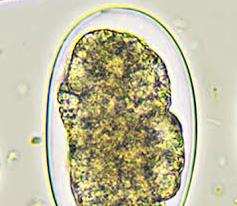
Laboratory identification may involve specialized microscopic procedures. Cyclospora oocysts possess distinctive structural and staining characteristics that can assist in their recognition (Figure 2). Modified acid-fast staining is one method that may be used, although staining intensity can vary between individual oocysts (Figure 3). Another useful approach is ultraviolet fluorescence microscopy, in which the oocysts can display characteristic blue-green autofluorescence. These laboratory features can help differentiate Cyclospora from other intestinal parasites.


Molecular diagnostic methods may also be employed where available. Polymerase chain reaction (PCR)-based assays can detect Cyclospora genetic material with high analytical sensitivity and specificity. Such techniques are particularly valuable when microscopy produces uncertain findings or when several intestinal pathogens need to be investigated simultaneously. The availability of molecular testing varies between laboratories and healthcare settings.
The patient’s clinical history and exposure history should also be considered alongside laboratory findings. Recent consumption of raw or minimally processed produce, exposure to potentially contaminated water, travel to areas where cyclosporiasis occurs, or participation in a recognized outbreak may provide useful epidemiological clues. Combining these factors with laboratory evidence provides a stronger basis for diagnosis than relying on symptoms alone.
Once cyclosporiasis has been confirmed or strongly suspected, appropriate antimicrobial therapy can substantially shorten the course of illness. The established treatment is the combination of trimethoprim-sulfamethoxazole (TMP-SMX), an antimicrobial preparation containing two active components. It is generally used to eliminate the parasite and reduce the duration and severity of gastrointestinal symptoms.
Supportive management is equally important, particularly in individuals experiencing frequent diarrhea. Persistent loss of water and electrolytes through watery stools can result in dehydration, weakness, and disturbances in electrolyte balance. Patients should therefore maintain adequate fluid intake, and oral rehydration solutions may be useful when fluid losses are substantial. In more severe cases, clinical assessment may be necessary to determine whether additional fluid or electrolyte replacement is required.
Treatment response is generally monitored according to the improvement of symptoms. Diarrhea, abdominal discomfort, appetite, and general energy levels may gradually return toward normal as the infection resolves. However, relapse can occur, particularly in individuals with impaired immune function. Recurrence of symptoms should prompt further clinical assessment rather than assuming that the original infection has completely resolved.
When TMP-SMX cannot be used because of an allergy, intolerance, or another clinical consideration, treatment can become more challenging. Alternative therapeutic options are less well established, and management should therefore be individualized by a qualified healthcare professional. Self-medication with unrelated antibiotics is inappropriate because cyclosporiasis requires specific antimicrobial therapy.
Effective management of cyclosporiasis combines laboratory confirmation, targeted antimicrobial treatment, and restoration of fluid balance. Prompt recognition is particularly important when diarrhea is prolonged, recurrent, or associated with substantial fluid loss. Appropriate diagnosis and therapy can reduce illness duration and help prevent complications associated with persistent gastrointestinal infection.
Epidemiology, prevention and control of cyclosporiasis
Cyclosporiasis epidemiology is closely linked to environmental sanitation, food-production practices, water quality, and human exposure to contaminated produce. Although infections can occur sporadically, clusters and outbreaks are frequently associated with consumption of contaminated fresh fruits, vegetables, herbs, and other ready-to-eat foods. The infection is therefore an important concern for both community health and food safety, particularly when contaminated products are distributed widely. Transmission begins when infectious Cyclospora oocysts are ingested through contaminated food or water.
A distinctive epidemiological feature of the parasite is that freshly excreted oocysts are not immediately infectious. They require a period of maturation in the environment before they can infect another person. Direct transmission from one infected individual to another is relatively uncommon. Instead, transmission is strongly influenced by environmental contamination and the subsequent introduction of mature oocysts into food or water. This characteristic makes sanitation and food-handling practices central components of disease prevention.
The sustainable prevention of cyclosporiasis depends on interrupting the pathway of transmission from human fecal contamination to food or water consumption. Strengthening sanitation infrastructure, maintaining safe water supplies, improving agricultural and food-handling practices, promoting effective hand hygiene and public health education, and conducting timely outbreak investigations can collectively reduce the transmission of the parasite. Because contamination may occur at several points along the food-production chain, sustained preventive measures are more effective than relying on a single intervention.
Personal hygiene and sanitation
Effective hand hygiene is one of the fundamental measures for reducing fecal contamination. Hands should be washed carefully with soap and running water after using the toilet, changing diapers, handling potentially contaminated materials, and before preparing or consuming food. Particular attention should be given to cleaning areas between the fingers and around the fingernails, where microorganisms may remain. Alcohol-based hand sanitizers should not be considered a complete substitute for handwashing when fecal contamination is possible.
Environmental sanitation is equally important. Proper disposal and treatment of human fecal waste can limit the introduction of Cyclospora into soil and water. Communities with inadequate sewage systems or unsafe sanitation infrastructure may face greater opportunities for contamination of agricultural environments. Improving sanitation facilities, maintaining sewage systems, and preventing untreated wastewater from reaching agricultural water sources are therefore important public health interventions.
Food safety and fresh produce
Fresh produce requires careful handling because fruits and vegetables may become contaminated during cultivation, harvesting, processing, transportation, or preparation. Produce should be handled under hygienic conditions and washed thoroughly with safe water before consumption. Washing can reduce contamination on the surface, although it cannot be relied upon to eliminate all infectious organisms.
Food handlers also have an important role in prevention. Individuals involved in harvesting, processing, packaging, food preparation, and serving should follow appropriate hygiene procedures and avoid practices that could introduce fecal contamination. Food-processing environments should maintain clean equipment, sanitary surfaces, adequate wastewater management, and appropriate separation between raw materials and ready-to-eat foods.
Safe water and environmental protection
Access to microbiologically safe water is essential for controlling cyclosporiasis. Drinking water should come from a reliable and properly managed source. Water used for washing produce, preparing food, or maintaining food-contact surfaces should also be of appropriate sanitary quality. Agricultural water deserves particular attention because contamination at the production stage can affect large quantities of fresh produce. Environmental monitoring and rapid investigation of suspected outbreaks can help identify contaminated food or water sources. When an outbreak is recognized, public health authorities can use epidemiological investigations, laboratory testing, traceback procedures, and food-supply information to determine potential sources and interrupt further exposure.
Public health control
Control of cyclosporiasis requires cooperation between individuals, food producers, healthcare professionals, laboratories, and public health authorities. Clinicians should consider cyclosporiasis in patients presenting with prolonged or recurrent watery diarrhea, particularly when there is a relevant history of consuming potentially contaminated food or exposure during an outbreak. Accurate laboratory diagnosis supports surveillance and helps distinguish cyclosporiasis from other causes of gastrointestinal illness.
Public health education
Public health education is an essential component of preventing and controlling cyclosporiasis because effective disease prevention depends not only on environmental measures but also on informed individual and community practices. Educational programs should explain that cyclosporiasis is caused by C. cayetanensis and is commonly acquired through ingestion of contaminated food or water. Particular attention should be given to the importance of personal hygiene, safe food preparation, and proper sanitation.
Communities should be encouraged to wash their hands thoroughly with soap and water after using the toilet, changing diapers, and before preparing or consuming food. Public health messages should also emphasize the careful washing of fresh fruits and vegetables using safe water. Food handlers, agricultural workers, and caregivers can benefit from targeted training on hygienic practices and prevention of fecal contamination during food production and preparation.
Health education should also increase awareness of the characteristic symptoms of cyclosporiasis, especially prolonged or recurrent watery diarrhea, abdominal discomfort, fatigue, and weight loss. Individuals experiencing persistent gastrointestinal symptoms should be encouraged to seek medical evaluation. During outbreaks, timely communication can help communities recognize potential sources of exposure and follow recommended preventive measures.
References
Almeria, S., Cinar, H. N., & Dubey, J. P. (2019). Cyclospora cayetanensis and cyclosporiasis: An update. Microorganisms, 7(9), 317.
Blans, M. C., Ridwan, B. U., Verweij, J. J., Rozenberg-Arska, M., & Verhoef, J. (2005). Cyclosporiasis outbreak, Indonesia. Emerging Infectious Diseases, 11(9), 1453–1455.
Casillas, S. M., Bennett, C., & Straily, A. (2018). Notes from the field: Multiple cyclosporiasis outbreaks—United States, 2018. MMWR. Morbidity and Mortality Weekly Report, 67(39), 1101–1102.
Döller, P. C., Dietrich, K., Filipp, N., Brockmann, S., Dreweck, C., Vonthein, R., Wagner-Wiening, C., & Wiedenmann, A. (2002). Cyclosporiasis outbreak in Germany associated with the consumption of salad. Emerging Infectious Diseases, 8(9), 992–994.
Karanja, R. M., Gatei, W., & Wamae, N. (2007). Cyclosporiasis: An emerging public health concern around the world and in Africa. African Health Sciences, 7(2), 62–67.
Li, J., Cui, Z., Qi, M., & Zhang, L. (2020). Advances in cyclosporiasis diagnosis and therapeutic intervention. Frontiers in Cellular and Infection Microbiology, 10, 43.
Li, J., Wang, R., Chen, Y., Xiao, L., & Zhang, L. (2020). Cyclospora cayetanensis infection in humans: Biological characteristics, clinical features, epidemiology, detection method and treatment. Parasitology, 147(2), 160–170.
Zhang, L.-X., Wang, R.-J., Zhao, G.-H., & Li, J.-Q. (2021). Cyclospora and cyclosporiasis: Epidemiology, diagnosis, detection, and control. Academic Press.
www.fda.gov/food/foodborne-pathogens/cyclospora
www.cdc.gov/cyclosporiasis/about/index.html
Discover more from Microbiology Class
Subscribe to get the latest posts sent to your email.