
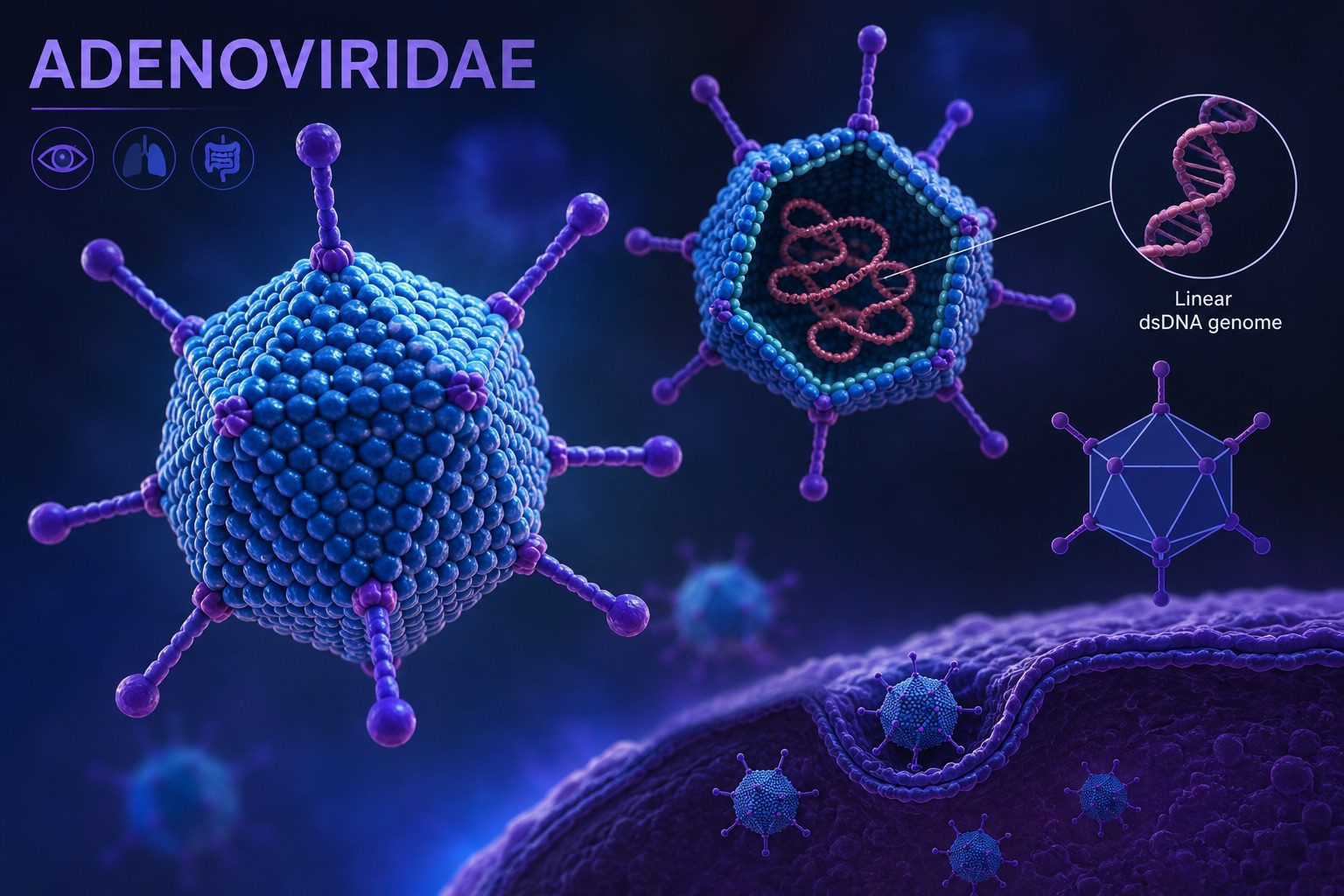
Adenoviridae family comprises a diverse group of non-enveloped, double-stranded DNA viruses that infect a wide range of vertebrate hosts, including humans, mammals, birds, reptiles, amphibians, and fish. These viruses are called adenoviruses. Since their first isolation from human adenoid tissue in the 1950s, adenoviruses have attracted significant scientific attention due to their ability to cause a variety of diseases, their widespread distribution, and their increasing importance in biotechnology and vaccine development. Members of the Adenoviridae family are characterized by their icosahedral capsid structure, linear double-stranded DNA genome, and remarkable genetic stability compared with many RNA viruses.
These features contribute to their persistence in host populations and their utility as vectors in gene therapy and vaccine platforms. Mastadenovirus, Aviadenovirus, Atadenovirus, Siadenovirus, and Ichtadenovirus are the different genera of the Adenoviridae family. Each of these genera is associated with specific host groups. Human adenoviruses belong primarily to the genus Mastadenovirus and are further classified into multiple species and numerous serotypes based on genetic, immunological, and biological characteristics. This extensive diversity enables adenoviruses to infect different tissues and host species, resulting in a broad spectrum of clinical manifestations.
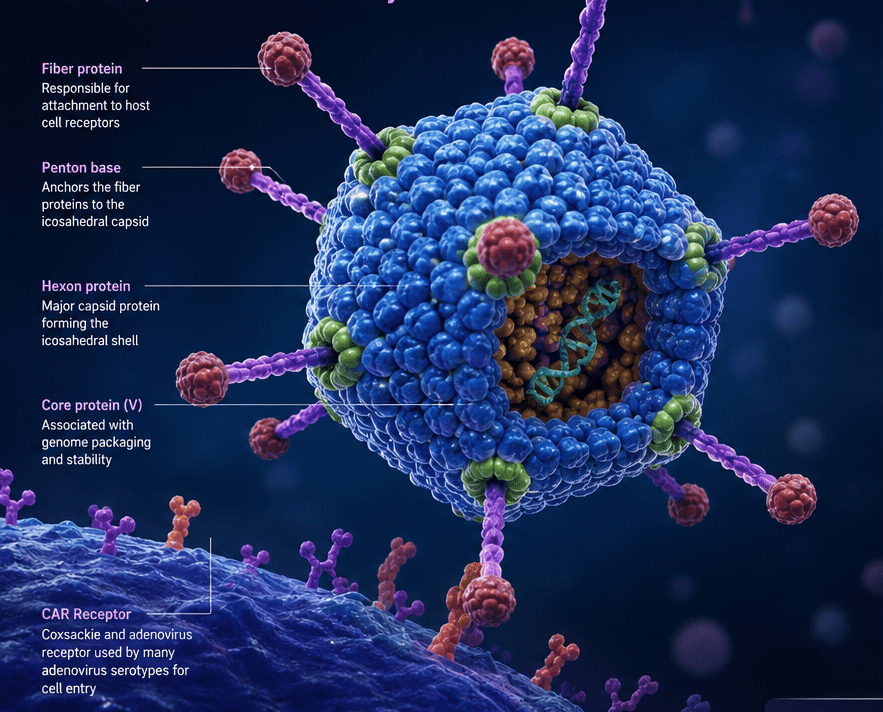
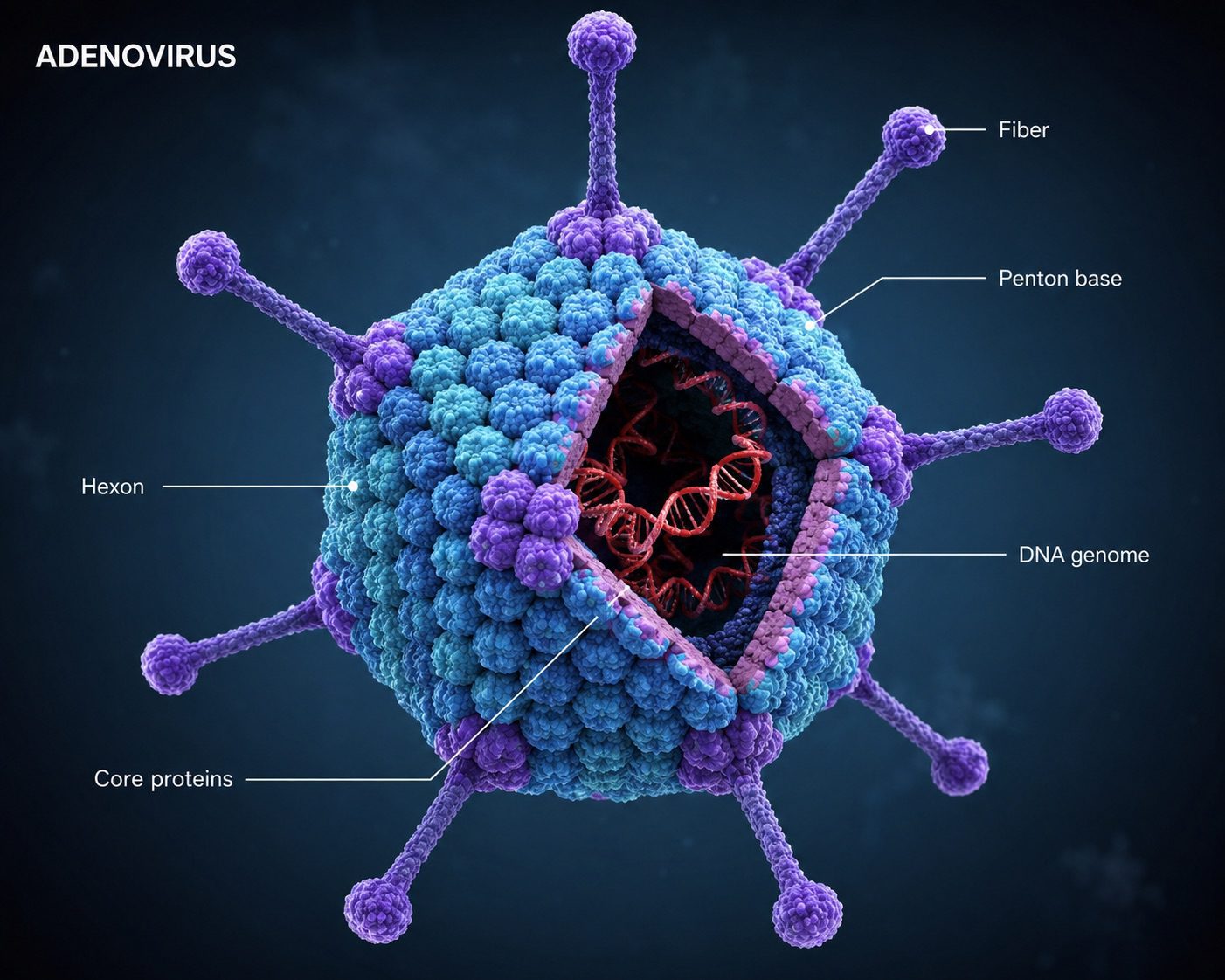
Adenoviruses possess a non-enveloped capsid approximately 70-90 nm in diameter, composed mainly of hexon, penton, and fiber proteins. The fiber protein plays a crucial role in viral attachment and entry into host cells by binding to specific cellular receptors. Following entry, the viral genome is transported to the nucleus, where replication and transcription occur using host cellular machinery. The relatively large genome, typically ranging from 26 to 48 kilobase pairs, encodes numerous proteins involved in viral replication, host immune modulation, and cell transformation. These molecular features contribute to the adaptability and pathogenic potential of adenoviruses.
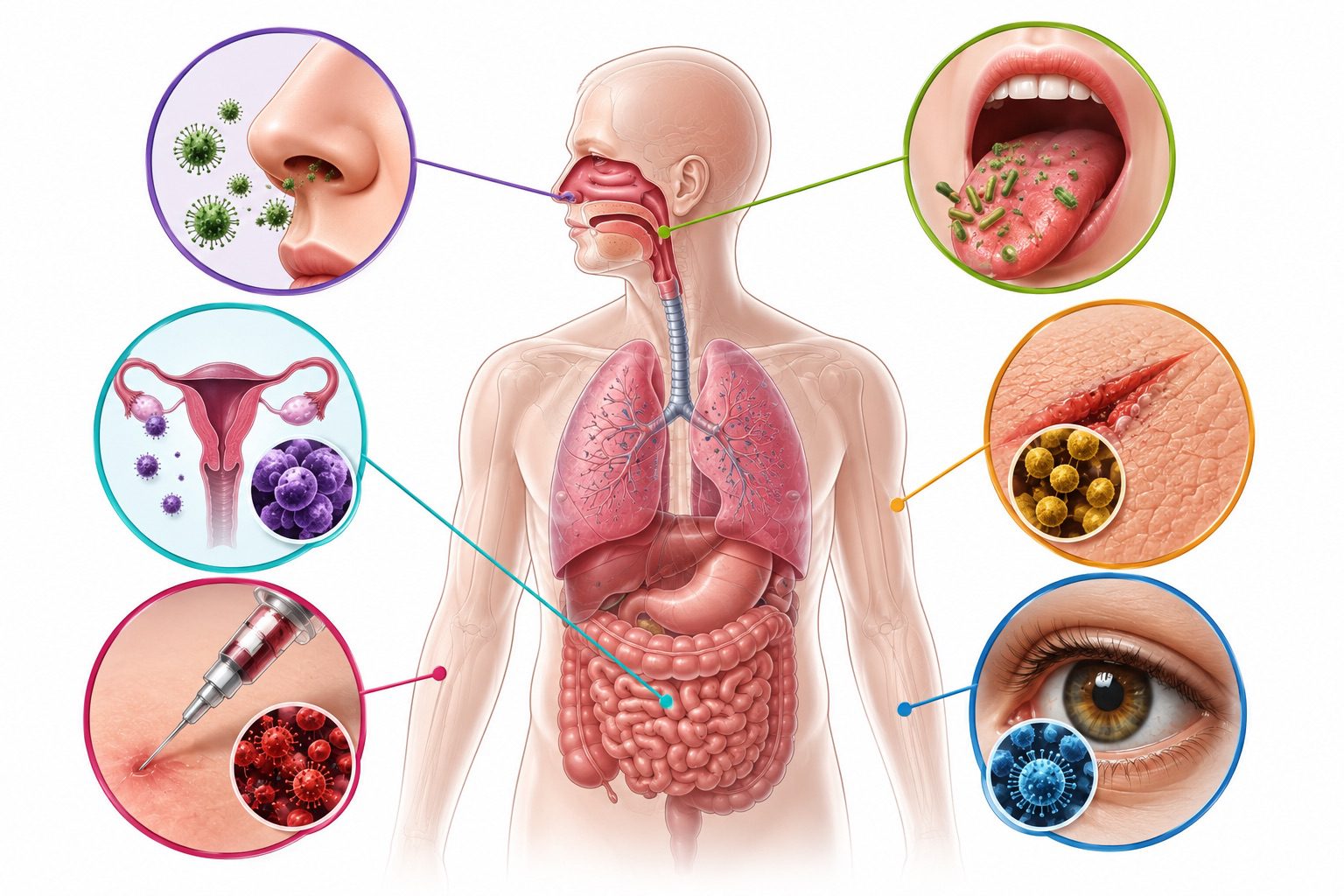
Clinically, adenoviruses are associated with a wide range of diseases affecting multiple organ systems. In humans, infections commonly involve the respiratory tract, gastrointestinal tract, urinary tract, and conjunctiva. Respiratory infections can range from mild upper respiratory illnesses to severe pneumonia, particularly in infants, elderly individuals, and immunocompromised patients. Certain adenovirus serotypes are also responsible for epidemic keratoconjunctivitis, gastroenteritis, hemorrhagic cystitis, and disseminated infections. Although most infections are self-limiting, severe outcomes can occur in vulnerable populations, highlighting the public health importance of these viruses.
The epidemiology of adenoviruses is influenced by their ability to remain stable in the environment and resist many common disinfectants. Transmission occurs through respiratory droplets, direct contact, fecal-oral routes, and contaminated water sources. Outbreaks frequently occur in crowded environments such as schools, military training camps, healthcare facilities, and childcare centers. The widespread circulation of adenoviruses and their capacity for asymptomatic persistence contribute to their continuous transmission across populations. Beyond their role as pathogens, adenoviruses have become valuable tools in biomedical research and medicine.
Their ability to efficiently deliver genetic material into host cells has led to the development of adenovirus-based vectors for gene therapy, cancer treatment, and vaccine production. Notably, adenoviral vector technologies have been employed in several vaccines against emerging infectious diseases, demonstrating their versatility and effectiveness in modern biotechnology. The Adenoviridae family represents a group of biologically complex and medically important viruses with significant implications for human and animal health. Their unique structural characteristics, broad host range, diverse pathogenic potential, and utility in genetic engineering make them a critical subject of virological research.
Structural characteristics of the Adenoviridae family
Members of the Adenoviridae family are non-enveloped viruses possessing a highly organized icosahedral capsid that encloses a linear double-stranded DNA (dsDNA) genome. Their distinctive structural features contribute significantly to viral stability, infectivity, and persistence in diverse environmental conditions. Adenoviruses are generally spherical in appearance, with a diameter ranging from approximately 70 to 90 nm, and exhibit a characteristic icosahedral symmetry composed of 252 capsomers.
The viral capsid consists primarily of three major structural proteins: hexon, penton base, and fiber proteins. Hexon proteins form the majority of the capsid surface and are arranged as 240 trimers, providing structural integrity and protection to the viral genome. These proteins also contain antigenic determinants that stimulate host immune responses and are commonly used in serotype classification. At each of the twelve vertices of the icosahedral capsid is a penton complex composed of a penton base protein and a protruding fiber protein. The fiber proteins extend outward from the virion surface and play a crucial role in host-cell recognition and attachment by binding to specific cellular receptors. This interaction represents the initial step in viral infection and influences tissue tropism and host specificity.
Internally, the adenoviral genome consists of a linear double-stranded DNA molecule ranging from approximately 26 to 48 kilobase pairs, depending on the species and genus (Figure 1). The genome is tightly associated with several core proteins, including proteins V, VII, and μ (mu), which facilitate DNA packaging and stabilize the viral nucleoprotein complex. A terminal protein is covalently attached to each 5′ end of the DNA strand and functions as a primer during viral DNA replication.
In addition to the major capsid proteins, adenoviruses encode several minor structural proteins, including proteins IIIa, VI, VIII, and IX. These proteins contribute to capsid assembly, stabilization, and disassembly during the infection process. Protein VI, for example, is involved in endosomal escape following viral entry, enabling the viral particle to access the host-cell cytoplasm and subsequently the nucleus.
The absence of a lipid envelope provides adenoviruses with exceptional environmental resistance compared with enveloped viruses. As a result, they can survive for extended periods on surfaces, in water, and under varying environmental conditions. This structural robustness enhances viral transmission and contributes to the widespread distribution of adenoviruses among humans and animals. The intricate architecture of adenoviruses underpins their biological success, pathogenic potential, and utility as vectors in molecular biology, gene therapy, and vaccine development.
Host range of the Adenoviridae family
The Adenoviridae family exhibits one of the broadest host ranges among DNA viruses, infecting a diverse array of vertebrate species. Members of this family have been identified in mammals, birds, reptiles, amphibians, and fish, demonstrating their remarkable evolutionary adaptability and ecological distribution. The ability of adenoviruses to infect multiple host groups has contributed significantly to their persistence in nature and their importance in both human and veterinary medicine.
Adenoviruses are generally host-specific, with most species showing a strong preference for particular animal hosts. In mammals, viruses belonging to the genus Mastadenovirus infect humans, non-human primates, cattle, pigs, sheep, goats, dogs, cats, horses, rodents, and several wildlife species. Human adenoviruses are among the most extensively studied and are responsible for a variety of respiratory, ocular, gastrointestinal, and urinary tract infections. Similarly, adenoviruses in domestic animals can cause diseases ranging from respiratory disorders to enteric infections, leading to significant economic losses in livestock production.
Birds serve as important hosts for adenoviruses, particularly those classified within the genus Aviadenovirus. Avian adenoviruses infect poultry species such as chickens, turkeys, ducks, geese, and quails. These viruses are associated with economically important diseases, including inclusion body hepatitis, hydropericardium syndrome, and gizzard erosion. The widespread occurrence of adenoviruses in poultry populations has made them a major concern for the global poultry industry. In addition, wild birds act as natural reservoirs, facilitating viral maintenance and dissemination across geographic regions.
The host range of the Adenoviridae family extends beyond mammals and birds. Members of the genus Atadenovirus have been detected in reptiles, including snakes, lizards, and crocodilians, while some species have also been identified in ruminants and birds. The genus Siadenovirus infects both avian and amphibian hosts, reflecting a broader host association compared with other adenoviral groups. The recently recognized genus Ichtadenovirus includes adenoviruses isolated from fish, highlighting the evolutionary expansion of the family into aquatic vertebrates.
Although adenoviruses generally exhibit host specificity, evidence suggests that host-switching events have occurred during their evolutionary history. Genetic analyses indicate that some adenoviruses have crossed species barriers, leading to adaptation in new hosts. Such events contribute to viral diversity and provide insights into adenovirus evolution and emergence. The extensive host diversity of adenoviruses underscores their ecological significance and highlights their role as important pathogens across a wide spectrum of vertebrate species.
The importance of adenoviruses in vaccine development, gene therapy, and biomedical research
The relevance of the Adenoviridae family extends far beyond its role as a pathogen. Adenoviruses have become indispensable tools in vaccine development, gene therapy, cancer treatment, and biomedical research. Their proven effectiveness, safety profile, and adaptability have positioned them at the forefront of modern biotechnology and medical innovation. As research continues to advance, adenoviral technologies are expected to play an increasingly important role in addressing current and future challenges in global health and precision medicine.
The Adenoviridae family has gained considerable attention in modern medicine and biotechnology due to its significant role in vaccine development, gene therapy, and biomedical research. Although adenoviruses are known to cause a variety of infections in humans and animals, their greatest scientific and clinical importance lies in their application as efficient delivery systems for genetic material. Over the past few decades, advances in molecular virology and genetic engineering have transformed adenoviruses from disease-causing agents into powerful tools for the prevention and treatment of numerous diseases.
Adenoviruses are among the most extensively studied viral groups, and this extensive body of knowledge has facilitated their successful adaptation for medical applications. Researchers have developed modified adenoviral vectors capable of delivering specific genes into target cells without causing the diseases normally associated with wild-type viruses. Their effectiveness as delivery vehicles has made them central to many experimental and clinical studies aimed at addressing major public health challenges.
One of the most important applications of adenoviruses is in vaccine development. Adenoviral vectors have proven highly effective in delivering genetic information that enables the immune system to recognize and respond to infectious agents. This technology has revolutionized vaccine design by providing a platform that can be rapidly adapted to emerging pathogens. Adenovirus-based vaccines stimulate both cellular and humoral immune responses, resulting in strong and long-lasting protection. Their success has been demonstrated in the development of vaccines against several infectious diseases, highlighting their value in responding to global health emergencies. The rapid development and deployment of adenoviral-vector vaccines during recent disease outbreaks further underscored their importance in modern public health interventions.
Beyond vaccination, adenoviruses have become indispensable tools in gene therapy. Gene therapy is a field that seeks to treat diseases by introducing therapeutic genes into affected cells. Gene therapy offers the potential to address the underlying genetic causes of many inherited and acquired disorders. Adenoviral vectors are particularly valuable because they can efficiently transport therapeutic genes into a wide range of tissues and cell types. Unlike some other viral vectors, adenoviruses generally do not integrate their genetic material into the chromosomes of host cells. This characteristic significantly reduces the risk of unintended genetic alterations, making them attractive candidates for clinical applications. Consequently, adenoviral vectors have been investigated for the treatment of numerous conditions, including genetic disorders, cardiovascular diseases, neurological diseases, and various forms of cancer.
The role of adenoviruses in cancer therapy has also attracted significant attention. Researchers have engineered adenoviruses to function as oncolytic viruses capable of selectively targeting and destroying cancer cells while minimizing damage to normal tissues. In addition, adenoviral vectors are being explored as vehicles for delivering therapeutic genes that enhance anti-tumor immune responses. These innovative approaches have opened new avenues for cancer treatment and continue to be evaluated in clinical trials worldwide.
Another reason for the continued relevance of adenoviruses is their importance in biomedical and molecular research. Because they are among the best-characterized viruses, adenoviruses have served as valuable model systems for studying fundamental biological processes, including gene expression, cell signaling, and host-pathogen interactions. Insights gained from adenovirus research have contributed substantially to advances in virology, immunology, molecular biology, and genetic engineering. Their use in laboratory research has also accelerated the development of novel therapeutic strategies and diagnostic technologies.
Adenoviruses can be propagated efficiently under laboratory conditions, allowing large-scale production for research, vaccine manufacture, and clinical applications. Their well-established production systems, combined with decades of accumulated scientific knowledge, have made them one of the most reliable and widely used viral platforms in biotechnology.
Pathogenesis of human adenoviruses
The pathogenesis of human adenoviruses is characterized by viral attachment, cellular entry, nuclear replication, cell lysis, and the induction of inflammatory responses. The ability of adenoviruses to evade immune defenses and establish persistent infections contributes significantly to their pathogenicity. Understanding these mechanisms is essential for developing effective antiviral therapies, vaccines, and preventive measures against adenovirus-associated diseases.
Human adenoviruses (HAdVs) are important pathogens capable of causing a wide range of clinical diseases, including respiratory tract infections, conjunctivitis, gastroenteritis, and urinary tract infections. The pathogenesis of human adenoviruses involves a complex interaction between viral factors and host immune responses that determines the severity and outcome of infection. Although most infections are mild and self-limiting, severe disease may occur in infants, elderly individuals, and immunocompromised patients.
The pathogenic process begins when adenoviruses gain entry into the host through respiratory, ocular, or gastrointestinal mucosal surfaces. Viral attachment is mediated by the fiber protein located at the vertices of the icosahedral capsid. This protein binds to specific cellular receptors such as the coxsackievirus and adenovirus receptor (CAR) or CD46, depending on the adenovirus serotype. Following attachment, the penton base protein interacts with cellular integrins, facilitating receptor-mediated endocytosis and internalization of the virus into host cells. Once inside the cell, the viral capsid undergoes disassembly, allowing the viral DNA to be transported into the nucleus where replication and transcription occur.
Adenoviral replication is initiated through the expression of early genes that regulate viral DNA synthesis and manipulate host cellular processes. Early proteins promote viral replication by driving infected cells into the DNA synthesis phase of the cell cycle and suppressing antiviral defenses. Viral DNA replication is followed by the expression of late genes encoding structural proteins necessary for virion assembly. Newly formed viral particles accumulate in the nucleus until cell lysis occurs, releasing progeny virions that infect neighboring cells. This lytic replication cycle is a major contributor to tissue damage and clinical disease.
The respiratory tract is one of the most common sites of adenovirus infection. Following infection of epithelial cells lining the upper or lower respiratory tract, extensive viral replication results in cellular destruction, inflammation, and impairment of mucociliary clearance. The release of inflammatory mediators attracts neutrophils, macrophages, and lymphocytes to the site of infection, leading to edema and tissue injury. Clinically, these pathological changes manifest as pharyngitis, bronchitis, bronchiolitis, or pneumonia. Certain serotypes, particularly HAdV-3, HAdV-4, HAdV-7, and HAdV-14, are associated with severe respiratory disease and outbreaks in military recruits and crowded communities.
Adenoviruses possess several mechanisms that enable them to evade host immune responses and establish persistent infections. Viral proteins encoded by the early transcription region interfere with antigen presentation by downregulating major histocompatibility complex (MHC) class I molecules on infected cells. This reduces recognition and elimination by cytotoxic T lymphocytes. Additionally, adenoviral proteins inhibit apoptosis, allowing infected cells to survive long enough for efficient viral replication. These immune evasion strategies enhance viral persistence and facilitate prolonged shedding of the virus.
The host immune response plays a critical role in controlling adenoviral infection. Innate immunity is activated through the recognition of viral components by pattern recognition receptors, resulting in the production of interferons and pro-inflammatory cytokines. Natural killer cells contribute to the early elimination of infected cells. Subsequently, adaptive immune responses involving virus-specific antibodies and T lymphocytes provide long-term protection. Neutralizing antibodies prevent viral attachment and reinfection, while cytotoxic T cells destroy infected cells. However, excessive immune activation can contribute to tissue damage and disease severity, particularly in severe respiratory infections.
In immunocompromised individuals, including transplant recipients and patients with advanced immunodeficiency, adenoviral infections may become disseminated. The virus can spread through the bloodstream to multiple organs, causing hepatitis, nephritis, encephalitis, and severe pneumonia. High viral loads and impaired immune control are often associated with poor clinical outcomes in these patients.
Detection and diagnostic approaches for adenovirus infections
Accurate detection of Adenoviridae infections is essential for clinical management, outbreak control, and epidemiological surveillance. Because adenoviruses can produce a broad spectrum of clinical manifestations ranging from mild respiratory illness to severe systemic disease diagnosis relies on a combination of clinical suspicion and laboratory confirmation.
Traditional diagnostic methods for adenovirus infection include viral culture, antigen detection, and serology. Viral culture remains a classical approach in which patient samples such as respiratory swabs, stool, urine, or conjunctival specimens are inoculated into susceptible cell lines. Cytopathic effects, including cell rounding and lysis, typically appear within days, confirming viral presence. However, culture is time-consuming and less frequently used in routine diagnostics due to delays in clinical decision-making.
Antigen detection assays, including enzyme-linked immunosorbent assays (ELISA) and immunofluorescence assays, provide faster results by identifying viral proteins directly from clinical specimens. These methods are useful for rapid screening, particularly in outbreak settings, but their sensitivity may vary depending on viral load and sample quality.
The most widely used modern approach is nucleic acid amplification testing (NAAT), particularly polymerase chain reaction (PCR). PCR-based assays detect adenoviral DNA with high sensitivity and specificity, enabling rapid diagnosis even in low viral load infections. Real-time PCR also allows quantification of viral load, which is particularly important in immunocompromised patients, such as transplant recipients, where disease severity correlates with viral replication levels.
Multiplex PCR panels are increasingly used in clinical laboratories to detect adenoviruses alongside other respiratory or gastrointestinal pathogens, improving diagnostic efficiency. In addition, next-generation sequencing (NGS) is emerging as a powerful tool for characterizing novel adenovirus strains, tracking outbreaks, and studying viral evolution.
Serological testing, which detects host antibodies against adenoviruses, is mainly used for epidemiological studies rather than acute diagnosis, as antibody responses may not distinguish between past and current infections. Molecular diagnostic techniques especially PCR represent the gold standard for adenovirus detection due to their speed, accuracy, and scalability in clinical and public health settings.
Treatment and clinical management of adenovirus infections
The treatment of Adenoviridae infections is primarily supportive, as there are currently no universally approved, highly specific antiviral therapies for routine clinical use. Management strategies depend on disease severity, affected organ system, and patient immune status.
In immunocompetent individuals, adenovirus infections are usually self-limiting. Supportive care includes hydration, antipyretics, analgesics, and rest. Respiratory infections are managed symptomatically, while gastrointestinal infections require fluid and electrolyte replacement to prevent dehydration. Conjunctivitis associated with adenovirus may be treated with lubricating eye drops and strict hygiene measures to prevent transmission.
Immunocompromised patients, such as hematopoietic stem cell or solid organ transplant recipients, may develop severe or disseminated adenovirus disease requiring more aggressive intervention. In such cases, reduction of immunosuppression is often the first step in management to allow host immune recovery and viral control.
Although no definitive antiviral therapy is universally approved, cidofovir, a nucleotide analogue, is the most commonly used antiviral agent in severe adenovirus infections. It inhibits viral DNA polymerase, reducing viral replication. However, its use is limited by nephrotoxicity and requires careful monitoring. A lipid-conjugated derivative, brincidofovir, has been investigated as a less toxic alternative with broader antiviral activity and improved oral bioavailability.
Other investigational treatments include ribavirin, though its efficacy against adenovirus remains inconsistent and strain-dependent. In severe or refractory cases, intravenous immunoglobulin (IVIG) may be administered to provide passive immunity, particularly in pediatric or immunocompromised patients.
Preventive strategies also play a crucial role in controlling adenovirus infections. Strict infection control practices, including hand hygiene, disinfection of contaminated surfaces, and isolation of infected patients in healthcare settings, are essential to limit transmission. In military populations, where outbreaks are common, live oral vaccines targeting specific adenovirus serotypes have been used effectively to reduce respiratory disease incidence.
While supportive care remains the cornerstone of adenovirus management, antiviral agents and immunomodulatory strategies are reserved for severe infections. Ongoing research into targeted antivirals and vaccines continues to improve prospects for more effective treatment options in the future.
Epidemiology of infections caused by viruses in the Adenoviridae family
The Adenoviridae family comprises a diverse group of DNA viruses that are distributed worldwide and infect a broad range of vertebrate hosts, including humans, mammals, birds, reptiles, and fish. Human adenoviruses are among the most common viral pathogens and are responsible for both sporadic infections and outbreaks throughout the year. Although adenoviral infections can occur in individuals of all ages, they are particularly prevalent among young children, military recruits, immunocompromised patients, and individuals living in crowded environments.
Human adenoviruses are transmitted through multiple routes, including respiratory droplets, direct person-to-person contact, the fecal-oral route, and exposure to contaminated water or surfaces. Their non-enveloped structure confers considerable environmental stability, allowing them to survive for prolonged periods outside the host and resist many commonly used disinfectants. This resilience facilitates transmission in community settings such as schools, daycare centers, hospitals, and military barracks.
More than 100 human adenovirus types have been identified and are classified into several species (A-G). Different types are associated with distinct clinical syndromes and epidemiological patterns. For example, species B, C, and E are commonly linked to respiratory infections, while species F is frequently associated with gastroenteritis in children. Outbreaks of adenoviral respiratory disease have been documented worldwide, particularly in closed or semi-closed populations where close contact promotes viral spread.
In animals, adenoviruses are important pathogens in poultry, livestock, companion animals, and wildlife. Avian adenoviruses are associated with diseases such as inclusion body hepatitis and hydropericardium syndrome, causing significant economic losses in the poultry industry. Cross-species transmission is considered uncommon, although ongoing surveillance is necessary to monitor viral evolution and emergence. The global distribution, multiple transmission routes, environmental persistence, and extensive genetic diversity of adenoviruses contribute to their epidemiological significance
Prevention and control of Adenoviridae infections
Effective prevention and control of infections caused by members of the Adenoviridae family require a combination of hygiene measures, environmental management, surveillance, and vaccination strategies where available. Because adenoviruses are highly stable in the environment and can be transmitted through respiratory droplets, direct contact, fecal–oral routes, and contaminated water, comprehensive infection-control practices are essential in both community and healthcare settings.
Good personal hygiene remains one of the most important preventive measures. Regular handwashing with soap and water, especially after using the restroom and before handling food, helps reduce viral transmission. Individuals with active adenoviral infections should avoid close contact with others, cover coughs and sneezes, and refrain from sharing personal items such as towels, utensils, and eye-care products. In healthcare facilities, strict adherence to infection prevention protocols, including patient isolation when necessary and proper use of personal protective equipment (PPE), can help limit outbreaks.
Environmental sanitation is equally important because adenoviruses can survive for extended periods on surfaces and resist some common disinfectants. Routine cleaning and disinfection of frequently touched surfaces, medical equipment, and communal areas using effective virucidal agents are recommended. Proper maintenance and chlorination of swimming pools and recreational water facilities are also critical to prevent waterborne transmission.
Vaccination provides additional protection against specific adenovirus types. Live oral vaccines targeting human adenovirus types 4 and 7 have been successfully used in military populations to reduce outbreaks of acute respiratory disease. Although these vaccines are not widely available for the general public, they demonstrate the effectiveness of immunization in high-risk groups.
In veterinary medicine, prevention focuses on maintaining good biosecurity practices, reducing overcrowding, ensuring adequate sanitation, and implementing vaccination programs where available, particularly in poultry production systems. Surveillance and rapid diagnosis are essential for early outbreak detection and containment. A multifaceted approach combining hygiene, environmental control, vaccination, biosecurity, and continuous surveillance is necessary to minimize the spread and impact of adenoviral infections in both human and animal populations.
References
Acheson N.H (2011). Fundamentals of Molecular Virology. Second edition. John Wiley and Sons Limited, West Sussex, United Kingdom.
Alan J. Cann (2005). Principles of Molecular Virology. 4th edition. Elsevier Academic Press, Burlington, MA, USA.
Alberts B, Bray D, Johnson A, Lewis J, Raff M, Roberts K and Walter P (1998). Essential Cell Biology: An Introduction to the Molecular Biology of the Cell. Third edition. Garland Publishing Inc., New York.
Barrett J.T (1998). Microbiology and Immunology Concepts. Philadelphia, PA: Lippincott-Raven Publishers. USA.
Black, J.G. (2008). Microbiology: Principles and Explorations (7th ed.). Hoboken, NJ: J. Wiley & Sons.
Brian W.J Mahy and Mark H.C van Regenmortel (2010). Desk Encyclopedia of Human and Medical Virology. Elsevier Academic Press, San Diego, USA.
Brooks G.F., Butel J.S and Morse S.A (2004). Medical Microbiology, 23rd edition. McGraw Hill Publishers. USA.
Cann A.J (2011). Principles of Molecular Virology. Fifth edition. Academic Press, San Diego, United States.
Carter J and Saunders V (2013). Virology: Principles and Applications. Second edition. Wiley-Blackwell, New Jersey, United States.
Champoux J.J, Neidhardt F.C, Drew W.L and Plorde J.J (2004). Sherris Medical Microbiology: An Introduction to Infectious Diseases. 4th edition. McGraw Hill Companies Inc, USA.
Dimmock N (2015). Introduction to Modern Virology. Seventh edition. Wiley-Blackwell, New Jersey, United States.
Dimmock N.J, Easton A.J and Leppard K.N (2001). Introduction to modern virology. 5th edition. Blackwell publishers. Oxford, UK
Discover more from Microbiology Class
Subscribe to get the latest posts sent to your email.