Eutrophication refers to the enrichment of aquatic ecosystems with excessive amounts of inorganic nutrients, primarily nitrogen and phosphorus, that stimulate accelerated growth of plants and algae. These nutrients are essential for photosynthesis and biological productivity; however, when introduced into water bodies at concentrations beyond natural levels, they disrupt ecological balance and trigger undesirable biological responses. Eutrophication commonly occurs in lakes, rivers, ponds, reservoirs, estuaries, and coastal waters where nutrient inputs accumulate over time. Eutrophication is a nutrient-driven ecological disturbance characterized by excessive plant and algal growth in aquatic ecosystems. It results primarily from anthropogenic nutrient enrichment and leads to algal blooms, oxygen depletion, habitat degradation, toxin production, and biodiversity loss. Addressing this environmental challenge requires coordinated management practices that reduce nutrient inputs, improve wastewater treatment, and promote sustainable land-use practices to protect water quality and ecosystem health.
Under normal conditions, nitrogen and phosphorus act as limiting factors that regulate primary productivity in aquatic systems. When these nutrients become abundant often due to anthropogenic activities – the system shifts from balanced productivity to overproduction. This nutrient enrichment promotes rapid proliferation of aerobic photosynthetic organisms such as phytoplankton, cyanobacteria, and aquatic plants. The most visible consequence of eutrophication is the development of algal blooms, which significantly alter the physical, chemical, and biological properties of the affected water body.
An algal bloom is defined as a rapid and excessive increase in the population density of algae in a water system. Bloom formation typically occurs when environmental conditions favor growth, including elevated temperatures, sufficient sunlight, and high nutrient availability. Warm water temperatures enhance metabolic and reproductive rates of algae, while nutrient enrichment provides the biochemical building blocks necessary for rapid biomass accumulation. When these conditions coincide, algae multiply exponentially within a short period. Algal blooms often result in noticeable discoloration of water bodies. The water may appear green, yellowish-brown, or red depending on the dominant algal species and pigment composition. The green coloration is usually associated with chlorophyll-rich phytoplankton, while red or reddish discoloration commonly referred to as “red tides” in marine environments may result from certain dinoflagellates. The visible color change reflects the high density of pigmented algal cells suspended in the water column.
Runoffs from agriculture and developmental sites, pollution from septic systems and sewers, and other human-related activities increase the flux of both inorganic nutrients and organic substances into terrestrial, aquatic, and coastal marine ecosystems; and this encourages the formation of algal blooms. Algal blooms present many problems for aquatic ecosystems and even for the general public (Figure 1). Water systems affected by algal blooms cannot be used or domestic or industrial purposes; and such water bodies are foul-smelling due to the death of aquatic animals killed from suffocation or lack of oxygen. Nitrogen and phosphorus are found naturally in low quantities in healthy water systems, and they are essential for aquatic plants and other forms of aquatic life. However, the introduction of excess nitrogen and phosphorus into water systems through human activities such as discharge of municipal and industrial effluents and washing-off of fertilizers can cause an overgrowth of algae in a short period of time, faster than even the ecosystems can handle.
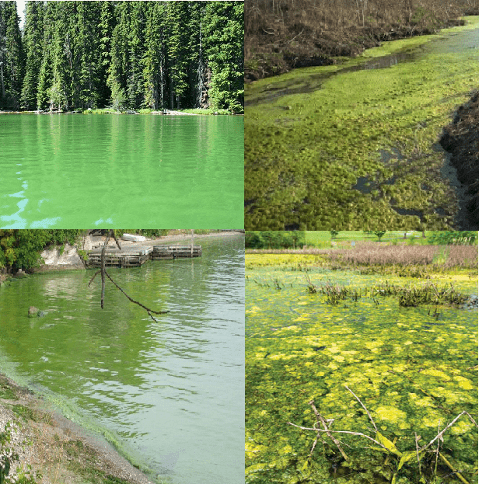
Beyond aesthetic changes, algal blooms severely disrupt oxygen dynamics within aquatic systems. During daylight, algae produce oxygen through photosynthesis; however, at night and particularly during bloom collapse, microbial decomposition of dead algal biomass consumes large amounts of dissolved oxygen. This process creates hypoxic (low oxygen) or anoxic (no oxygen) conditions. Oxygen depletion suffocates aquatic organisms such as fish, crustaceans, and other aerobic species, leading to large-scale fish kills and biodiversity loss. The collapse of fish populations also affects food webs and fisheries-dependent communities. Another critical impact of eutrophication is the blocking of sunlight penetration. Dense algal mats and suspended biomass reduce light availability to submerged aquatic vegetation. Photosynthetic plants located beneath the water surface depend on sunlight for energy production. When light penetration is restricted, these plants experience reduced growth or die off completely. The loss of submerged vegetation further destabilizes ecosystems because these plants provide habitat, food, and oxygen to aquatic organisms.
Nutrient enrichment that drives eutrophication commonly originates from human activities. Agricultural practices represent one of the primary sources. Chemical fertilizers and organic fertilizers are frequently applied to enhance crop productivity. However, when fertilizers are used excessively or improperly managed, rainfall and irrigation runoff transport surplus nitrogen and phosphorus into nearby streams, rivers, and lakes. Livestock operations also contribute nutrients through manure discharge and waste leakage. Urbanization and industrial activities further intensify nutrient loading. Wastewater discharge from households and industries often contains significant concentrations of phosphorus and nitrogen compounds. Inadequate sewage treatment systems increase the risk of untreated or partially treated effluent entering water bodies. Stormwater runoff in urban areas collects nutrients from soil, detergents, organic debris, and atmospheric deposition before draining into aquatic systems.
Some algal species that proliferate during blooms produce harmful toxins known as cyanotoxins or phycotoxins. These toxic compounds can contaminate drinking water supplies and accumulate in aquatic organisms. Exposure to toxic algal metabolites poses health risks to humans and animals, including liver damage, neurological disorders, gastrointestinal illness, and skin irritation. Additionally, contaminated water often develops unpleasant taste and odor characteristics, reducing its suitability for domestic consumption and industrial use.
Eutrophication also diminishes the recreational and economic value of water resources. Water bodies affected by persistent algal blooms are unattractive for tourism, fishing, swimming, and other leisure activities. The costs associated with water treatment increase because additional filtration and purification processes are required to remove algal cells and toxins. Fisheries industries suffer economic losses due to reduced fish stocks and mortality events. Effective management of eutrophication requires integrated nutrient control strategies. Reducing nutrient input at the source is the most sustainable approach. In agriculture, precision fertilization techniques, soil testing, controlled application rates, buffer strips, and proper timing of fertilizer use can minimize nutrient runoff. Establishing vegetative buffer zones along waterways helps trap sediments and absorb excess nutrients before they reach aquatic systems.
Improving wastewater treatment infrastructure is another essential intervention. Advanced treatment technologies capable of removing nitrogen and phosphorus from effluents significantly reduce nutrient discharge. Proper management of septic systems and industrial wastewater also contributes to nutrient control. In urban areas, stormwater management systems such as retention ponds and constructed wetlands can capture and treat nutrient-laden runoff. Restoration efforts may include mechanical removal of algal biomass, aeration to restore dissolved oxygen levels, and biomanipulation techniques to rebalance aquatic food webs. Continuous monitoring of nutrient concentrations, chlorophyll levels, and dissolved oxygen parameters is critical for early detection and prevention of severe bloom events. Public awareness and regulatory policies that limit nutrient pollution further strengthen prevention efforts.
Controlling Nutrient Inputs to Prevent Eutrophication and Protect Water Resources
Eutrophication threatens the quality, functionality, and sustainability of water resources by promoting excessive algal growth, oxygen depletion, and ecological imbalance. Controlling nutrient inputs—particularly nitrogen and phosphorus—is a fundamental strategy for preventing eutrophication and safeguarding water resources for drinking, agriculture, fisheries, industry, and recreation. Effective nutrient management directly contributes to maintaining water quality and preserving ecosystem services.
The primary source of eutrophication is the excessive loading of plant nutrients from agricultural runoff, livestock waste, urban stormwater, and inadequately treated wastewater. When these nutrients enter rivers, lakes, reservoirs, and coastal waters in high concentrations, they stimulate rapid algal growth. The resulting algal blooms reduce water clarity, deplete dissolved oxygen, and may release toxins that contaminate drinking water supplies. By limiting the introduction of these nutrients at their source, the risk of ecological degradation is significantly reduced.
Protecting water resources begins with improved nutrient management practices. In agriculture, precision fertilizer application, soil nutrient testing, and optimized timing of fertilizer use reduce nutrient runoff into nearby water bodies. The establishment of vegetative buffer strips and riparian zones along waterways enhances nutrient uptake by plants and soil microorganisms before runoff reaches aquatic systems. Proper manure management and controlled livestock access to streams also minimize direct nutrient discharge.
Upgrading wastewater treatment facilities is another critical intervention. Advanced treatment technologies that remove phosphorus and nitrogen from municipal and industrial effluents reduce nutrient concentrations before discharge. Effective sewage management ensures that treated water released into the environment meets quality standards that protect downstream ecosystems and public health.
By controlling nutrient inputs, water resources are protected through improved water clarity, stable dissolved oxygen levels, reduced toxin production, and enhanced biodiversity. Healthy aquatic ecosystems support fisheries productivity, safe drinking water supplies, and recreational activities. Ultimately, proactive nutrient control strengthens the resilience and long-term sustainability of freshwater and marine resources.
Eutrophication Processes and Their Environmental Impacts on Aquatic Ecosystems
Eutrophication processes involve the enrichment of aquatic ecosystems with excessive nutrients, primarily nitrogen and phosphorus, which stimulate accelerated growth of phytoplankton, algae, and other photosynthetic organisms. Nitrogen and phosphorus are essential growth factors required for the normal development and metabolic functioning of plants. In terrestrial ecosystems, these nutrients may often be present in sufficient quantities; however, in freshwater and marine environments, they typically occur in limited concentrations and act as natural regulators of primary productivity.
Human activities and certain natural processes significantly increase the concentration of these limiting nutrients in water systems. Agricultural runoff, fertilizer application, livestock waste, urban stormwater discharge, industrial effluents, and untreated or poorly treated sewage introduce large amounts of nitrogen and phosphorus into aquatic habitats. Natural events such as soil erosion, flooding, and decomposition of organic matter can also contribute to nutrient enrichment, although anthropogenic inputs are usually the dominant drivers.
The introduction of inorganic nutrients into water bodies disrupts ecological balance and triggers rapid proliferation of phytoplankton and algal populations. Enhanced nutrient availability stimulates photosynthetic activity, leading to sporadic and excessive growth commonly referred to as algal blooms. Cyanobacteria, a group of photosynthetic microorganisms often associated with these blooms, can dominate under nutrient-rich and warm environmental conditions. These blooms frequently form dense surface layers that reduce light penetration and physically block the exchange of oxygen between the atmosphere and the water column.
A critical consequence of recurrent algal blooms is the development of hypoxia, a condition characterized by insufficient dissolved oxygen to sustain aquatic life. When large quantities of algae die off, microbial decomposition processes break down the organic biomass. This decomposition consumes substantial amounts of dissolved oxygen, further depleting oxygen levels in the water. Prolonged oxygen depletion creates anoxic environments that lead to fish kills, loss of benthic organisms, and degradation of aquatic biodiversity.
Eutrophication also negatively affects drinking water sources, recreational waters, and fisheries. Reduced water clarity diminishes aesthetic quality and limits recreational activities such as swimming and boating. Additionally, certain algal species produce harmful toxins that contaminate water supplies and pose serious public health risks, including liver damage, neurological effects, and gastrointestinal illness. Eutrophication alters ecosystem structure and function, reduces water quality, and undermines the ecological and economic value of aquatic resources.
CAUSES (SOURCES) OF NUTRIENT INPUT INTO WATER BODIES
Eutrophication is majorly caused by the unusual increase of nutrient supply to a particular water body. And this phenomenon makes the water body more eutrophic (i.e. richer in nutrients such as phosphorus and nitrogen that support the growth of aerobic photosynthetic organisms such as phytoplanktons and/or cyanobacteria). Both human activities and natural occurrences contribute to the increase in the nutrient enrichment of freshwater habitat and marine ecosystems. The most common biological effects of increased nitrogen and phosphorus supplies on aquatic ecosystems is increase in the abundance of the growth of algae, cyanobacteria and aquatic plants which all culminate to the formation of algal bloom in water systems. This leads to sever consequential aesthetic loss of the quality of the affected water body, making it unfit for industrial, domestic or recreational activities. The supply of nutrients that leads to the eutrophication of a particular water body is caused by several factors as elucidated in this section.
- Municipal wastewater effluents.
- Effluents from industrial wastewater.
- Leachate and runoff from waste/refuse disposal sites.
- Runoff from oil fields and mines.
- Runoff of fertilizers from farms into water systems.
- Runoff from construction or building sites.
- Runoff or overflows from sanitary sewers.
- Deposition of atmospheric substances over a particular water surface.
- Runoff from failed septic tanks.
- Leakage from septic tank.
- Runoff from farms and other lands where agricultural practices such as irrigation are carried out.
- Runoff from animal grazing sites and lands.
- Runoff from abattoirs and animal feedlots.
EFFECTS OF EUTROPHICATION ON WATER SYSTEMS
The excessive addition or introduction of inorganic chemicals such as nitrogen and phosphorus into a body of water leading to eutrophication has far-reaching effects on the biology and chemistry of water bodies including lakes, streams, rivers and ponds. Water systems that receive unusual amount of nitrogen and phosphorus from either natural sources or human activities lose their aesthetics and usefulness due to the growth of algal blooms. The effects of eutrophication on water bodies are highlighted in this section.
- Eutrophication pollutes aquatic ecosystems including rivers, streams, lakes and ponds.
- Eutrophication leads to increased death of aquatic organisms especially fishes.
- It reduces the clarity of water.
- It impacts negatively on the odour, taste and quality of water.
- Eutrophication poses potential health risks to water supplies especially people that use water covered with algal blooms.
- It leads to increase in the pH of the affected water body.
- Eutrophication depletes the amount of dissolved oxygen in water.
- It decreases the aesthetic value of the water body.
- Eutrophication impacts negatively on the environment especially on the affected water body which it renders useless for domestic and industrial usage.
- It impacts negatively on aquatic plants by changing their physiology and species compositions.
- Eutrophication changes the species of fish in the affected water body to less desirable species of fish.
- Eutrophication alters the food web or food chain of aquatic ecosystems.
- It prevents the usage of affected water bodies for swimming and other recreational activities.
- It disrupts water treatment processes such as flocculation and chlorination.
- Eutrophication leads to loss of aquatic biodiversity.
Practical Strategies to Prevent Algal Blooms
Algal blooms can be effectively prevented through proactive nutrient management, improved wastewater treatment, sustainable land-use practices, and continuous environmental monitoring. Since excessive nitrogen and phosphorus inputs are the primary drivers of bloom formation, strategies that reduce nutrient loading at the source are the most efficient and sustainable approach to protecting water quality.
One of the most practical strategies is improving agricultural nutrient management. Precision agriculture techniques help farmers apply fertilizers at optimal rates, times, and locations based on soil nutrient requirements. Soil testing and plant tissue analysis reduce the risk of over-fertilization and minimize nutrient runoff. Controlled-release fertilizers and slow-release formulations further decrease the likelihood of nutrient leaching into nearby rivers and lakes. Establishing vegetative buffer strips and riparian zones along water bodies is another effective method. These vegetated areas trap sediments and absorb excess nutrients before they reach aquatic systems, thereby reducing nutrient pollution.
Proper livestock and manure management also plays a critical role. Manure storage facilities should be designed to prevent leakage, and manure application should follow recommended guidelines to avoid runoff during rainfall events. Restricting livestock access to streams prevents direct deposition of waste into water bodies. These measures significantly reduce nutrient inputs from animal agriculture.
Urban and industrial wastewater treatment is equally important in preventing algal blooms. Modern wastewater treatment plants should incorporate advanced nutrient removal technologies capable of eliminating substantial amounts of nitrogen and phosphorus before effluent discharge. Upgrading sewage infrastructure and ensuring regular maintenance reduce the risk of untreated wastewater entering surface waters. In addition, managing stormwater through retention ponds, constructed wetlands, and green infrastructure helps capture and treat nutrient-rich runoff from urban areas.
Restoration and in-lake management strategies also contribute to bloom prevention. Aeration systems improve dissolved oxygen levels and enhance water circulation, reducing conditions that favor harmful algal growth. Phytoremediation and biomanipulation techniques can restore ecological balance by promoting the growth of beneficial organisms that compete with algae for nutrients.
Environmental monitoring and policy enforcement are essential to prevent eutrophication. Regular water quality assessments allow early detection of nutrient buildup and bloom formation. Strong regulatory frameworks that limit nutrient discharge, combined with public awareness campaigns, encourage responsible nutrient use. These practical strategies reduce nutrient pollution and strengthen the resilience of aquatic ecosystems against harmful algal blooms.
References
Bennett E.M, Carpenter S.R and Caraco N.F (2001). Human impact on erodable phosphorus and eutrophication: a global perspective. BioScience, 51:227–234.
Bunting B.T. and Lundberg J (1995). The humus profile-concept, class and reality. Geoderma, 40:17–36.
Jee C and Shagufta (2007). Environmental Biotechnology. APH Publishing Corporation, Darya Ganj, New Delhi, India.
Maier R.M, Pepper I.L. and Gerba C.P (2000). Environmental Microbiology. Academic Press, San Diego.
Miguel A, Manuel F, Francisco J.P and Antonio B (2006). Environmental biocatalysis: from remediation with enzymes to novel green processes. TRENDS in Biotechnology, 24(6):1-7.
Mishra B.B, Nanda D.R and Dave S.R (2009). Environmental Microbiology. First edition. APH Publishing Corporation, Ansari Road, Darya Ganj, New Delhi, India.
Pepper I.L and Gerba C.P (2005). Environmental Microbiology: A Laboratory Manual. Second Edition. Elsevier Academic Press, New York, USA.
Roberto P. Anitori (2012). Extremophiles: Microbiology and Biotechnology. First edition. Caister Academic Press, Norfolk, England.
Salyers A.A and Whitt D.D (2001). Microbiology: diversity, disease, and the environment. Fitzgerald Science Press Inc. Maryland, USA.
Sawyer C.N, McCarty P.L and Parkin G.F (2003). Chemistry for Environmental Engineering and Science (5th ed.). McGraw-Hill Publishers, New York, USA.
Ulrich A and Becker R (2006). Soil parent material is a key determinant of the bacterial community structure in arable soils. FEMS Microbiol Ecol, 56(3):430–443.
Discover more from Microbiology Class
Subscribe to get the latest posts sent to your email.