Offer Description
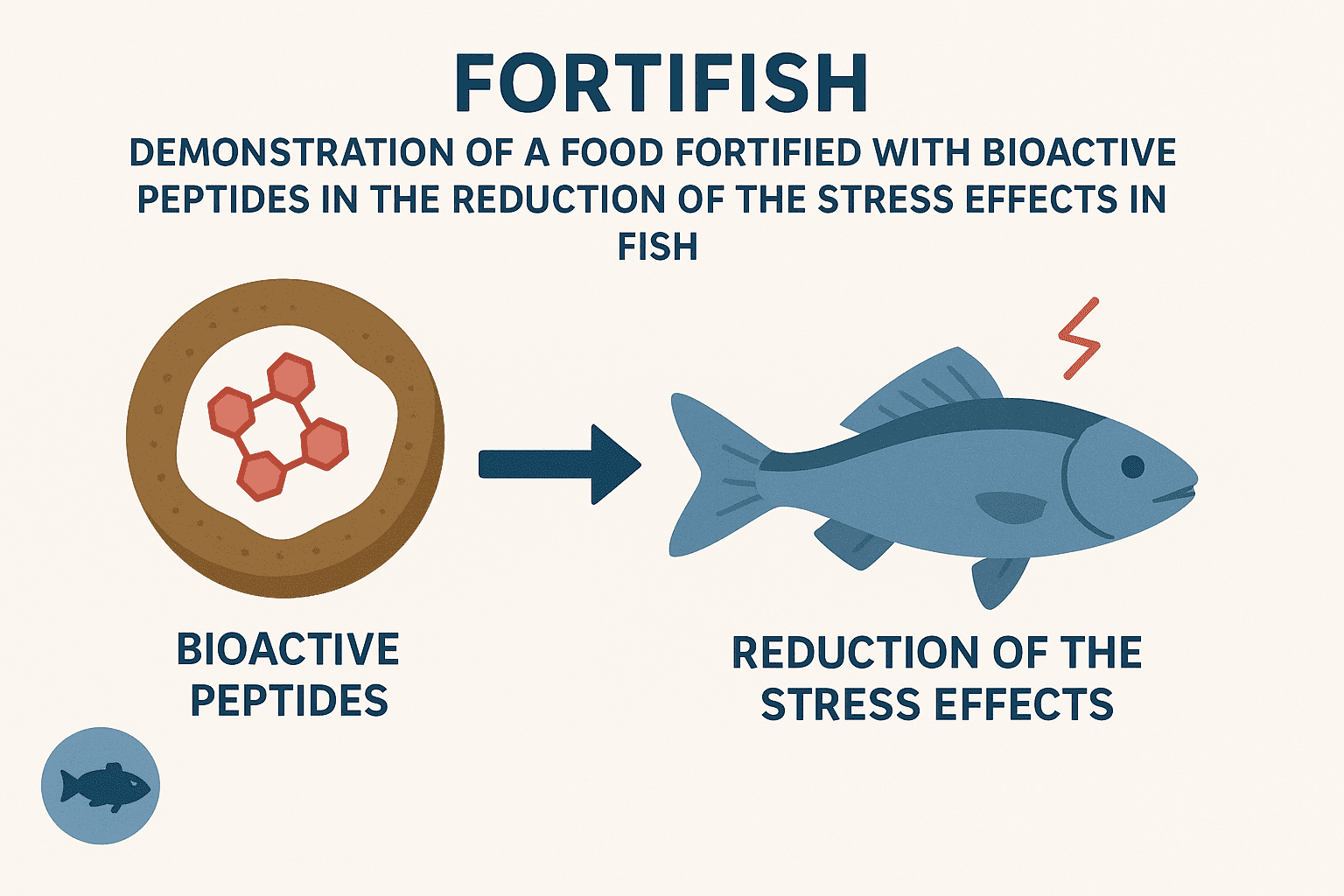
i3s – Institute for Research and Innovation in Health (hereinafter i3S) is opening a call to award a grant for the development of R&D activities for a PhD’s with less than 3 years of postdoctorate, within the project “FORTIFISH: “demonstration of a food fortified with bioactive peptides in the reduction of the stress effects in fish” – No. 21286, Operation No. MPr-2024-9-21286 (COMPETE2030-FEDER-02232500, LISBOA2030-FEDER-02232500, ALGARVE-FEDER-02232500), co‑financed by the European Union through the Algarve 2030, Lisboa 2030 and COMPETE 2030 Operational Programs, in the framework of Portugal 2030.
Host Institution: i3S – Instituto de Investigação e Inovação em Saúde, Porto, Portugal.
Scientific Area: Veterinarian Science, Animal Science.
Project Title: “FORTIFISH: “demonstration of a food fortified with bioactive peptides in the reduction of the stress effects in fish”.
Workplans:
Mitigating the effects of stress in early-life stages of fish is a critical challenge for the aquaculture industry and biomedical research using zebrafish as an experimental model. In this regard, the FORTIFISH project aims to develop fortified functional foods that promote the well-being and health of marine fish and zebrafish. This innovative project focuses on formulating foods fortified with bioactive peptides capable of reducing the impact of stress factors and improving production efficiency from the early stages of fish development. In i3S, the FORTIFISH functional solution will be tested aiming to optimize adult zebrafish welfare, species used in the biomedical industry. The contracted postdoc will be responsible for communicating with the animal facility to monitor the animal care and keep the best husbandry conditions for the zebrafish. The post-doc will be involved in the induction of stress protocols and in the execution of behavioural testing and subsequent video analysis. The postdoc will also quantify biomarkers using molecular biology techniques, such as ELISA and proteomics.
Admission Requirements:
Mandatory:
– Candidates must hold a PhD degree in Veterinary Sciences, Aquatic Environment Sciences, Animal Science, Biology or related areas for less than three years.
To have license to work with laboratory animals;
Preferencial: Solid experience and practical knowledge on the following aspects:
– The care, housing, handling, and maintenance of laboratory fish, especially zebrafish;
– Behavioural testing in fish, particularly in stress;
– Experience in molecular biology techniques, namely ELISA kits and proteomics.
The applicant should have interest in animal welfare and to be capable of identifying stress in zebrafish.
The Doctorate beneficiary of this type of fellowship cannot exceed, with the conclusion of the fellowship contract, an accumulated period of three years under this type of scholarship, continuous or not continuously calculated. The calculation of the three years period considers also all the host entities to which the Doctorate has been linked to by a postdoctoral fellowship.
PhD holders of this type of fellowship must also have carried out the research work that led to the attribution of the PhD degree in a host institution other than i3S.
Place: The research activities will be hosted at i3S, under the scientific coordination of Prof. Anna Olsson.
Length time: The duration of the fellowship is 6 months, eventually reneawble. The expected starting date is 16th of January of 2026, upon availability of the financed funds.
Monthly maintenance stipend: €1.851,00, according to the values table of FCT, at Portugal (https://www.fct.pt/wp-content/uploads/2025/02/Tabela_valores_SMM_2025.pdf). The payments will be made by bank transference.
Research grants may also include other components, as the voluntary social insurance, under the terms of the Research Fellowship Holder Statute, article 10.
Evaluation Criteria:
The selection will be carried out through curriculum evaluation (60%), considering previous experience in the points described in the Admission Requirements, motivation letter (30%), and an interview (10%). An evaluation will be made (on a scale from 1 to 100), followed by a ranking of the candidates based on the score obtained in the criteria defined above.
Only candidates with a total score of 80 will proceed to the interview.
Evaluation Pannel: President Anna Olsson, PhD; other members: José Bessa, PhD and Ana Valentim, PhD.
Information and Publicity of Funding Granted: The results of the evaluation will be notified by email to all candidates. After notification, candidates have 10 working days to comment and, within that period, a complaint may be submitted by email to rh.i3S@i3s.up.pt.
Applications: The call will be open between 04th december 2025 and 18th december 2025. The applications must be submitted electronically at:
https://dozer.i3s.up.pt/applicationmanagement/#/addapplications/f1b6bd66229e7ec114c23084ccb93653
The required documents composing the applications are: PhD Certificate, Curriculum Vitae, letter of motivation and other documents, considered as relevant by the candidate.
Full announcement at: https://dozer.i3s.up.pt/fileupload/downloadfile/viewpdfnewtab/e1cf76fd3ece5b55a4420be7625878d
Where to apply: https://dozer.i3s.up.pt/applicationmanagement/#/addapplications/f1b6bd66229e7ec114c23084ccb93653
Requirements
Research FieldMedical sciences » Veterinary medicineEducation LevelPhD or equivalent
Specific Requirements
Admission Requirements:
Mandatory:
– Candidates must hold a PhD degree in Veterinary Sciences, Aquatic Environment Sciences, Animal Science, Biology or related areas for less than three years.
To have license to work with laboratory animals;
Preferencial: Solid experience and practical knowledge on the following aspects:
– The care, housing, handling, and maintenance of laboratory fish, especially zebrafish;
– Behavioural testing in fish, particularly in stress;
– Experience in molecular biology techniques, namely ELISA kits and proteomics.
The applicant should have interest in animal welfare and to be capable of identifying stress in zebrafish.
The Doctorate beneficiary of this type of fellowship cannot exceed, with the conclusion of the fellowship contract, an accumulated period of three years under this type of scholarship, continuous or not continuously calculated. The calculation of the three years period considers also all the host entities to which the Doctorate has been linked to by a postdoctoral fellowship.
PhD holders of this type of fellowship must also have carried out the research work that led to the attribution of the PhD degree in a host institution other than i3S.
Discover more from Microbiology Class
Subscribe to get the latest posts sent to your email.