
Mushrooms are macroscopic fungi that produce visible fruiting bodies, commonly characterized by an umbrella-like structure. They represent the reproductive stage of certain fungal species and develop under suitable environmental conditions. Mushrooms are sometimes referred to as toadstools; however, both terms describe the fleshy, spore-bearing structures produced by fungi rather than distinct biological groups. Scientifically, a mushroom is defined as the above-ground fruiting body of a fungus that emerges from a mycelial network growing within a substrate.
The structure of a typical mushroom consists of a cap (pileus), a stalk (stipe), and often gills or pores located on the underside of the cap. The cap protects the reproductive tissues, while the gills or pores contain spore-producing cells that facilitate reproduction and dispersal. Spores are released into the environment and, under favorable conditions of moisture, temperature, and nutrient availability, germinate to form new mycelial networks. This reproductive strategy enables fungi to spread efficiently across suitable habitats.
Mushrooms grow on a wide range of substrates, which serve as their food source. These substrates include soil rich in organic matter, decomposing plant material, dead wood, agricultural residues, compost, and even living plant hosts in some cases. In natural ecosystems, mushrooms play a crucial ecological role as decomposers, breaking down complex organic compounds such as cellulose and lignin. Through this process, they contribute to nutrient cycling and soil fertility. Some species also form symbiotic relationships with plants, enhancing nutrient and water uptake through mycorrhizal associations.
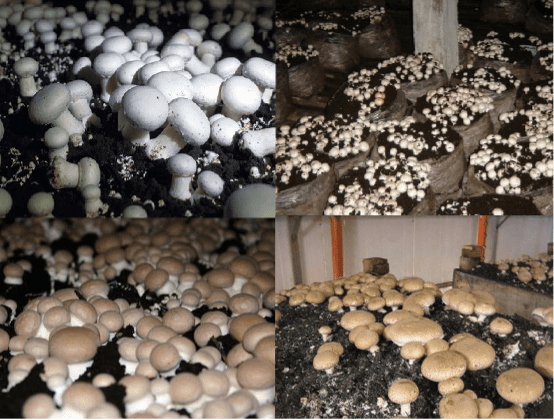
In the wild, mushrooms are commonly found growing on forest floors, on decaying logs, in grasslands, and on tree trunks. Certain species thrive in controlled environments where conditions such as humidity, temperature, light, and substrate composition are regulated to optimize growth. Because of their nutritional value and economic potential, mushrooms are widely cultivated for food, medicine, and commercial production. Edible varieties provide protein, vitamins, minerals, and bioactive compounds, making them an important component of sustainable agriculture and food systems.
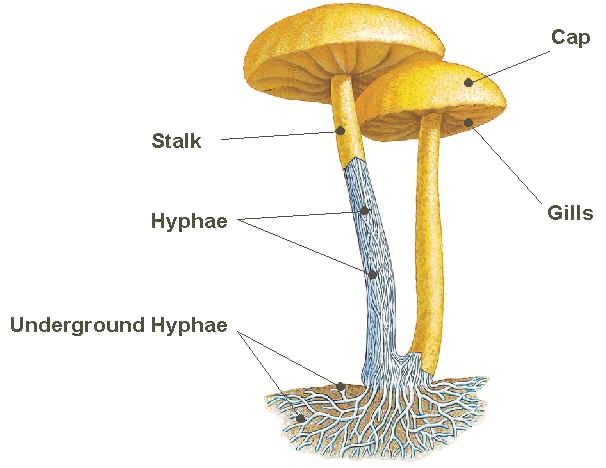
Morphologically, mushrooms have a cap (pileus), a stem (stipe), underground hyphae, hyphae, stalk and gill (lamellae) (Figure 1). The lamellae (singular: lamella) produce microscopic spores that help the fungus spread across the ground or its occupant surface. Spore formation by mushrooms is a critical parameter for the propagation of this macro-organism especially in new habitats. Most mushrooms are Basidiomycetes; and they are known to produce spore which help in their propagation in the environment. Mushrooms that are basidiomycetes produce basidiospores – which aid in the reproduction of the organism in a new environment or substrate.
Mushrooms originate from a very small developmental structure known as a primordium (plural: primordia), which typically emerges as a nodule or pinhead measuring less than two millimeters in diameter. This early stage of fruit body formation develops within the mycelial network and is usually located on or close to the surface of the substrate where the fungus is actively growing. The primordium forms through the aggregation and differentiation of tightly packed hyphae, which are the filamentous cells that make up the fungal mycelium. Under suitable environmental conditions such as optimal temperature, humidity, light, and nutrient availability the primordium continues to develop and undergoes morphological changes.
As growth progresses, the primordium enlarges into a more defined, rounded structure composed of densely interwoven hyphae. This stage is commonly referred to as the “button” stage because of its compact, spherical to oval appearance that resembles a small egg or button. The button represents an intermediate developmental phase before the mushroom expands into its mature fruiting form. During this stage, key structural components such as the cap (pileus), stem (stipe), and gills or pores begin to differentiate but remain enclosed or tightly packed.
Many cultivated edible mushrooms are harvested at or before the button stage, which is why they are commonly called button mushrooms. Harvesting at this stage is often preferred in commercial production because the texture is firm, the shelf life is longer, and the size is suitable for market demand. Proper management of environmental conditions during primordium formation and button development is critical for maximizing yield and ensuring uniform mushroom production.
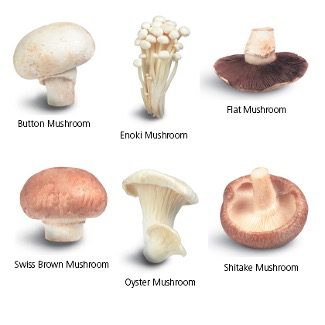
Oyster mushrooms, Swiss brown mushroom, Enoki mushroom, flat mushroom, shitake mushroom, button mushrooms and paddy straw mushrooms are the names that mushrooms can be called depending on their morphological appearance (Figure 2). Most species of mushrooms seemingly appear overnight, growing or expanding rapidly on their substrate. The substrates for mushroom cultivation are commonly sourced from the environment, and they include commonly sourced wastes from our homes and farms especially composted materials (Figure 3). Straws, sawdust, woodchips, wood, waste plant materials and composted materials are some of the substrates used for mushroom cultivation. Cultivated mushroom as well as the common field mushroom initially forms a minute fruiting body, referred to as the pin stage because of their small size.
Slightly expanded, they are called buttons because of the relative size and shape that they assume during reproduction. Once the button stages of the mushrooms are formed, the mushroom can rapidly pull in water from its mycelium and expand, mainly by inflating preformed cells that took several days to form in the primordia. This leads to the formation of the main mushroom structure. Edible mushrooms especially the Agaricus bisporus and Agaricus campestrismushrooms are commercially sold in supermarkets because of their nutritional value. Mushrooms are a good source of numerous macro- and micro-nutrients that nourishes the human body. Mushrooms contain proteins, carbohydrates, fats, vitamins and minerals; and these nutritional qualities of mushrooms warrant their widespread usage in many cultures across the world.
Certain mushroom species are widely recognized for their potential medicinal properties and have been used in traditional and modern health practices across different cultures. These medicinal mushrooms are often valued for their bioactive compounds, including polysaccharides, antioxidants, terpenoids, and other secondary metabolites that are believed to support immune function, reduce inflammation, and contribute to overall health maintenance. In some communities, mushrooms are incorporated into diets or processed into extracts, powders, and supplements to address specific primary health needs and to promote general well-being. Scientific research continues to explore and validate the therapeutic potential of various species, further expanding their applications in functional foods and natural medicine.
Despite their benefits, mushrooms must be consumed with caution because many species are toxic and can pose serious health risks if misidentified or improperly prepared. Poisonous mushrooms often resemble edible varieties, making accurate identification essential. Wild mushrooms should not be collected and consumed without proper expertise and verification. Only individuals trained in mycology or professionals who can reliably distinguish edible species from toxic ones should certify mushrooms for safe consumption. Misidentification can lead to food poisoning, organ damage, or even fatal consequences.
Mushroom farming, also known as mushroom cultivation, refers to the controlled and systematic production of mushrooms for domestic use or commercial markets. It involves the deliberate management of substrate preparation, environmental conditions, inoculation, and harvesting to ensure consistent yield and quality. Commercial cultivation reduces reliance on wild harvesting, enhances food safety, and provides a reliable source of income for producers while meeting growing consumer demand for both edible and medicinal mushrooms.
STEPS INVOLVED IN MUSHROOM FARMING
Mushroom farming usually involves six (6) different steps. The six steps involved in mushroom cultivation are: (1) Phase I composting; (2) Phase II composting; (3) Spawning; (4) Casing; (5) Pinning; and (6) Cropping. Mushroom composts or substrates are usually made from two types of materials that include wheat straw-bedded horse manure and synthetic compost – which is usually made from hay and crushed corncobs. The primary ingredient for the wheat straw bedded horse manure is horse manure; and this type of mushroom compost or substrate is more expensive than the synthetic compost produced from hay and crushed corncobs that are readily available. Nitrogen supplements and a conditioning agent (e.g. gypsum) are usually added to both types of mushroom compost to activate and spur the optimal growth and development of the mushroom being cultivated.
Gypsum is added to mushroom compost in order to minimize the greasiness compost normally tends to have during cultivation. Gypsum also increases the flocculation of certain chemicals in the compost, and they adhere to straw or hay rather than filling the pores (holes) between the straws. Seed meals of soybeans, peanuts, or cotton, corn distiller’s grain, and chicken manure are usually the nitrogen supplements included in mushroom compost. The nitrogen supplements increase the growth and reproduction of the microflora found in the compost. The microflora found in mushroom compost aid in the growth and development of the mushroom. It takes approximately 14 weeks to complete an entire production cycle for mushroom production or cultivation, from the start of composting to the final steaming off after harvesting has ended.
Phase I composting
Phase I composting is the first stage of mushroom cultivation. In this phase, the substrates for mushroom cultivation (horse manure or synthetic compost) are placed in a rectangular container with tight sides and loosed center. The center of the container must be loose in order to allow air (oxygen) to move through the compost, and thus prevent the development of an anaerobic environment. Water is usually sprayed on the substrates as they pass through a compost turner; and the nitrogen supplements and gypsum (the conditioning agent) are spread over the top of the bulk of the ingredients and then finally mixed with the compost turner. The compost turner helps to aerate and water the ingredients of the mushroom compost.
The watering and turning of the compost is usually done for 2-3 days; and this is critical in order to ensure the continuation of the process since adequate oxygen, nitrogen, carbohydrates and moisture are required for composting. The mushroom compost can still be mixed manually using a pitchfork instead of the compost turner (which is a mechanized and fast approach). After this, aerobic fermentation (composting) commences as a result of the growth and reproduction of microorganisms (which occur naturally in the bulk ingredients); and heat, ammonia, and carbondioxide are released during the process.
The fermentative activity of the indigenous microbes in the ingredients converts the raw materials into mushroom compost necessarily for the growth of mushrooms (with the exclusion of other fungi and bacteria). Phase I composting lasts for about 7 to 14 days, depending on the nature of the material at the start of the process and its characteristics at each turn. There is usually a strong ammonia odour that is associated with composting; and this smell is usually accompanied by a sweet and moldy (rotten) smell. Characteristically, the compost should have certain features at the end of Phase I composting; and this include: a chocolate brown color; a soft, pliable straw; a moisture content of 68 to 74 percent; and a strong smell of ammonia as aforementioned. When the moisture, temperature, color, and odour have been reached, the Phase I composting is completed.
Phase II composting
Phase II composting is the second stage of mushroom cultivation. It is at this stage that the compost formation is finished or completed. Phase II composting is critical for the entire mushroom cultivation process. Pasteurization occurs at this stage, and it helps to kill nematodes, pest fungi, insects and other pests that may be present in the compost. The ammonia formed in phase I composting is also removed at this stage because ammonia is poisonous and inhibitory to the growth of mushrooms. Pasteurization sequence of the compost and the removal of ammonia are the two main objective of phase II composting.
Phase II takes place in several ways including the bed (shelf) system, zoned system, or the bulk system in which the compost is either placed in bed, tray or bulk respectively. The ammonia and carbondioxide is usually replaced with outside air at this stage. Phase II composting is usually characterized by a controlled, temperature-dependent, ecological process that make use of air to maintain the compost in a temperature range best suited for the de-ammonifying microbes to grow and reproduce.
The growth of these thermophilic (heat-loving) microorganisms depends on the availability of usable carbohydrates and nitrogen added as supplements in Phase I composting. Phase II composting is usually maintained at a high temperature level or at a low temperature level due to the difficulty experienced in the optimal management of this stage of mushroom cultivation. At the end of Phase II, the compost temperature must be lowered to approximately 75° to 80°F before spawning (planting) can begin. The nitrogen content of the compost should be 2.0 to 2.4 percent, and the moisture content between 68 and 72 percent.
Spawning (planting)
A spawn is the white, fibrous matter that forms the matrix from which mushroom grows. Spawning or planting is the third stage of mushroom cultivation. Mushrooms reproduce sexually during underground growth, and asexually through spore formation. Mushroom reproduction either sexually or asexually is usually affected by microorganisms in the atmosphere, and this interferes with the optimal growth and development of mushrooms. Thus, the actively growing mushroom culture (mycelium) is placed on mushroom growth culture or compost – where the mushroom is allowed to mature and develop into an adult organism.
This process of mushroom cultivation is known as spawning. Spawning helps to give mushroom a firm beginning in development while preventing or reducing the chances of any microbial contamination. Mushrooms produces many spores on the mushroom gills lining the underside of the mushroom cap as the mushroom matures over the mushroom compost. Mushroom spores are not usually used to seed mushroom compost for mushroom propagation because mushroom spores are not reliable for mushroom propagation. Their germination is usually unpredictable.
Nevertheless, the mycelium of mushrooms can be propagated vegetatively from germinated mushroom spores; and this allows for the multiplication of the culture for spawn (mushroom offspring) production. Mushroom spawn is distributed or spread on the mushroom compost and then mixed thoroughly into the compost. A special spawning machine can be used to achieve this in a much faster manner but the spawn can also be mixed manually with the hand. Spawn yield can be increased through supplementation of the spawn and compost with protein or lipid-rich materials.
The drying of the compost or spawn is prevented through the maintenance of optimal relative humidity. The spawn grows, producing threadlike network of mycelium through the compost. The time needed for spawn to colonize the compost usually depends on the spawning rate and its distribution over the compost, the moisture and temperature of the compost, the supplementation of the compost, and the nature and quality of the compost. It takes between 14 to 20 days to run a complete spawn.
Casing
Casing is the next stage after spawning. It is carried out once the mushroom compost is fully grown with spawn. Casing is the top-dressing applied to the spawn-run mushroom compost on which the mushroom eventually grows. It acts as a water reservoir and a place where the rhizomorphs form. The rhizomorphs form when mycelium fuses together. Primordia (which are the initials of mushrooms) form on the rhizomorphs. Rhizomorphs are the main foundational support of mushrooms because without the rhizomorphs there will be no mushrooms.
Casing helps to supply water to the mycelium for growth and development since moisture is important for the development of a solid mushroom. It also prevents and protects the mushroom compost from drying. Casting provides support for the developing mushrooms and it prevents any structural breakdown of the young mushroom following repeated watering. The materials used for casing include ground limestone, and peat moss sphagnum. It is important to maintain intermittent supply of water throughout the period after casing in order to raise the moisture level capacity of the mushroom compost before the mushroom pins or primordia begins to form.
Pinning
Pinning is the stage at which primordia or mushroom pins begin to form. It is the stage that follows casing. The mushroom pins, mushroom initials or primordia begin to form once the rhizomorphs have formed in the casing. Though very small, the mushroom initials or primordia are usually seen as outgrowths on the rhizomorphs. The mushrooms pins continue to expand and grow larger through the button stage. The button stage of the young mushroom eventually matures into a mature and harvestable mushroom – which usually appears in about 17 – 21 days after a successful casing.
Cropping
Cropping is the final stage in the mushroom cultivation process. At this stage, fully developed and mature mushrooms are ready for harvesting for either domestic consumption or commercial distribution. Cropping follows successful substrate colonization, primordia formation, and fruit body development. Proper timing is critical, as harvesting too early or too late can negatively affect yield, quality, and market value. Mushrooms are typically harvested when they reach optimal size, firmness, and cap development, depending on the species and market requirements.
During cropping, careful handling is essential to prevent damage to the fruiting bodies and the growing substrate, which may produce additional flushes. Harvesting methods usually involve twisting, cutting, or gently pulling the mushrooms from the substrate to maintain product quality and reduce contamination risks. Environmental conditions such as humidity, temperature, and ventilation should also be managed appropriately to support successive flushes and maximize overall production. Effective cropping practices contribute to higher productivity, improved shelf life, and better economic returns in mushroom farming systems.
References
Chang S.T (2006). The world mushroom industry: trends and technological development. International J. Medicinal Mushrooms, 8:297-314.
Jee C and Shagufta (2007). Environmental Biotechnology. APH Publishing Corporation, Darya Ganj, New Delhi, India.
Maier R.M, Pepper I.L. and Gerba C.P (2000). Environmental Microbiology. Academic Press, San Diego.
Miguel A, Manuel F, Francisco J.P and Antonio B (2006). Environmental biocatalysis: from remediation with enzymes to novel green processes. TRENDS in Biotechnology, 24(6):1-7.
Mishra B.B, Nanda D.R and Dave S.R (2009). Environmental Microbiology. First edition. APH Publishing Corporation, Ansari Road, Darya Ganj, New Delhi, India.
Paul E.A (2007). Soil Microbiology, ecology and biochemistry. 3rd edition. Oxford: Elsevier Publications, New York.
Discover more from Microbiology Class
Subscribe to get the latest posts sent to your email.